
10 Accidental Discoveries That Changed the World
From Chocolate Chips to X-rays: How Unexpected Mistakes Revolutionized the World
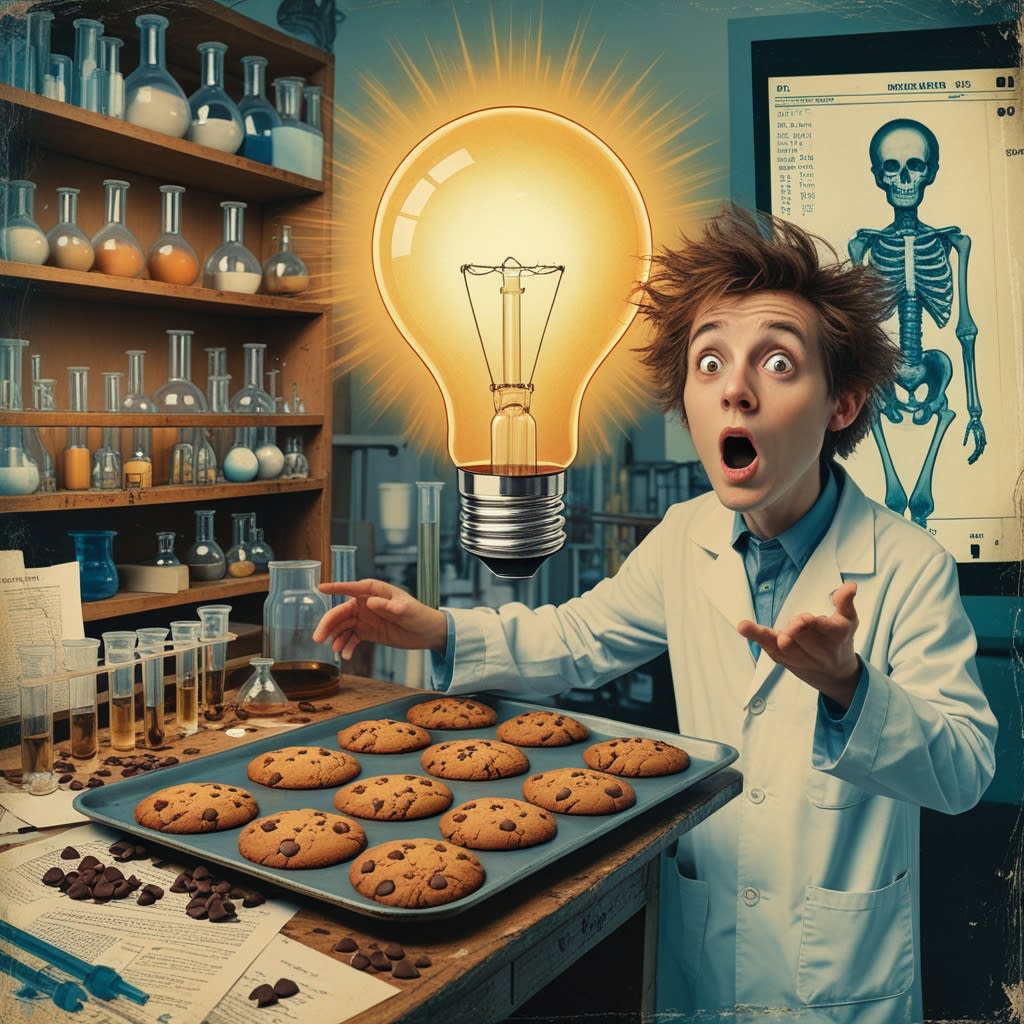
Sometimes, the greatest breakthroughs come when we least expect them. These ten discoveries were not the result of careful planning—but of fortunate accidents that changed history forever.
1. Penicillin
Subheading: The Mold That Saved Millions
In 1928, Alexander Fleming returned from vacation to find mold growing on a petri dish of Staphylococcus bacteria. To his surprise, the mold had killed the bacteria. He had stumbled upon the world’s first antibiotic: penicillin. This accidental discovery led to the development of drugs that have saved countless lives from infections that were once deadly. It marked the beginning of the antibiotic era and revolutionized modern medicine.
Before penicillin, bacterial infections like pneumonia, syphilis, gonorrhea, and even infected wounds were often fatal. Fleming’s discovery was refined and mass-produced during World War II, saving thousands of soldiers. Later work by Howard Florey and Ernst Boris Chain helped scale production of penicillin, earning all three the Nobel Prize in Physiology or Medicine in 1945. Today, penicillin remains one of the most widely used antibiotics, a true testament to the power of accidental discovery.
2. Microwave Oven
Subheading: A Melted Candy Bar Sparked a Kitchen Revolution
Percy Spencer, an engineer working with radar equipment during World War II, noticed a candy bar in his pocket had melted. Curious, he directed microwave energy at popcorn and watched it pop. Spencer had unknowingly discovered microwave cooking. The first commercial microwave ovens were introduced in 1946 and have since become a kitchen staple worldwide.
The initial microwave ovens were bulky and expensive, mainly used in restaurants. It wasn’t until the 1970s that compact and affordable models reached household kitchens. Microwaves changed how people cooked—making it faster, more convenient, and energy-efficient. They also sparked innovation in food packaging and pre-cooked meals, forever altering the food industry.
3. X-Rays
Subheading: Invisible Rays That Made the Human Body Transparent
In 1895, Wilhelm Conrad Roentgen was experimenting with cathode rays when he noticed a glow from a fluorescent screen nearby—even though the rays were blocked by heavy paper. He realized he had discovered a new type of ray, capable of passing through human flesh but not bone. His wife’s hand became the first X-ray image in history, revolutionizing diagnostics in medicine.
Roentgen’s accidental discovery earned him the first-ever Nobel Prize in Physics in 1901. X-rays quickly became an essential tool in medicine, allowing doctors to see broken bones, tumors, and foreign objects without surgery. Their applications expanded to industrial uses like checking for structural flaws in machinery and artworks. The X-ray was a leap forward in our ability to look inside the body—and the world.
4. Vulcanized Rubber
Subheading: A Chance Spill That Strengthened Rubber Forever
Charles Goodyear had spent years trying to make rubber more durable. One day, he accidentally dropped a mixture of rubber and sulfur onto a hot stove. The result was a strong, elastic material that didn’t melt in heat or freeze in cold. This process, called vulcanization, led to the modern rubber industry—transforming transportation, manufacturing, and even fashion.
Before vulcanization, rubber was sticky, smelly, and degraded quickly. Goodyear’s innovation allowed for tires, waterproof clothing, and thousands of rubber products. Despite his achievement, Goodyear died in debt—though his legacy lives on in every car tire and industrial seal that uses his accidental discovery.
5. Teflon
Subheading: The Non-Stick Accident That Changed Cookware
In 1938, Roy Plunkett was working on refrigerants when he discovered that a gas he stored in a canister had turned into a white, waxy solid. This substance was incredibly slippery and resistant to heat and chemicals. It was named Teflon and became the basis for non-stick cookware, aerospace applications, and protective coatings.
Teflon’s low friction and high resistance made it valuable beyond frying pans. NASA used it in space suits and wiring for its thermal resistance. Chemists appreciated its inertness in aggressive environments. Though later controversies surrounded its manufacturing process, Teflon remains a landmark invention born from an unexpected chemical reaction.
6. Post-it Notes
Subheading: A Weak Glue That Stuck Around
Spencer Silver, a scientist at 3M, was trying to develop a super-strong adhesive—but instead created a low-tack glue that could stick and be removed without residue. At first, it seemed useless. But colleague Art Fry realized it was perfect for bookmarks and reminders. In 1980, Post-it Notes were launched—and quickly became a global office essential.
Today, over 50 billion Post-it Notes are produced each year. Their success lies in their versatility—from reminders on refrigerators to color-coded brainstorming in corporate meetings. The invention shows how a perceived failure can become a beloved tool used in homes, schools, and offices worldwide.
7. Saccharin (Artificial Sweetener)
Subheading: A Sweet Mistake in a Dirty Lab
In 1879, chemist Constantin Fahlberg forgot to wash his hands after a day in the lab. When he sat down to dinner, he noticed the bread he touched tasted unusually sweet. He traced the taste back to a compound he had been working with—accidentally discovering saccharin, the first artificial sweetener. It paved the way for diet foods and sugar alternatives.
Saccharin helped millions manage their sugar intake, especially diabetics. It led to a boom in low-calorie products and influenced modern food science. Despite health controversies, saccharin remained on the market and paved the way for later sweeteners like aspartame and stevia.
8. Safety Glass
Subheading: A Shattered Flask That Didn’t Break Apart
In 1903, French chemist Édouard Bénédictus dropped a glass flask coated in plastic cellulose nitrate. The flask cracked but didn’t shatter. Intrigued, he realized this combination could be used to create shatter-resistant glass. Safety glass soon became essential in car windshields and public buildings.
Its invention greatly reduced injuries from broken glass in accidents. Today, safety glass is used in architecture, mobile devices, and protective eyewear. This accidental fall of a flask led to a breakthrough that protects lives every day.
9. Pacemaker
Subheading: A Circuit That Gave the Heart a Rhythm
Engineer Wilson Greatbatch was building a device to record heart sounds when he accidentally used the wrong resistor. The device began emitting pulses similar to a heartbeat. He realized this could help regulate irregular heart rhythms. Thus, the pacemaker was born—saving millions of lives by maintaining proper heartbeats in patients.
Earlier pacemakers were bulky and required external power. Greatbatch’s version was implantable and changed cardiac care. The modern pacemaker is a marvel of biomedical engineering, giving people longer, healthier lives—all from a wiring mistake.
10. Corn Flakes
Subheading: A Breakfast Revolution Born from a Forgotten Pot
In the late 1800s, John Harvey Kellogg and his brother Will left cooked wheat sitting out too long. When they returned, it had gone stale, but they rolled it out anyway—and it formed flakes. They baked the flakes, and to their surprise, it was tasty. With a few tweaks and a new grain—corn—corn flakes were created, changing breakfast forever.
Corn flakes became one of the first mass-produced cereals. The Kellogg Company, born from this accident, went on to revolutionize the breakfast industry. Their creation reflected a larger health movement of the time, promoting vegetarianism and low-meat diets.
Conclusion
These accidental discoveries prove that not all scientific progress is the result of careful planning. Sometimes, a curious mind and a fortunate accident can change the course of history. Whether in medicine, technology, or even breakfast food, these unexpected innovations remind us that breakthroughs often come when we least expect them—and that mistakes can be the beginning of greatness.
Each of these stories shares a common theme: observation, curiosity, and an open mind. None of these inventors set out to make what they did—but when the moment came, they recognized the value of the unexpected. These tales are a celebration of human ingenuity, the power of persistence, and the magic that can happen when science meets serendipity.
About the Creator
AI in Pulp and Paper Industry Market to hit USD 14.7 Billion By 2034
AI in Pulp and Paper Industry Market Overview The Global AI in Pulp and Paper Industry Market is projected to reach approximately USD 14.7 Billion by 2034, increasing from USD 7.1 Billion in 2024, reflecting a CAGR of 7.9% during the forecast period from 2025 to 2034.
By Roberto Cruma day ago in Futurism
The Mystery of the "Ghost Pikachu": 5 Heartbreaking Truths Behind Peakychu’s Pale Appearance
Before the first copy of Pokopia even hit shelves, the "Ghost Pikachu" had already broken the internet. When the trailers debuted a pale, hauntingly white version of the world’s most famous mouse, the fandom's collective head-canon went into overdrive, with viral theories suggesting a new Ghost-type regional variant or, more grimly, the literal spirit of a deceased companion. However, the truth buried in the game’s Pokédex is far more grounded and emotionally devastating. Peakychu isn't a supernatural phantom; it is a creature defined by a history of trauma, raising a haunting question: What happens to a Pokémon when it loses the very energy that defines its existence?
By Tech Horizons7 days ago in Futurism




Comments
There are no comments for this story
Be the first to respond and start the conversation.