
Mars: The Final Frontier?
Exploring the Realities and Myths of Colonizing the Red Planet


For centuries, humanity has gazed up at Mars with wonder. Its reddish surface and eerie, desert-like landscapes have inspired countless imaginations. From ancient civilizations to modern scientists, Mars has captured the minds of dreamers and explorers alike. But as the dream of human colonization inches closer to reality, we must ask: Is Mars truly the final frontier, or is it a far more complicated journey than we’ve been led to believe?
The Vision of a New World
In the early days of space exploration, Mars was often portrayed as a habitable world, waiting for us to discover its secrets. With its days lasting roughly 24.6 hours and the presence of frozen water at its poles, Mars appeared to be a close match to Earth. Stories of Martian civilizations and the potential for human settlement painted a future of interplanetary travel, where colonies on Mars would thrive, a second home for humankind.
Elon Musk’s SpaceX and NASA's Artemis missions have been at the forefront of pushing Mars exploration forward. SpaceX’s Starship, designed for long-duration flights, aims to make the dream of Mars colonization a reality. Musk’s ambitious plans include not just sending astronauts to Mars but building a self-sustaining city on its surface, a feat that sounds like science fiction come to life.
But the reality of life on Mars is far from what we might expect.

The Harsh Reality of Mars
While the idea of humans living on Mars excites many, the harsh conditions of the planet present challenges that can’t be ignored. Mars, though similar in size to Earth, has a much thinner atmosphere, composed mostly of carbon dioxide. This means that the planet lacks the oxygen we need to breathe and has very little protection from harmful radiation from the sun.
The average temperature on Mars hovers around -80 degrees Fahrenheit (-60 degrees Celsius), and it can drop to even more extreme lows. For comparison, Antarctica, the coldest place on Earth, rarely experiences temperatures colder than -70 degrees Fahrenheit. The idea of surviving in such frigid temperatures is a challenge in itself, but the planet also lacks liquid water on the surface, and the dust storms can last for weeks, blocking out sunlight and making solar power unreliable.
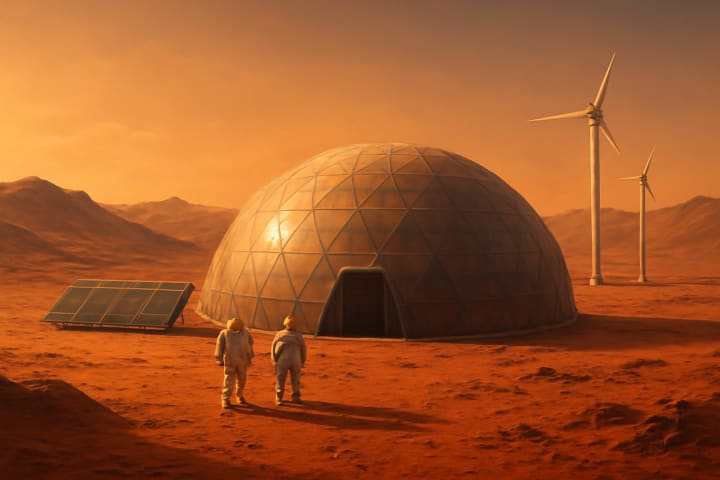
Another major hurdle is the planet’s gravity. Mars has only 38% of Earth’s gravity, which means that humans living there would experience muscle and bone loss over time, unless countermeasures like artificial gravity or regular physical exercise are implemented. Long-term habitation would require creating artificial environments to protect human life—habitats that can sustain oxygen, warmth, and a livable atmosphere.
The Technological Leap
To make Mars habitable, we would need technology far beyond what we currently possess. Spacecraft capable of carrying large payloads, advanced life support systems, and methods for generating food and water would all need to be developed and perfected.
One of the most promising solutions is the concept of in-situ resource utilization (ISRU), which involves using the materials available on Mars to support human life. For instance, extracting water from ice deposits beneath the Martian surface and converting the planet's carbon dioxide into oxygen for breathing. However, this technology is still in its infancy, and many experts warn that these methods may not be reliable enough for long-term survival.
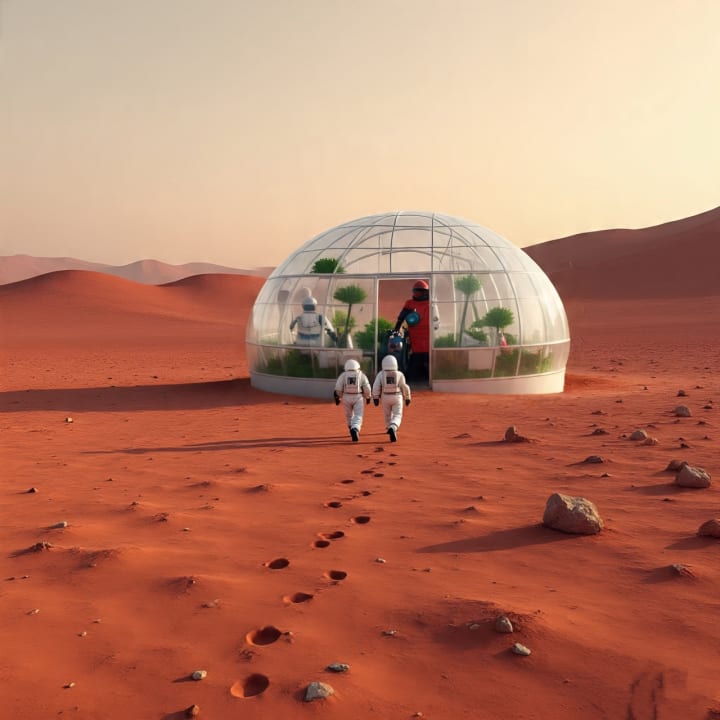
Another consideration is how to sustain a growing population on Mars. Agriculture would be essential to feed the settlers, but Mars’ soil is toxic, lacking the necessary nutrients for Earth plants to thrive. Scientists are exploring ways to grow food in greenhouses with carefully controlled environments, using hydroponics and other innovative techniques. But until such systems can be perfected, any colony would be entirely dependent on Earth for supplies.
The Psychological Strain of Isolation
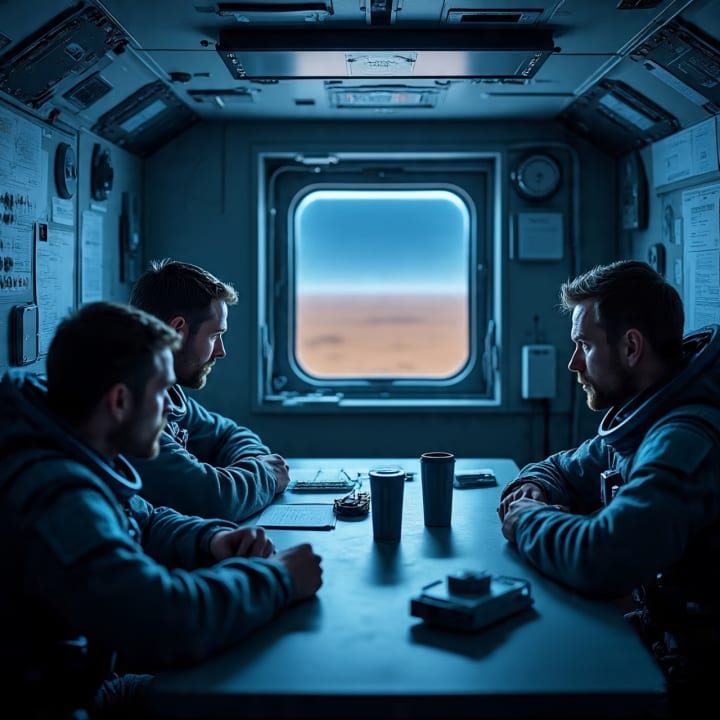
Beyond the physical challenges, living on Mars would present a severe psychological strain. The isolation from Earth, the confined spaces, and the constant pressure to survive in such a hostile environment could lead to mental health issues for astronauts. The longest missions to date have lasted around a year, but plans to establish permanent colonies could involve being cut off from Earth for years at a time.
Astronauts will need to remain in close quarters, which could create tension and stress. The potential for conflict among colonists, combined with the immense distance from Earth, would make any emergency a high-stakes situation. Psychologists are already studying how to prepare future Mars explorers for this extreme form of isolation.
The Dream or the Danger?
Despite these challenges, the dream of colonizing Mars continues to inspire millions. Some see it as humanity’s next logical step, a way to ensure the survival of our species in case of a catastrophe on Earth. Others believe it’s an unattainable dream that could cost lives and resources better spent on improving conditions here at home.
While the possibility of humans on Mars remains tantalizing, we must remember that the planet is no Earth-like paradise. It is a harsh, unforgiving world that requires a level of technology and resilience we have yet to master. However, with the rapid advancements in space exploration and technology, it’s possible that the Red Planet could one day become a second home—or a costly lesson in the limits of human ambition.

The Final Frontier... Or Just Another Step?
As we stand on the precipice of interplanetary travel, Mars offers a tantalizing glimpse into the future. Its barren, reddish surface is both a symbol of the untapped potential for human settlement and a stark reminder of the immense challenges we face. The dream of colonizing Mars has inspired countless scientists, engineers, and visionaries to push the limits of technology, striving for what once seemed impossible. Yet, the reality is far more complex.
Mars may not be the utopia some imagine, but it is a challenge worth tackling. It is an opportunity to test our resourcefulness, resilience, and ability to adapt in ways we never have before. Perhaps it is not just about escaping Earth—it is about proving that, even in the harshest environments, we can overcome adversity and forge a new chapter for humanity.
In the end, Mars is not just the final frontier because of its distance. It is the final frontier because it represents the ultimate test of human endurance, ingenuity, and spirit. And even if we never fully conquer its challenges, the pursuit of Mars may be the very thing that drives us forward, unlocking new technologies, new possibilities, and a deeper understanding of what it means to be human.
The journey to Mars is not just about reaching the Red Planet—it is about pushing the boundaries of what we can achieve and, in the process, discovering new horizons within ourselves.
About the Creator
Keep reading
More stories from Sahir E Shafqat and writers in Futurism and other communities.
Sahara's Solar Revolution
The Sahara is a place of extremes. Stretching across eleven countries in North Africa, it covers an area nearly the size of the United States. To many, it is a wasteland of scorching heat, endless sand dunes, and little else. But hidden in its golden vastness is something extraordinary: a potential energy treasure powerful enough to light up the entire world.
By Sahir E Shafqat6 months ago in Futurism
Why the Takaful Market Is Set to Soar: A Guide for Investors and Consumers
The Rise of Takaful: How Islamic Insurance Is Reshaping Global Finance For centuries, conventional insurance has operated on a simple promise: pay now, collect later if something goes wrong. But for hundreds of millions of Muslims around the world, that promise comes with a catch — and it has to do with faith.
By Frank Morgan4 days ago in Futurism




Comments
There are no comments for this story
Be the first to respond and start the conversation.