
Magnetic Pulse Rotary Engines: Engineering the Future of Motion
Space

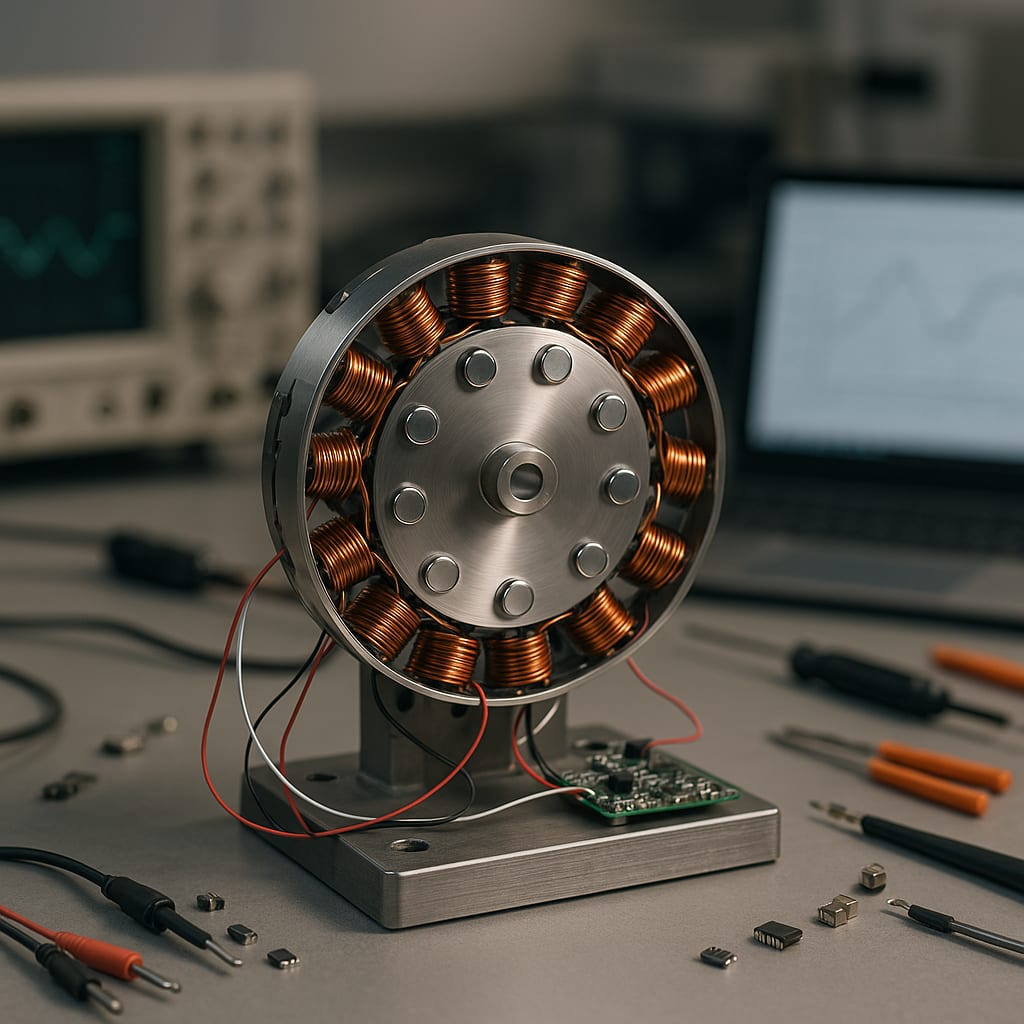
In the global race for cleaner, smarter, and more efficient energy, engineers and inventors constantly search for technologies that could transform how we generate and use power. Among the most intriguing concepts is the magnetic pulse rotary engine — a device that turns magnetic energy into mechanical motion through a carefully timed series of electromagnetic impulses.
It sounds like something out of a sci-fi novel — a motor that spins using magnetic fields instead of fuel or friction — but this technology is more real (and more complex) than most people think. Let’s explore how it works, what makes it so promising, and why it still hasn’t replaced your car engine just yet.
The Core Idea: Motion Without Contact
At the heart of a magnetic pulse rotary engine is a simple yet powerful idea: using magnetism to create motion without mechanical contact.
Traditional motors rely on brushes, gears, and bearings — parts that rub together, wear down, and waste energy as heat. Magnetic pulse engines, on the other hand, use fields instead of friction.
The basic setup includes:
- A rotor, fitted with permanent magnets;
- A stator, equipped with coils that can generate electromagnetic pulses;
- A controller, which manages when and how these pulses fire.
When electricity runs through the coils, they create brief but powerful magnetic fields that either attract or repel the magnets on the rotor. By timing these impulses precisely, the rotor keeps spinning — quietly, efficiently, and with minimal wear.
Think of it like a magnetic “dance,” where attraction and repulsion are perfectly choreographed to keep the system in motion.
The Power of the Pulse
What makes this system special is that it doesn’t rely on continuous current, like a traditional electromotor. Instead, it uses short magnetic pulses — controlled bursts of energy that deliver maximum force for minimal power consumption.
Each pulse acts like a small push on a merry-go-round: well-timed, efficient, and only applied when it’s needed. This pulsed operation reduces energy waste and limits heating, which can be a major problem in conventional motors.
Because the magnetic fields act instantaneously and require no direct contact, the engine runs almost silently — making it ideal for applications where noise and vibration are critical, such as drones, robotics, or even spacecraft components.
Real-World Applications and Experiments
- While “magnetic pulse rotary engine” sounds exotic, versions of this idea already exist in everyday life.
- Brushless DC motors (BLDC) — found in electric scooters, computer fans, and drones — use a similar principle of timed electromagnetic switching.
- Hybrid vehicle starters often rely on magnetic impulse mechanisms for smooth, contactless operation.
Research prototypes in labs around the world are testing high-efficiency pulse-controlled motors that could one day drive pumps, wheels, or even generators.
However, despite the progress, these systems haven’t yet surpassed traditional electric motors in terms of raw efficiency. The main challenge lies in balancing energy input versus magnetic field strength. Generating a strong magnetic pulse still requires a noticeable amount of electricity, and minimizing those losses is where most of today’s engineering effort is focused.
The “Free Energy” Myth
Whenever magnetic engines are mentioned, one common misconception inevitably appears: the idea of a perpetual motion machine — a device that runs forever without consuming energy.
Unfortunately (or fortunately, depending on your view of physics), that’s impossible. The laws of thermodynamics make it clear that no system can produce more energy than it consumes.
Yes, magnets can provide continuous force, but that force is not infinite. A magnetic pulse rotary engine still needs an external power source to energize the coils and control the pulses. Its advantage lies not in breaking the laws of physics, but in using energy more intelligently.
In short: these engines aren’t “free-energy” devices — they’re smart-energy devices.
Why the Future Still Looks Bright
Even though we’re far from a mass-market magnetic pulse engine, the technology has exciting potential. Advances in power electronics, AI-based control systems, and superconducting materials are making it possible to achieve stronger magnetic fields with far less energy.
Imagine:
- Ultra-quiet micro-motors for medical nanorobots or precision instruments;
- Compact propulsion units for electric drones with longer flight times;
- Maintenance-free generators for space exploration or remote installations.
In these applications, efficiency, reliability, and silence matter far more than brute power — and that’s where magnetic pulse systems could shine.
As semiconductor switching technology improves, engineers can control magnetic impulses with nanosecond precision, squeezing every possible bit of performance from each electron. The result could be a new generation of motors that are lighter, cleaner, and virtually frictionless.
The Bottom Line
Magnetic pulse rotary engines represent a fascinating intersection of physics, engineering, and imagination. They aren’t “perpetual motion machines,” but they do push the boundaries of what’s possible with electromagnetic control.
By converting electric energy into rotational motion with incredible precision and minimal loss, they could redefine how we think about movement itself — not just in machines, but in our energy systems as a whole.
Whether they become the backbone of future transportation or remain a niche solution for specialized tech, one thing is clear: the age of magnetic motion has already begun, and it’s spinning faster every year.
About the Creator
Keep reading
More stories from Holianyk Ihor and writers in Futurism and other communities.
Fusion Drive: The Power Source That Could Take Us Between Worlds
For over half a century, humans have dreamed of venturing beyond the Moon — to Mars, the outer planets, and maybe even the stars themselves. Yet our greatest limitation isn’t imagination. It’s propulsion. Chemical rockets, the same technology that took Apollo to the Moon, remain the backbone of space travel today. They’re powerful but painfully inefficient — guzzling vast amounts of fuel for tiny amounts of payload.
By Holianyk Ihor3 months ago in Futurism
About Binding Prometheus
I want to start actively advocating on behalf of my own work, and the most valuable part of my canon is, without a doubt, Binding Prometheus, the play I have been working on since 2019 and only finished in 2023 as part of my MA. The play itself is an amalgamation of a million different inspirations. On one end, it evokes the Ancient Greek myth-play, deriving its own title from the earliest extant work of Western drama we have, Aeschylus’s Prometheus Bound. On the other end, it borrows significantly from the sci-fi bulwarks from over the years, namely Mary Shelley’s Frankenstein and Karel Capek’s Rossum’s Universal Robots. The play could be an episode of Black Mirror, I fear. I don’t know. I’ve only ever seen one episode of Black Mirror.
By Steven Christopher McKnight15 days ago in Futurism
United States Asparagus Market Size & Forecast 2026–2034
The United States asparagus market is poised for stable and sustained growth over the coming decade as consumers increasingly embrace nutritious, fresh, and minimally processed foods. According to Renub Research, the U.S. asparagus market is expected to grow from US$ 9.04 billion in 2025 to US$ 13.22 billion by 2034, registering a compound annual growth rate (CAGR) of 4.32% from 2026–2034. This expansion reflects the growing importance of vegetables in everyday diets, rising demand for organic and clean-label foods, and the continued popularity of asparagus in both home kitchens and foodservice establishments.
By jaiklin Fanandish7 days ago in Futurism


Comments
There are no comments for this story
Be the first to respond and start the conversation.