
United States Tissue Paper Market Size and Forecast 2025–2033
Hygiene Awareness, Sustainability Innovation, and Expanding Retail Channels Drive Long-Term Industry Growth

United States Tissue Paper Market Outlook
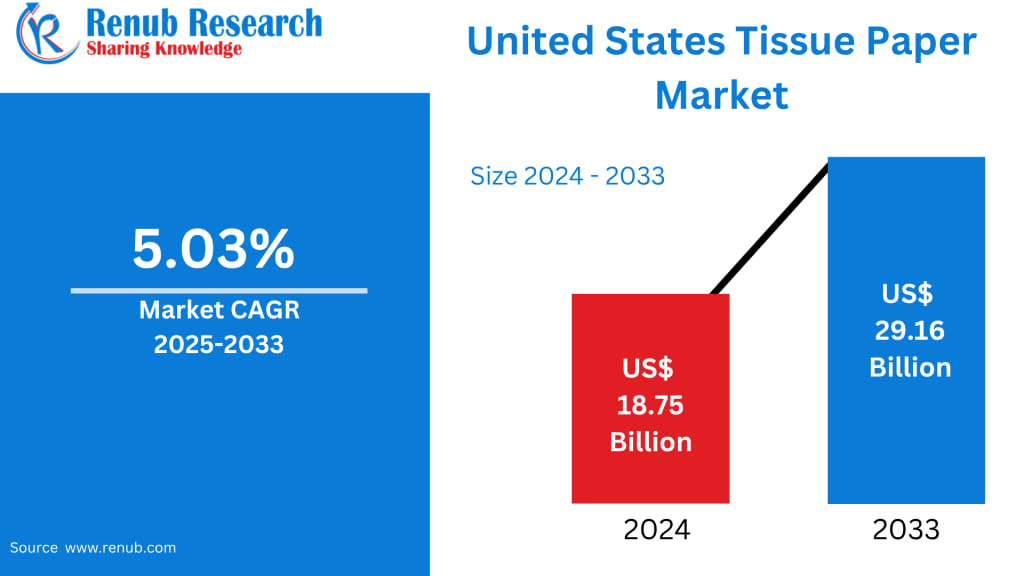
The United States Tissue Paper Market is expected to reach US$ 29.16 billion by 2033, growing from US$ 18.75 billion in 2024, at a compound annual growth rate (CAGR) of 5.03% from 2025 to 2033. This steady expansion reflects increasing hygiene awareness, rising demand for disposable products across households and institutions, and strong innovation in eco-friendly and premium tissue paper offerings. As lifestyles become more convenience-oriented and sustainability becomes a key purchasing factor, tissue paper products are evolving from basic commodities into branded, value-added essentials.
Tissue paper plays a central role in modern hygiene and sanitation practices, serving both residential and commercial needs. From toilet paper and facial tissues to paper towels, napkins, and specialty wipes, tissue products are integral to daily routines in homes, offices, healthcare facilities, hospitality establishments, and educational institutions. Growth is further supported by expanding retail formats, strong penetration of e-commerce, and manufacturers’ focus on product differentiation through softness, absorbency, multi-ply designs, and environmentally responsible sourcing.
United States Tissue Paper Industry Overview
The U.S. tissue paper industry encompasses the production, processing, and distribution of paper-based hygiene products, including facial tissues, toilet paper, paper towels, napkins, and specialty wipes. The market is characterized by the presence of large multinational manufacturers alongside regional and private-label producers, offering products for household, commercial, and industrial applications.
The industry relies on raw materials such as virgin pulp, recycled fibers, and increasingly, alternative plant-based sources. Manufacturing processes include pulping, bleaching, drying, converting, and packaging. Over the past decade, technological improvements have enhanced production efficiency, product softness, absorbency, and strength, while also reducing water and energy consumption. Automated converting lines, advanced quality control systems, and sustainable packaging solutions are becoming standard across leading facilities.
Distribution channels are diversified, ranging from mass retail chains and warehouse clubs to e-commerce platforms, wholesalers, and institutional supply networks serving hotels, restaurants, offices, hospitals, and educational institutions. Consumer preferences strongly shape product portfolios, with growing demand for premium multi-ply tissues, fragrance-enhanced products, and eco-certified options made from recycled or responsibly sourced fibers.
Branding, packaging innovation, and functional differentiation—such as extra-soft textures, high absorbency, and compact formats—play a critical role in purchasing decisions. Meanwhile, regulatory frameworks related to deforestation, waste management, and chemical usage are encouraging companies to adopt certified sourcing, reduce environmental footprints, and invest in circular economy practices. Competitive dynamics include mergers, acquisitions, and strategic partnerships with retailers, reinforcing the industry’s evolution toward sustainability, operational efficiency, and long-term growth.
Key Factors Driving the United States Tissue Paper Market Growth
Rising Hygiene Awareness and Health Consciousness
Increasing consumer focus on cleanliness and disease prevention continues to be a primary growth driver. Tissue paper products are widely perceived as convenient, hygienic, and disposable solutions for personal and public use. Heightened awareness of bacterial transmission in shared spaces has made facial tissues, paper towels, and napkins indispensable in homes, offices, schools, and healthcare facilities.
Public health campaigns, workplace hygiene protocols, and institutional standards further boost routine consumption. The preference for single-use paper products in food service and healthcare settings reinforces demand. In response, manufacturers are introducing softer, more absorbent, and multifunctional tissue products designed for both residential and professional environments. This sustained emphasis on hygiene supports recurring purchases and long-term market expansion.
Growth of Retail and E-commerce Channels
The expansion of modern retail formats—including supermarkets, hypermarkets, convenience stores, and warehouse clubs—has significantly improved tissue paper accessibility across urban and semi-urban areas. At the same time, e-commerce platforms are reshaping purchasing behavior by offering subscription services, bulk packaging, and home delivery.
Online channels enable manufacturers to directly engage consumers, gather insights, and launch customized or limited-edition products. Digital promotions, product reviews, and targeted marketing campaigns further influence buying decisions. Retailers increasingly stock a wide range of price tiers, from economy packs to premium and eco-friendly variants, driving higher household penetration and volume growth. These evolving distribution models enhance availability, convenience, and brand visibility nationwide.
Innovation and Sustainability Initiatives
Product innovation remains central to competitive differentiation in the U.S. tissue paper market. Manufacturers continuously enhance softness, strength, and absorbency through advanced fiber blends and multi-ply construction. Premium tissues, scented napkins, specialty wipes, and compact packaging formats cater to diverse consumer lifestyles.
Equally important is the industry’s focus on sustainability. Recycled fibers, biodegradable packaging, chlorine-free bleaching, and certifications such as FSC or recycled-content labels appeal to environmentally conscious consumers. Companies are investing in resource-efficient manufacturing technologies that reduce water usage, energy consumption, and waste. Sustainability-driven branding strengthens customer loyalty, supports premium pricing, and aligns with regulatory expectations, making innovation and environmental responsibility key pillars of long-term growth.
Challenges in the United States Tissue Paper Market
Raw Material Price Volatility
Tissue paper production depends heavily on pulp sourced from virgin wood, recycled fibers, and alternative plant materials. Price fluctuations driven by timber supply constraints, recycling market dynamics, and transportation costs directly affect production economics. Environmental regulations, climate-related disruptions, and logistics bottlenecks can further strain raw material availability.
Smaller manufacturers may face margin pressures when input costs rise, limiting their ability to compete on price. Effective procurement strategies, diversified sourcing, long-term supplier contracts, and inventory optimization are critical to maintaining stable operations while preserving product affordability.
Environmental and Regulatory Compliance
The tissue paper industry faces increasing scrutiny regarding deforestation, water usage, chemical processing, and waste management. Compliance with environmental regulations and sustainability certifications often requires substantial capital investment in wastewater treatment systems, energy-efficient equipment, and eco-friendly packaging.
Failure to meet regulatory standards can result in penalties, reputational risks, or loss of key retail partnerships. Balancing environmental responsibility with operational efficiency remains a complex challenge. Companies must continually adapt to evolving regulations while managing costs and maintaining consistent product quality.
United States Tissue Paper Market Overview by States
Regional consumption patterns vary based on population density, commercial activity, tourism, and distribution infrastructure. Urbanized states and regions with strong hospitality, healthcare, and institutional sectors exhibit higher demand.
California Tissue Paper Market
California represents one of the largest tissue paper markets in the U.S., driven by its vast population and strong commercial base. Urban households show growing preference for premium and eco-friendly products, while healthcare, education, and hospitality sectors generate significant institutional demand. Retail chains and e-commerce platforms ensure wide product availability. Strict environmental regulations influence sourcing and production practices, encouraging sustainable innovation. California’s emphasis on green products makes it a strategic market for premium and certified tissue paper brands.
Texas Tissue Paper Market
Texas benefits from rapid population growth, urban expansion, and diversified commercial activity. Residential demand spans toilet paper, paper towels, and facial tissues, while offices, schools, and healthcare institutions drive B2B consumption. Efficient logistics networks and strong retail penetration support consistent availability. Manufacturers focus on product variety, competitive pricing, and sustainability credentials to meet the needs of a diverse consumer base. Texas remains a high-growth state market supported by demographic trends and evolving lifestyle preferences.
New York Tissue Paper Market
New York’s dense population and extensive business activity make it a core market for tissue paper products. Urban consumers favor premium, multi-ply, and eco-certified options, while offices, hotels, hospitals, and restaurants contribute to strong institutional demand. Advanced retail infrastructure and online platforms enhance accessibility. Seasonal promotions, bulk packs, and subscription services drive repeat purchases. Sustainability compliance and efficient supply chains are crucial for maintaining market presence in this highly competitive region.
Florida Tissue Paper Market
Florida’s large population, thriving tourism industry, and expansive healthcare sector shape tissue paper demand. Hotels, restaurants, and medical facilities generate substantial institutional consumption, while urban households increasingly prefer soft, durable, and premium products. Seasonal tourism peaks influence demand cycles, requiring agile supply chains. Sustainability considerations are growing in importance, with recycled and eco-certified products gaining popularity. Florida offers consistent growth opportunities driven by demographic diversity and strong commercial activity.
Market Segmentation
By Product Type
Paper Tissue (made from pulp)
Wet Wipes
Facial Tissue
Others
By Application
At Home
Away from Home (AFH)
By Distribution Channel
Online
Offline
By States
California, Texas, New York, Florida, Illinois, Pennsylvania, Ohio, Georgia, New Jersey, Washington, North Carolina, Massachusetts, Virginia, Michigan, Maryland, Colorado, Tennessee, Indiana, Arizona, Minnesota, Wisconsin, Missouri, Connecticut, South Carolina, Oregon, Louisiana, Alabama, Kentucky, and Rest of the United States.
Competitive Landscape and Key Players
The U.S. tissue paper market is moderately consolidated, with multinational corporations, private-label brands, and regional manufacturers competing across product segments. Companies focus on brand equity, innovation, distribution partnerships, and sustainability leadership.
Key Players Analyzed (with five viewpoints: Overview, Key Person, Recent Developments, SWOT Analysis, and Revenue Analysis):
Procter & Gamble (Cascade)
Kimberly-Clark
Essity
Kirkland Signature (Costco)
Georgia-Pacific
Solaris Paper
Seventh Generation
Charmin Paper
Angel Soft
Strategic priorities among market leaders include expanding recycled and responsibly sourced product lines, investing in automated manufacturing, strengthening private-label partnerships with retailers, and enhancing direct-to-consumer channels. Mergers, acquisitions, and capacity expansions remain key tactics for reinforcing market share and improving operational efficiency.
Future Outlook
From 2025 to 2033, the United States Tissue Paper Market is set to grow steadily as hygiene awareness becomes increasingly embedded in daily life and institutional practices. Premiumization, sustainability-driven innovation, and digital retail expansion will shape product development and marketing strategies. At the same time, manufacturers must navigate raw material volatility and regulatory compliance while meeting evolving consumer expectations for quality, value, and environmental responsibility.
Emerging opportunities include biodegradable packaging, plant-based fiber alternatives, compact and travel-friendly formats, and subscription-based distribution models. Institutional demand from healthcare, hospitality, and education will continue to underpin volume growth, while branding and eco-certifications will drive differentiation in the competitive household segment.
Final Thoughts
The U.S. tissue paper industry has evolved far beyond basic hygiene products, becoming a dynamic consumer goods market defined by innovation, sustainability, and convenience. With the market projected to rise from US$ 18.75 billion in 2024 to US$ 29.16 billion by 2033, the outlook remains strong. Companies that successfully combine product quality, environmental responsibility, and efficient distribution will be best positioned to capture long-term value. As consumer priorities continue to shift toward health, cleanliness, and eco-friendly living, tissue paper will remain a staple of everyday life—and a resilient growth segment within the broader paper and packaging industry.
About the Creator
Keep reading
More stories from Aaina Oberoi and writers in Futurism and other communities.
United States AI Server Market Size & Forecast 2026–2034
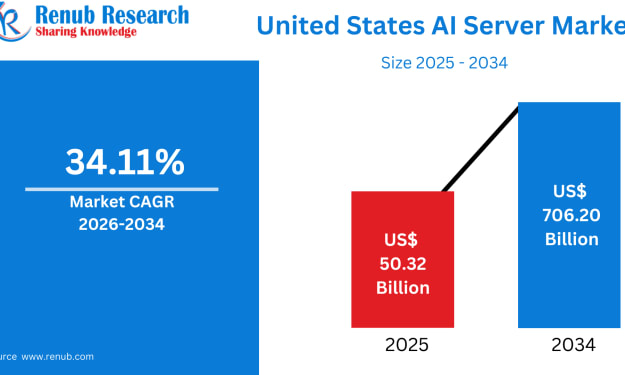
United States AI Server Market at a Glance The United States AI server market is entering a historic growth phase. According to Renub Research, the market will expand from US$ 50.32 Billion in 2025 to US$ 706.20 Billion by 2034, representing a powerful CAGR of 34.11% from 2026 to 2034. This surge is being driven by the rapid expansion of artificial intelligence workloads across hyperscale data centers, cloud platforms, and enterprise IT environments. From generative AI and high-performance computing (HPC) to big data analytics and automation, demand for advanced GPU- and accelerator-based server infrastructure is transforming how organizations build and operate digital systems.
By Aaina Oberoi3 days ago in Futurism
About Binding Prometheus
I want to start actively advocating on behalf of my own work, and the most valuable part of my canon is, without a doubt, Binding Prometheus, the play I have been working on since 2019 and only finished in 2023 as part of my MA. The play itself is an amalgamation of a million different inspirations. On one end, it evokes the Ancient Greek myth-play, deriving its own title from the earliest extant work of Western drama we have, Aeschylus’s Prometheus Bound. On the other end, it borrows significantly from the sci-fi bulwarks from over the years, namely Mary Shelley’s Frankenstein and Karel Capek’s Rossum’s Universal Robots. The play could be an episode of Black Mirror, I fear. I don’t know. I’ve only ever seen one episode of Black Mirror.
By Steven Christopher McKnight11 days ago in Futurism


Comments
There are no comments for this story
Be the first to respond and start the conversation.