
Leveraging AI in Climate Change Mitigation: A New Frontier
The Intersection of AI and Climate Change
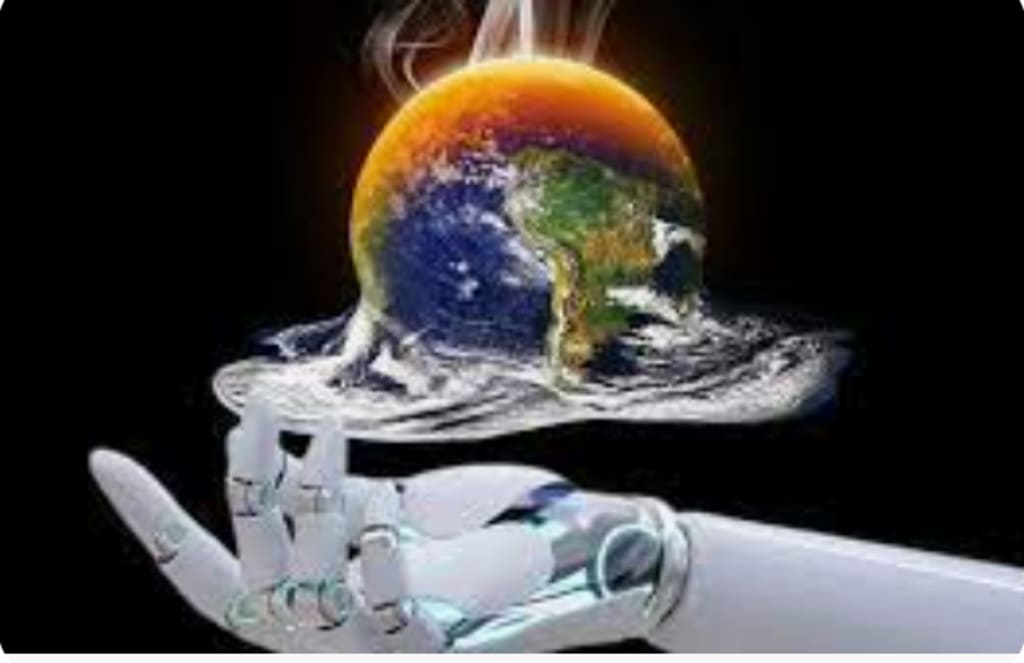
Climate change is undeniably one of the most pressing issues of our time. As we grapple with rising global temperatures, unpredictable weather patterns, and increasing sea levels, the need for effective solutions is more urgent than ever. Among the various technologies being used to combat climate change, Artificial Intelligence (AI) holds particular promise. This article explores the unique ways in which AI is being leveraged in climate change mitigation.
The Intersection of AI and Climate Change
AI, with its ability to analyze vast amounts of data and make predictions, can offer invaluable insights into complex climate systems. It can also help identify the most effective strategies for reducing greenhouse gas emissions, adapt to changes, and even directly capture carbon from the atmosphere.
Predicting and Understanding Climate Patterns
One of the primary ways AI is used in climate science is through climate modeling. Traditional climate models require vast computational resources and time to simulate the earth's climate systems accurately. However, AI can significantly speed up this process. By training deep learning models on large datasets from historical climate patterns, scientists can generate accurate climate predictions much faster. These AI-enhanced models can provide more accurate predictions of future climate scenarios, helping policymakers make informed decisions about climate change mitigation and adaptation strategies.
Optimizing Energy Consumption
AI can also play a significant role in reducing greenhouse gas emissions by optimizing energy consumption. AI algorithms can predict energy demand patterns and adjust energy supply accordingly, minimizing the need for energy storage and reducing reliance on fossil fuels. Moreover, AI can optimize the operation of smart grids, integrating renewable energy sources more effectively and improving the overall efficiency of the energy system.
Carbon Capture and Storage
Beyond prediction and optimization, AI is also being used in innovative ways to directly mitigate climate change. One such approach is carbon capture and storage (CCS), a process that involves capturing carbon dioxide at its emission source, transporting it to a storage site, and depositing it where it won't enter the atmosphere. AI can optimize this process, identifying the most effective methods and locations for carbon capture and storage.
Challenges and Opportunities
Despite its potential, the use of AI in climate change mitigation is not without challenges. AI models require large amounts of data and computational resources, which can be costly and energy-intensive. There are also concerns about the transparency and explainability of AI models, especially when they are used to inform policy decisions.
Nevertheless, the opportunities presented by AI for climate change mitigation are immense. As AI technology continues to improve and become more accessible, its application in climate science is likely to expand.
Conclusion
In the face of climate change, the need for innovative, effective solutions has never been more urgent. AI, with its ability to analyze complex systems, predict future scenarios, and optimize processes, offers a powerful tool in this fight.
Leveraging AI in climate change mitigation represents an exciting frontier in both environmental science and technology. As we continue to refine these technologies and work towards their ethical and equitable use, we move closer to a future where the impact of climate change can be effectively mitigated, and our planet safeguarded for future generations. Indeed, in the battle against climate change, AI might just be the secret weapon we need.
About the Creator
Geoffrey Muriuki
Geoff is a tech enthusiast with interest in the transformative powers of Artificial Intelligence and blockchain. He strives to demystify the world of AI and blockchain. He believes in the potential of technology to shape a better future.
Keep reading
More stories from Geoffrey Muriuki and writers in Futurism and other communities.
The Use of AI in Automated Vehicles: Shaping the Future of Transportation
Artificial Intelligence (AI) has already revolutionized numerous sectors of our society, and one of its most promising applications is in the domain of transportation. Automated vehicles, or self-driving cars, have long been the stuff of science fiction, but through the power of AI, they are rapidly becoming a reality. This article delves into the role of AI in automated vehicles and how it's shaping our future on the roads.
By Geoffrey Muriuki3 years ago in Futurism
About Binding Prometheus
I want to start actively advocating on behalf of my own work, and the most valuable part of my canon is, without a doubt, Binding Prometheus, the play I have been working on since 2019 and only finished in 2023 as part of my MA. The play itself is an amalgamation of a million different inspirations. On one end, it evokes the Ancient Greek myth-play, deriving its own title from the earliest extant work of Western drama we have, Aeschylus’s Prometheus Bound. On the other end, it borrows significantly from the sci-fi bulwarks from over the years, namely Mary Shelley’s Frankenstein and Karel Capek’s Rossum’s Universal Robots. The play could be an episode of Black Mirror, I fear. I don’t know. I’ve only ever seen one episode of Black Mirror.
By Steven Christopher McKnight19 days ago in Futurism
Indonesia Diabetes Drugs Market Expands with Rising Demand and Favorable Regulations
Indonesia diabetes drugs market reached USD 1.2 Billion in 2025 and is projected to climb to USD 1.7 Billion by 2034. This growth comes as Indonesia grapples with a diabetes epidemic that now affects over 20 million adults, making it one of the countries with the highest diabetes burden in the Western Pacific region.
By Abhishek Dixit7 days ago in Futurism



Comments
There are no comments for this story
Be the first to respond and start the conversation.