
Indonesia Diabetes Drugs Market Expands with Rising Demand and Favorable Regulations
Indonesia’s diabetes drugs market hit USD 1.2B in 2025 and is set to reach USD 1.7B by 2034. Rising diabetes cases, wider insurance coverage, and public health campaigns—such as national screening programs—are driving steady growth.


Indonesia diabetes drugs market reached USD 1.2 Billion in 2025 and is projected to climb to USD 1.7 Billion by 2034. This growth comes as Indonesia grapples with a diabetes epidemic that now affects over 20 million adults, making it one of the countries with the highest diabetes burden in the Western Pacific region.
Key Market Insights
- Base Year: 2025
- Historical Period: 2020-2025
- Forecast Period: 2026-2034
- Market Size (2025): USD 1.2 Billion
- Projected Market Size (2034): USD 1.7 Billion
The Diabetes Crisis Reshaping Indonesian Healthcare
Indonesia is facing a profound public health transformation. According to recent national health surveys, diabetes prevalence has climbed dramatically from 5.7% in 2007 to 11.7% in 2023. That translates to approximately 20 million Indonesians living with the condition today. Even more concerning, research suggests that roughly 80.9% of those with diabetes in Indonesia are not receiving any treatment, creating a massive unmet medical need.
The numbers tell a sobering story about lifestyle shifts across the archipelago. As urbanization accelerates and traditional diets give way to Western eating patterns, diabetes has become one of the top three causes of death in the country. The aging population compounds this challenge, with older adults showing persistently high diabetes rates despite some improvements among younger generations.
Universal Health Coverage: A Game Changer for Access
One of the most significant developments reshaping the diabetes drugs landscape is Indonesia's remarkable achievement in health insurance coverage. The Jaminan Kesehatan Nasional (JKN) program, launched in 2014, now covers approximately 278 million people or 98% of Indonesia's population as of April 2025. This makes JKN the world's largest single-payer health insurance system.
The impact on diabetes care has been substantial. Between 2013 and 2018, the rollout of JKN led to a huge surge in diabetes treatment uptake, as financial barriers to accessing medications were dramatically reduced. The program runs specialized chronic disease management initiatives like PROLANIS and referral programs that ensure diabetes patients receive regular monitoring and medication refills every three to four months.
However, healthcare infrastructure hasn't always kept pace with this expanded coverage. In 2022, Indonesia had just 3.84 health workers per 1,000 people on average, with wide variations across districts. Physician distribution remains heavily skewed toward urban areas, with 1.10 general practitioners per 1,000 people in cities compared to just 0.27 in rural regions.
Digital Health Revolution Reaches Remote Islands
Indonesia's unique geography, spanning thousands of islands, has historically made healthcare delivery challenging. Digital health platforms are now bridging these gaps in remarkable ways. The COVID-19 pandemic accelerated adoption of telemedicine services like Halodoc, Alodokter, and GrabHealth, which now serve millions of users across the archipelago.
These platforms offer virtual consultations, medication delivery, and appointment booking, proving particularly valuable for diabetes patients in remote areas who previously had limited access to specialist care. Mobile health apps provide functional support through medication reminders, dose monitoring, and educational materials, directly contributing to improved treatment adherence and patient outcomes.
The government has also embraced digital tools. The SATUSEHAT system, Indonesia's integrated health data platform, now captures comprehensive diabetes data from healthcare facilities nationwide. Through the SATUSEHAT IndonesiaKu (ASIK) application, community health workers in primary care facilities can record individual screening results, enabling better tracking and prevention efforts.
Biosimilar Insulin: Making Treatment More Affordable
The emergence of biosimilar insulin products represents a major shift in market dynamics. With high-quality biosimilar regulatory approvals proving these products to be as safe and effective as branded versions, healthcare providers are increasingly comfortable prescribing these alternatives. This is driving both competition and expanding patient access throughout Indonesia.
The Indonesian government has actively encouraged biosimilar adoption as part of efforts to control healthcare costs while maintaining treatment quality. For the JKN program, which must balance expanding demand for diabetes treatment with fiscal sustainability, biosimilars offer a practical solution to serve more patients without proportionally increasing drug expenditures.
Strategic Partnerships Strengthen Local Manufacturing
Recent developments highlight Indonesia's push toward greater pharmaceutical self-sufficiency. In a significant move, global pharmaceutical leader Novo Nordisk partnered with Indonesian drug manufacturer Bio Farma to enhance national production of diabetes medications. This collaboration, which follows the government's Health Service Resilience scheme, aims to make medicines more accessible across the country.
According to Indonesia's Health Minister, the country has reformed 10,000 primary healthcare facilities for better diabetes management. The strategic partnership with international pharmaceutical companies is expected to significantly increase domestic capabilities in producing affordable, high-quality diabetes medications while simultaneously enhancing awareness about the importance of chronic disease management.
Currently, Indonesia still imports roughly 90% of its active pharmaceutical ingredients (APIs), particularly for critical medications including diabetes drugs. The government has set ambitious targets to reduce this dependency, with a 2030 goal of bringing API imports below 60% for priority therapeutic categories including anti-diabetic medications.
Breaking Down the Market: Product Types and Channels
The Indonesia diabetes drugs market encompasses several key product categories. Insulins remain fundamental, subdivided into basal or long-acting insulins, bolus or fast-acting insulins, traditional human insulins, and increasingly, biosimilar insulins. Oral anti-diabetic drugs represent the largest segment and include biguanides like metformin, alpha-glucosidase inhibitors, SGLT-2 inhibitors, DPP-4 inhibitors, sulfonylureas, and meglitinides.
Non-insulin injectable drugs such as GLP-1 receptor agonists and amylin analogues are gaining traction, particularly for patients who need more intensive glycemic control. Combination drugs, both insulin combinations and oral combinations, offer convenient options for patients requiring multiple medications.
Distribution occurs through three main channels. Hospital pharmacies handle the bulk of diabetes medication dispensing, particularly for patients enrolled in the JKN chronic disease management programs. Retail pharmacies provide crucial access points in both urban and rural communities. Online pharmacies, though still smaller in volume, are experiencing rapid growth as digital health adoption accelerates.
Regional Variations Across the Archipelago
Geographic analysis reveals significant disparities in diabetes prevalence and treatment access across Indonesia's provinces. Java, as the most populous and economically developed region, naturally dominates market share. Sumatra, Kalimantan, and Sulawesi each present distinct characteristics in terms of urbanization levels, healthcare infrastructure, and disease burden.
Notably, diabetes diagnosis rates vary dramatically across subnational levels. In Jakarta, approximately 3.1% of the population has been diagnosed with diabetes, compared to just 0.2% in Papua Pegunungan. These disparities reflect both differences in actual disease prevalence and variations in healthcare access and diagnostic capacity.
Innovation in Drug Development and Approval
Recent regulatory approvals signal continued innovation in the Indonesian market. In February 2025, Sanofi received FDA approval for MERILOG, the first rapid-acting insulin aspart biosimilar, designed to improve glycemic control in adults and pediatric patients. Such developments expand treatment options while potentially reducing costs.
Daewoong Pharmaceutical Indonesia achieved Good Manufacturing Practice (GMP) certification in September 2025 for its stem cell, natural killer cell, and exosome therapies, marking significant advancement in the nation's cell therapy sector. While not diabetes-specific, this certification reflects Indonesia's growing capabilities in advanced biopharmaceutical production.
In December 2024, Recce Pharmaceuticals received approval from Indonesia's Badan POM to initiate a Phase 3 clinical trial for RECCE 327, a topical gel for diabetic foot infections. LeaderMed Group and Combiphar also entered a joint venture to begin Phase 3 trials for LM-008, a novel GLP-1 dual agonist, addressing Indonesia's diabetes and obesity challenges affecting more than 36 million individuals.
Market Segmentation
By Type:
- Insulins (Basal or Long Acting, Bolus or Fast Acting, Traditional Human, Biosimilar)
- Oral Anti-Diabetic Drugs (Biguanides, Alpha-Glucosidase Inhibitors, Dopamine D2 Receptor Agonist, SGLT-2 Inhibitors, DPP-4 Inhibitors, Sulfonylureas, Meglitinides)
- Non-Insulin Injectable Drugs (GLP-1 Receptor Agonists, Amylin Analogue)
- Combination Drugs (Insulin Combinations, Oral Combinations)
By Distribution Channel:
- Hospital Pharmacies
- Retail Pharmacies
- Online Pharmacies
By Region:
- Java
- Sumatra
- Kalimantan
- Sulawesi
- Others
Note: If you require any specific information that is not covered currently within the scope of the report, we will provide the same as a part of the customization.
About the Creator
Abhishek Dixit
I am content writer and blogger by profession
Keep reading
More stories from Abhishek Dixit and writers in Futurism and other communities.
South East Asia Toys Market Expands with Rising Investments and Infrastructure Boost
The South East Asia toys market size reached USD 4.3 Billion in 2024. It is forecasted to grow to USD 5.5 Billion by 2033, exhibiting a CAGR of 2.76% during the 2025-2033 period. Growth is driven by the rise of eco-friendly toys, a consumer shift from traditional to advanced electronic toys, and the growing influence of social media and celebrity endorsements. The market reflects the evolving preferences and technological advancements in toys within the region.
By Abhishek Dixit7 days ago in Futurism
About Binding Prometheus
I want to start actively advocating on behalf of my own work, and the most valuable part of my canon is, without a doubt, Binding Prometheus, the play I have been working on since 2019 and only finished in 2023 as part of my MA. The play itself is an amalgamation of a million different inspirations. On one end, it evokes the Ancient Greek myth-play, deriving its own title from the earliest extant work of Western drama we have, Aeschylus’s Prometheus Bound. On the other end, it borrows significantly from the sci-fi bulwarks from over the years, namely Mary Shelley’s Frankenstein and Karel Capek’s Rossum’s Universal Robots. The play could be an episode of Black Mirror, I fear. I don’t know. I’ve only ever seen one episode of Black Mirror.
By Steven Christopher McKnight19 days ago in Futurism
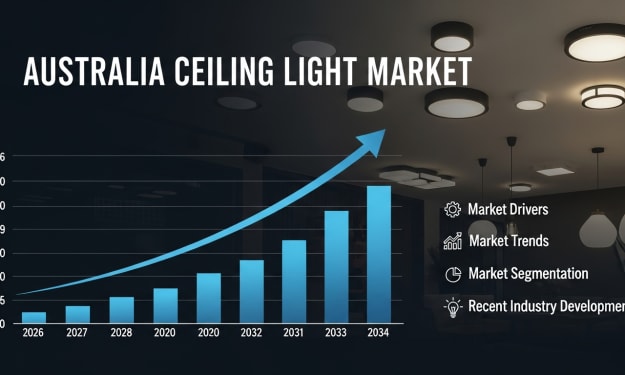
Australia Ceiling Light Market: Smart Illumination, Energy Efficiency & Future-Ready Living
In 2025, Australia ceiling light market was valued at USD 994.81 Million. Looking ahead, the market is projected to reach USD 1,461.66 Million by 2034, growing at a compound annual growth rate (CAGR) of 4.37% during 2026–2034.
By Kevin Cooper7 days ago in Futurism



Comments
There are no comments for this story
Be the first to respond and start the conversation.