
The Use of AI in Automated Vehicles: Shaping the Future of Transportation
The Dream of Autonomous Vehicles
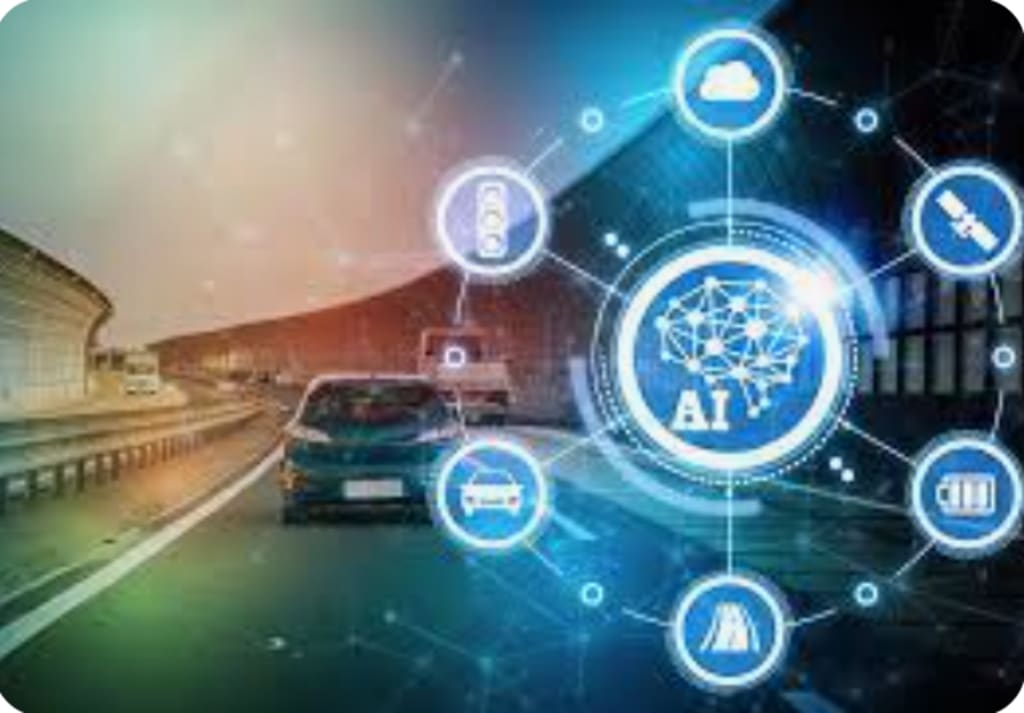
Artificial Intelligence (AI) has already revolutionized numerous sectors of our society, and one of its most promising applications is in the domain of transportation. Automated vehicles, or self-driving cars, have long been the stuff of science fiction, but through the power of AI, they are rapidly becoming a reality. This article delves into the role of AI in automated vehicles and how it's shaping our future on the roads.
The Dream of Autonomous Vehicles
The allure of self-driving cars is clear: they promise safer roads, more efficient commutes, and increased accessibility for those unable to drive. However, achieving this dream is no simple task. Driving involves a complex set of tasks like recognizing traffic signs, predicting other drivers' actions, and making split-second decisions, all while navigating through a dynamic environment.
This is where AI comes in. AI technologies, particularly Machine Learning (ML) and Deep Learning (DL), have shown remarkable success in tasks that require understanding complex patterns and making predictions, making them well-suited for autonomous driving.
How AI Powers Self-Driving Cars
AI in self-driving cars is primarily used for perception, prediction, and decision-making. Perception involves understanding the vehicle's surroundings, prediction involves anticipating what other road users will do, and decision-making involves determining the best course of action.
Perception
AI-powered systems use a combination of sensors, including cameras, lidar, and radar, to perceive their surroundings. Deep Learning algorithms, which excel at processing visual data, are used to identify and classify objects, like pedestrians, other vehicles, and traffic signs. These algorithms are trained on vast amounts of data, allowing them to recognize various objects even under challenging conditions.
Prediction
Once the AI system has perceived its environment, it needs to predict what other road users will do. This task is incredibly challenging as human behavior is inherently unpredictable. ML algorithms are used to analyze historical data and detect patterns in human behavior, which helps the AI system anticipate future actions.
Decision-making
The final step is decision-making, where the AI system determines the safest and most efficient course of action based on its perception and predictions. This involves complex problem-solving and strategic planning, often under time constraints. Reinforcement Learning, a type of ML where algorithms learn by trial and error, is commonly used for this task.
The Road Ahead: Challenges and Opportunities
While AI has significantly advanced the development of self-driving cars, numerous challenges remain. These include technical hurdles, like ensuring the reliability of AI systems in diverse and unpredictable road conditions, and ethical dilemmas, like deciding how an autonomous vehicle should act in a potential accident scenario.
Furthermore, the widespread adoption of self-driving cars will have significant societal implications. On the one hand, it could lead to safer roads and reduced traffic congestion. On the other hand, it could disrupt industries and job markets, particularly for professional drivers.
Conclusion
The use of AI in automated vehicles represents an exciting frontier in the intersection of technology and transportation. As we continue to improve AI technologies and address the associated challenges, the dream of a world with self-driving cars comes closer to reality.
In the words of AI pioneer Andrew Ng, "AI is the new electricity." Just as electricity transformed numerous industries last century, AI is poised to do the same in this one. And one of the most electrifying transformations is happening on our roads. The journey of AI-driven autonomous vehicles is just beginning, and it promises to redefine our approach to transportation, making our journeys safer, more efficient, and accessible.
About the Creator
Geoffrey Muriuki
Geoff is a tech enthusiast with interest in the transformative powers of Artificial Intelligence and blockchain. He strives to demystify the world of AI and blockchain. He believes in the potential of technology to shape a better future.
Keep reading
More stories from Geoffrey Muriuki and writers in Futurism and other communities.
A Closer Look at AI Ethics: Bias, Privacy, and Jobs
Artificial Intelligence (AI) has rapidly permeated numerous facets of our lives. From personalized recommendations on streaming platforms to autonomous vehicles and healthcare diagnostics, AI's influence is ever-growing. However, along with these advancements, there are concerns surrounding the ethical implications of AI, notably the issues of bias, privacy, and impact on jobs. This article delves into these pivotal aspects, highlighting the significance of ethical considerations in AI deployment.
By Geoffrey Muriuki3 years ago in Futurism
About Binding Prometheus
I want to start actively advocating on behalf of my own work, and the most valuable part of my canon is, without a doubt, Binding Prometheus, the play I have been working on since 2019 and only finished in 2023 as part of my MA. The play itself is an amalgamation of a million different inspirations. On one end, it evokes the Ancient Greek myth-play, deriving its own title from the earliest extant work of Western drama we have, Aeschylus’s Prometheus Bound. On the other end, it borrows significantly from the sci-fi bulwarks from over the years, namely Mary Shelley’s Frankenstein and Karel Capek’s Rossum’s Universal Robots. The play could be an episode of Black Mirror, I fear. I don’t know. I’ve only ever seen one episode of Black Mirror.
By Steven Christopher McKnight19 days ago in Futurism
Saudi Arabia Used Car Market: Rising Demand, Digital Platforms & Pricing Trends
According to IMARC Group's latest research publication, The Saudi Arabia used car market size was valued at USD 10.2 Billion in 2025. Looking forward, IMARC Group estimates the market to reach USD 17.4 Billion by 2034, exhibiting a CAGR of 6.11% from 2026-2034.
By Abhay Rajput4 days ago in Futurism


Comments
There are no comments for this story
Be the first to respond and start the conversation.