
Inventions in the Works for 2025: The Future of Technology at Your Fingertips
"The Future is Now: 7 Inventions That Will Change the World by 2025"
Introduction: A Future Beyond Imagination
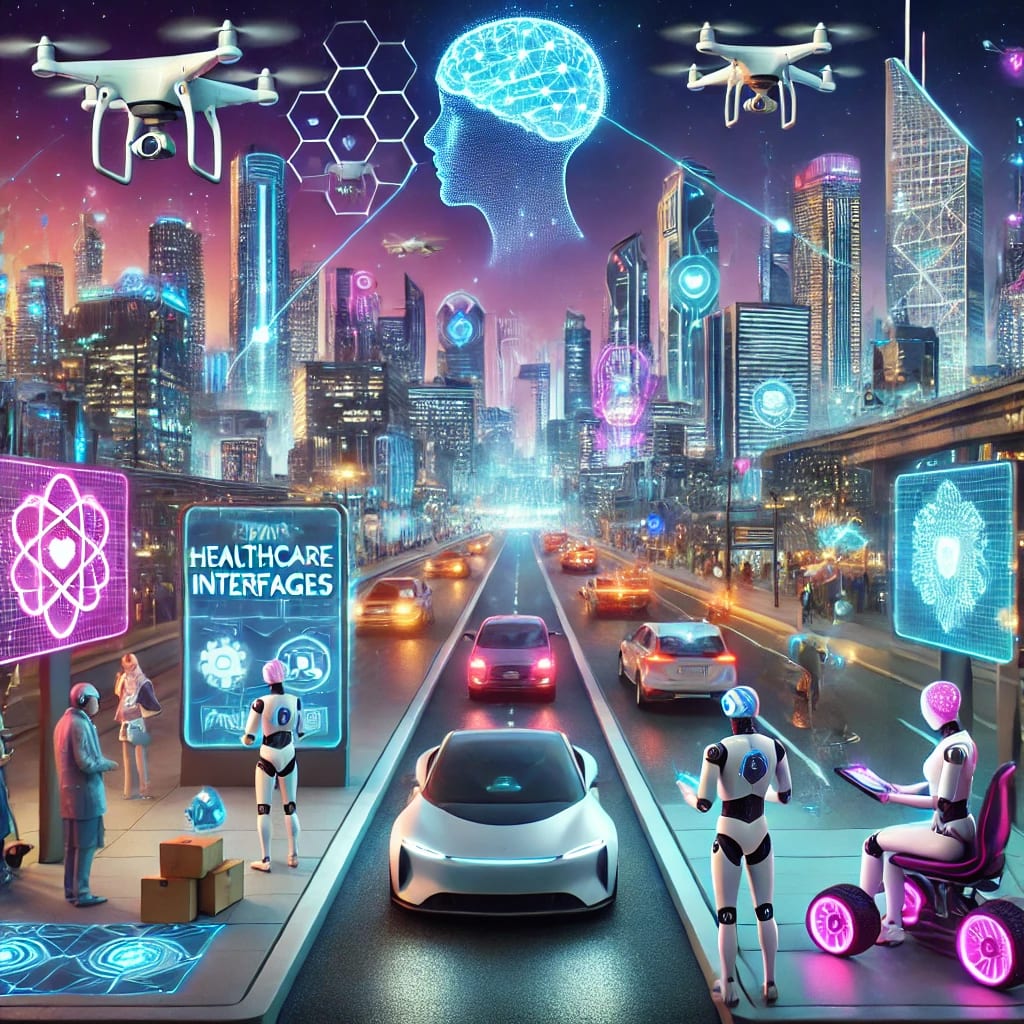
Have you ever imagined a world where cars fly, diseases are diagnosed by AI, and humans travel to space for vacation? This once-unthinkable future is fast approaching. By 2025, technological breakthroughs will reshape our world, introducing smarter cities, advanced robotics, and even brain-computer interfaces.
However, while these innovations offer unparalleled convenience and efficiency, they also bring challenges—from ethical concerns to regulatory obstacles. In this article, we’ll explore seven groundbreaking inventions expected by 2025, their real-world impact, and the barriers they must overcome.
1. Flying Cars: A Dream Closer to Reality
For decades, flying cars were a fantasy of sci-fi movies, but today, they are a near reality. Startups and major corporations are investing billions in vertical take-off and landing (VTOL) vehicles, aiming to reduce traffic congestion and revolutionize urban mobility.
Key Benefits
🚀 Faster Transportation: Shortens city travel time from hours to minutes.
🌍 Eco-Friendly Travel: Many flying cars use electric propulsion, reducing emissions.
Real-World Developments
Joby Aviation has received FAA approval for commercial flights by 2025.
Hyundai & Uber Elevate plan to launch air taxi services in major cities.
Challenges & Concerns
⚖️ Legal Issues: Air traffic regulations must be updated for personal aerial vehicles.
💰 High Costs: The first flying cars could cost over $300,000, limiting accessibility.
2. AI in Healthcare: A Revolution in Medicine
AI is already assisting doctors, but by 2025, it will be an integral part of healthcare, handling diagnostics, drug development, and robotic-assisted surgeries.
Key Advancements
🧬 AI-Driven Drug Discovery: AI can simulate molecules, accelerating pharmaceutical breakthroughs.
🤖 Surgical Robotics: AI-powered robots will perform high-precision surgeries.
Examples
DeepMind’s AlphaFold has revolutionized protein folding research, aiding in cancer treatment.
Da Vinci Surgical System is an AI-assisted robot that enables minimally invasive surgeries.
Challenges & Concerns
🔐 Patient Data Privacy: AI requires vast amounts of medical data, raising cybersecurity concerns.
💼 Job Displacement: Will AI replace human doctors and nurses?
3. Quantum Computing: A Technological Leap Forward
By 2025, quantum computing will unlock unimaginable computational power, transforming finance, medicine, and cybersecurity.
Breakthrough Capabilities
💡 Revolutionizing Cryptography: Current encryption methods will become obsolete.
🔬 Accelerating Scientific Research: Quantum simulations can help design next-gen materials.
Current Progress
Google & IBM are leading in quantum research, with IBM’s Quantum Roadmap aiming for a 1,000-qubit machine by 2025.
Chinese scientists have built the most powerful quantum supercomputer to date.
Challenges & Concerns
⚡ Energy Consumption: Quantum computers need extreme cooling (-273°C).
🔎 Limited Accessibility: Quantum computing remains expensive and experimental.
4. Smart Cities: A More Connected World
By 2025, smart cities will integrate AI, IoT, and renewable energy, making urban areas more efficient, sustainable, and interconnected.
Innovative Features
🏙️ Traffic-Free Cities: AI-driven traffic lights will reduce congestion.
🌞 Solar-Powered Infrastructure: Smart cities will use 100% renewable energy.
Example: Singapore
Singapore leads in smart city tech, with:
Autonomous taxis reducing reliance on personal vehicles.
AI-based water management systems improving conservation.
Challenges & Concerns
🛡️ Cybersecurity: A smart city is a hacking target.
📉 Economic Inequality: Will only wealthy nations afford smart cities?
5. Brain-Computer Interfaces (BCIs): The Rise of Mind-Controlled Tech
Imagine controlling devices with your thoughts. By 2025, BCIs will enable paralyzed patients to regain mobility, while enhancing communication and gaming.
Key Applications
🦾 Restoring Mobility: BCIs can help paralyzed individuals move robotic limbs.
🎮 Hands-Free Technology: Gamers will use brain signals instead of controllers.
Pioneers in the Field
Neuralink (Elon Musk) is developing brain implants for seamless AI-human interaction.
Synchron is testing non-invasive BCIs to improve accessibility.
Challenges & Concerns
🔬 Ethical Dilemmas: Should humans merge with AI?
🧠 Mental Privacy: Could BCIs read or manipulate thoughts?
6. Space Tourism: A Billionaire’s Playground or a Future Reality?
By 2025, commercial space travel will no longer be limited to astronauts. Companies like SpaceX, Blue Origin, and Virgin Galactic are pioneering space tourism, offering suborbital and orbital flights.
What to Expect
🚀 Edge of Space Flights: Tourists will experience zero gravity.
🏨 Luxury Space Hotels: Plans are underway for orbital hotels.
Industry Leaders
SpaceX Starship aims for moon missions by 2025.
Virgin Galactic is selling $450,000 tickets for suborbital flights.
Challenges & Concerns
💲 Exorbitant Costs: Only millionaires can afford early space travel.
⚠️ Safety Risks: Space travel remains dangerous.
7. Advanced Robotics: The Future Workforce
Humanoid robots are set to redefine labor by 2025, performing complex tasks in hospitals, factories, and homes.
Next-Gen Capabilities
🤖 AI-Powered Adaptation: Robots will learn new skills autonomously.
🏠 Home Assistants: Robots will help with daily chores and elderly care.
Real-World Applications
Boston Dynamics’ Atlas can run, jump, and carry objects.
Tesla Optimus is a humanoid robot designed for household and industrial work.
Challenges & Concerns
⚖️ Legal & Ethical Issues: Should robots have rights and responsibilities?
👷 Job Losses: Will robots replace millions of workers?
Conclusion: The Future is Now
By 2025, the world will be smarter, faster, and more interconnected than ever before. From AI-driven healthcare to space tourism and quantum computing, technology is shaping a new era of human civilization.
But these advancements bring ethical, economic, and social challenges. How we adapt, regulate, and integrate these innovations will determine whether they improve or disrupt our lives.
Are we ready for the future that’s just around the corner?
About the Creator
5G in Agriculture Market to Exceed USD 53.6 billion by 2034
5G in Agriculture Market Overview The Global 5G in Agriculture Market generated approximately USD 4.1 Billion in 2024 and is projected to grow from USD 5.3 Billion in 2025 to nearly USD 53.6 Billion by 2034, reflecting a strong CAGR of 29.3% during the forecast period.
By Roberto Crum3 days ago in Futurism
Vertical AI Market Projected to Reach USD 115.4 Billion By 2034
The Global Vertical AI Market is projected to reach approximately USD 115.4 Billion by 2034, increasing from USD 12.9 Billion in 2024, and it is expected to grow at a CAGR of 24.5% during the forecast period from 2025 to 2034. This expansion is supported by the increasing demand for industry-specific artificial intelligence solutions that address specialized operational requirements.
By Roberto Crum7 days ago in Futurism



Comments
There are no comments for this story
Be the first to respond and start the conversation.