
How Space Influences Earth's Electricity: The Invisible Interaction
Space


When you flip a light switch and the bulb lights up, few people stop to consider that at that very moment, somewhere on the outskirts of our Solar System, a powerful solar storm might be raging. At first glance, these two events seem completely unrelated. Yet space is far from empty; it’s a dynamic environment full of energetic processes that can significantly impact Earth’s electrical systems. Let’s explore how the cosmos influences electricity on our planet and why engineers around the world keep a vigilant eye on space weather.
What Is Space Weather?
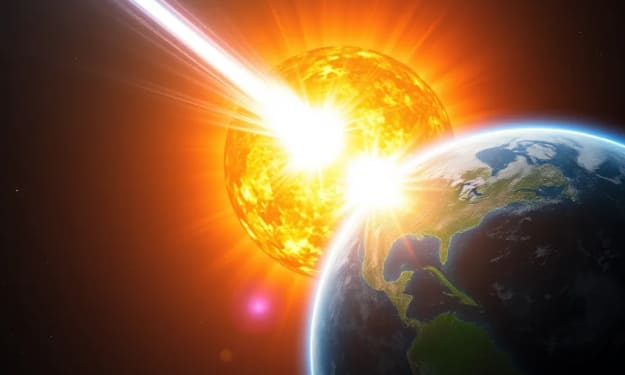
Just as Earth experiences weather with clouds, thunderstorms, and hurricanes, space has its own version — called space weather. The main "director" behind this cosmic weather is the Sun. Besides shining light and warmth, the Sun continuously emits a stream of charged particles known as the solar wind. Occasionally, it unleashes massive explosions called coronal mass ejections (CMEs) — enormous clouds of plasma hurled toward Earth at millions of miles per hour. When these solar storms reach our planet, they interact with Earth’s magnetic field, sometimes triggering what we call geomagnetic storms.
Geomagnetic Storms and Power Grids
A geomagnetic storm is a disturbance in Earth’s magnetic field caused by solar wind interactions. On normal days, our planet’s magnetic field acts like a protective shield, deflecting most charged particles harmlessly into space. However, during a geomagnetic storm, this shield "flares up" and fluctuates. These fluctuations induce electric currents on the ground, known as geomagnetically induced currents (GICs).
These currents can flow into long metal structures on Earth’s surface—like power lines, pipelines, and railway tracks—and cause serious problems in electrical grids:
- Transformer Overloads: GICs can cause transformers to overheat and even fail, sometimes catastrophically.
- Voltage Instability: Fluctuating voltages can damage sensitive electronics and disrupt power delivery.
- Widespread Blackouts: One of the most famous examples happened in Quebec in 1989 when a geomagnetic storm knocked out power for millions.
Such storms reveal that our electrical infrastructure, vital for modern life, can be vulnerable to events happening millions of miles away in space.
More Than Just Direct Effects
Space’s influence on Earth’s electricity isn’t limited to power grids alone. Several indirect impacts can ripple through our technological systems:
- Navigation and Communication Disruptions: Solar flares can distort GPS signals and radio communications, critical for controlling energy systems, especially in aviation and maritime sectors.
- Interference with Power Plant Controls: High-energy particles can cause glitches in the electronic control systems that manage power stations.
- Accelerated Equipment Wear: Energetic particles bombard orbiting satellites and ground monitoring systems alike, potentially shortening their operational lifespans.
These cascading effects illustrate how deeply intertwined our technology is with the space environment.
How We Protect Our Electrical Systems
Scientists and engineers employ multiple strategies to predict and mitigate space weather’s impact on Earth’s electricity:
- Space Monitoring: Satellites operated by NASA, ESA, and others constantly watch the Sun’s activity in real time, providing early warning signs.
- Forecasting and Alerts: Agencies like NOAA in the U.S. and the Space Research Institute in Russia issue timely warnings about incoming solar storms so operators can prepare.
- Engineering Solutions: Modern transformers and electrical equipment are designed to be more resilient to GICs, with protective filters and circuit breakers installed.
- Proactive Shutdowns: In extreme cases, grid operators may temporarily disconnect vulnerable sections of the network to prevent damage.
This coordinated approach helps minimize the risk of catastrophic failures and keeps the lights on when space storms hit.
Looking Ahead: The Growing Importance of Cosmic Awareness
As our society becomes ever more dependent on electricity and digital infrastructure, the influence of space weather grows increasingly relevant. The Sun follows an approximately 11-year activity cycle, and we are approaching the peak of its next cycle, known as the solar maximum. This means more frequent solar flares and CMEs in the coming years — and a higher chance of geomagnetic storms affecting Earth.
Understanding and preparing for this invisible interaction isn’t just a scientific curiosity; it’s a matter of national security and economic stability. The cosmos is not separate from us. It touches everyday life, from the internet and mobile networks to whether a simple light bulb in your home will turn on. And all of this happens through the unseen threads of solar wind and electromagnetic fields.
Conclusion
Space is neither an enemy nor a silent bystander. It can inspire discovery but also pose real threats to our planet’s electrical systems. The deeper we understand this cosmic connection, the better we can safeguard the technologies that underpin modern civilization. So next time you flick a switch, remember — somewhere out there, the Sun’s activity might be silently shaping the flow of electricity that powers your world.
About the Creator
Keep reading
More stories from Holianyk Ihor and writers in Futurism and other communities.
What Happens to Earth's Atmosphere During Solar Flares: A Cosmic Shockwave Through Our Air
The Sun is far more than just a source of light and warmth—it’s an incredibly powerful energy generator that regularly unleashes colossal bursts of energy into space. One of the most dramatic forms of this solar activity is the solar flare—sudden and intense explosions on the Sun’s surface. These flares can be so powerful that their effects are felt 150 million kilometers away, right here on Earth. But what exactly happens to our atmosphere when these cosmic storms hit? Let’s dive into the fascinating chain of events that unfold in the skies above us during solar flares.
By Holianyk Ihor7 months ago in Futurism
About Binding Prometheus
I want to start actively advocating on behalf of my own work, and the most valuable part of my canon is, without a doubt, Binding Prometheus, the play I have been working on since 2019 and only finished in 2023 as part of my MA. The play itself is an amalgamation of a million different inspirations. On one end, it evokes the Ancient Greek myth-play, deriving its own title from the earliest extant work of Western drama we have, Aeschylus’s Prometheus Bound. On the other end, it borrows significantly from the sci-fi bulwarks from over the years, namely Mary Shelley’s Frankenstein and Karel Capek’s Rossum’s Universal Robots. The play could be an episode of Black Mirror, I fear. I don’t know. I’ve only ever seen one episode of Black Mirror.
By Steven Christopher McKnight16 days ago in Futurism
Online Education Market Size & Forecast 2025–2033
Introduction: A Digital Transformation of Education The education sector is undergoing one of the most significant transformations in modern history. Driven by advances in digital infrastructure, changing learner expectations, and the growing demand for flexible skill development, online education has evolved from a supplemental learning method into a global education ecosystem. From professional certifications and virtual classrooms to full-scale online universities and enterprise training platforms, digital learning now touches millions of learners across borders and socioeconomic backgrounds.
By Renub Research3 days ago in Futurism



Comments (1)
Fascinating how solar storms can mess with our power grids. I've seen firsthand how electrical issues can disrupt daily life.