
What Happens to Earth's Atmosphere During Solar Flares: A Cosmic Shockwave Through Our Air
Space

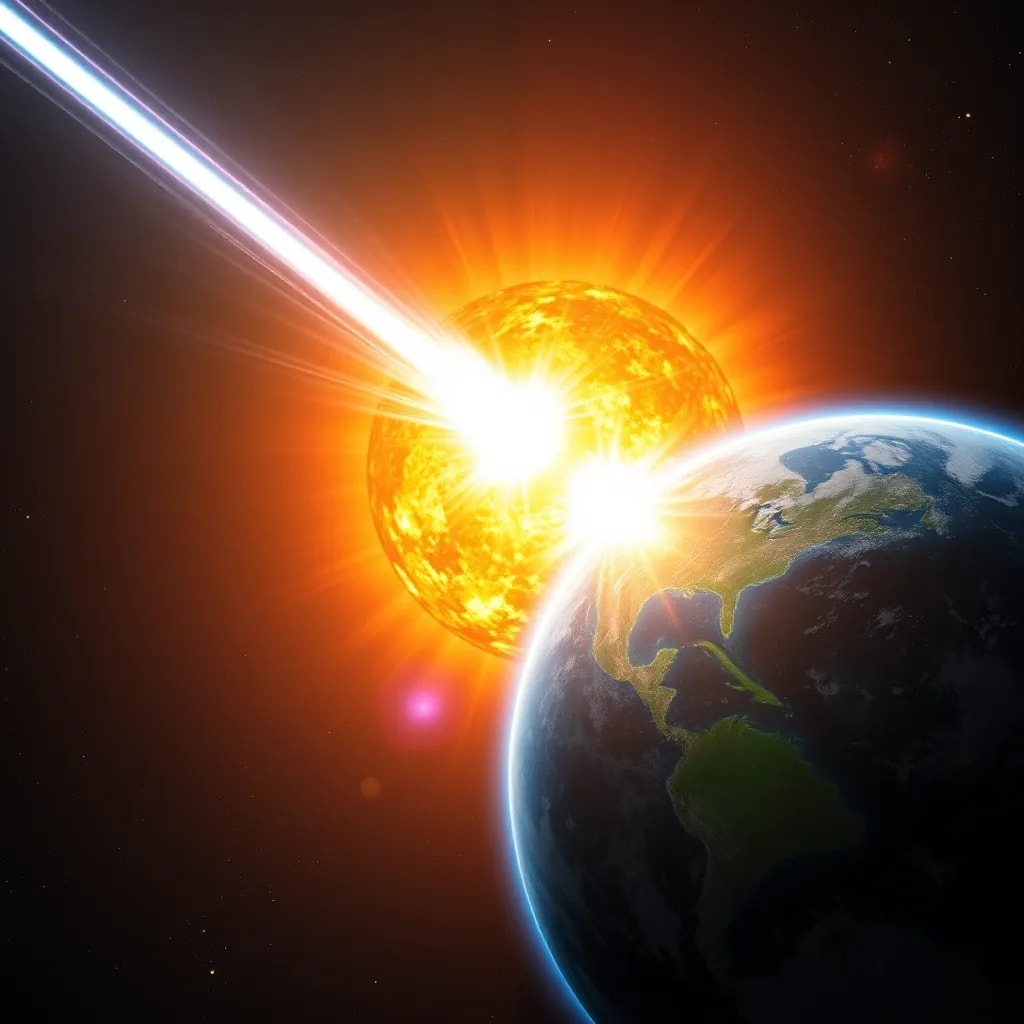
The Sun is far more than just a source of light and warmth—it’s an incredibly powerful energy generator that regularly unleashes colossal bursts of energy into space. One of the most dramatic forms of this solar activity is the solar flare—sudden and intense explosions on the Sun’s surface. These flares can be so powerful that their effects are felt 150 million kilometers away, right here on Earth. But what exactly happens to our atmosphere when these cosmic storms hit? Let’s dive into the fascinating chain of events that unfold in the skies above us during solar flares.
What Is a Solar Flare?
A solar flare is essentially an explosion on the Sun’s surface, accompanied by the release of X-rays, ultraviolet light, and streams of charged particles. These flares usually occur in active regions tied to sunspots and complex magnetic field anomalies. Sometimes, a solar flare is accompanied by a coronal mass ejection (CME)—a massive cloud of plasma hurled out into interplanetary space. When directed toward Earth, these eruptions can have profound effects on our planet's atmospheric layers.
The First Impact: The Ionosphere
The ionosphere, a layer of Earth’s atmosphere located between about 60 and 1,000 kilometers altitude, is the first to respond to a solar flare. As X-rays and ultraviolet radiation from the flare hit this region, the ionosphere undergoes rapid and intense ionization—meaning the number of free electrons skyrockets.
This sudden surge in ionization leads to several significant consequences:
- Radio Communication Disruptions: High-frequency radio waves bounce off the ionosphere to travel long distances. A solar flare can cause a phenomenon known as radio blackout, where entire continents temporarily lose this form of communication.
- Navigation Errors: GPS signals and aviation navigation systems rely on the ionosphere for signal transmission. Changes in ionospheric properties can introduce errors in positioning, impacting flight safety and precision.
- Spectacular Auroras: When a solar flare is paired with a coronal mass ejection, charged particles interact with Earth's magnetic field and atmosphere near the poles, producing dazzling auroras—the Northern and Southern Lights—that can even be visible far beyond the usual polar zones.
The Second Impact: Thermosphere Heating and Air Density Changes
Higher up, in the thermosphere, the energy from a solar flare heats the atmosphere, causing temperatures to rise by hundreds of degrees. This heating causes the atmospheric gases to expand, making the upper layers of the atmosphere denser.
These changes can trigger unexpected effects:
- Increased Drag on Satellites: As the atmosphere expands, satellites orbiting at low Earth orbit face increased air resistance. This slows them down, causing them to lose altitude faster than usual, and requiring frequent orbital adjustments.
- Instability of Space Debris: Space junk and fragments of defunct satellites can experience changes in their orbits, heightening the risk of collisions and complicating space traffic management.
Earth's Protective Shield: The Magnetosphere
Thankfully, our planet is wrapped in a magnetic field that acts like a protective shield. This magnetosphere deflects most of the incoming charged particles, funneling them toward the poles. However, during especially intense solar events, the magnetic field can become disturbed or compressed, triggering geomagnetic storms. These storms have the power to disrupt power grids, interfere with satellite electronics, and even affect ground-based technologies.
Effects on Lower Atmospheric Layers
While the upper atmosphere bears the brunt of solar flare impacts, recent studies suggest that powerful flares might influence weather patterns as well. Through complex chains of interaction—such as altering air circulation or affecting the ozone layer—solar activity might cause short-term changes in meteorological conditions. Though this is an active area of research, it hints at a deeper, intricate connection between the Sun’s behavior and Earth’s atmosphere than previously imagined.
Why Does It Matter?
Solar flares aren’t just distant cosmic fireworks—they have tangible impacts on our daily lives. Modern society depends heavily on satellite communication, navigation systems, and reliable power supplies. Because of this vulnerability, scientists constantly monitor solar activity and develop space weather forecasts to provide early warnings. These alerts help airlines reroute flights, satellite operators protect their equipment, and power companies prepare for potential disruptions.
Final Thoughts
When the Sun unleashes a flare, it’s not just a fleeting burst of light on a distant star—it’s a powerful message traveling millions of kilometers to Earth, triggering a cascade of reactions in our atmosphere. Our planet responds with waves of ionization, temperature shifts, shimmering auroras, and geomagnetic storms. This cosmic dance reminds us that, even across the vast emptiness of space, the Sun remains an active and unpredictable neighbor—one whose moods profoundly influence the delicate balance of life here on Earth.
About the Creator
Keep reading
More stories from Holianyk Ihor and writers in Futurism and other communities.
How Earth Looks from Different Points in the Solar System: A View from Afar
When we look up at the night sky from our own backyard, Earth feels like the center of the universe. It’s where we live, where our stories unfold, and where all known life thrives. But as soon as we travel even a little farther out into space, that perspective shifts dramatically. From other planets, moons, and spacecraft drifting through the Solar System, Earth transforms from a sprawling blue-and-green world into a tiny, shimmering dot — just one among countless stars scattered across the cosmic sea. Let’s take a journey and imagine how our home planet appears from different vantage points across the Solar System.
By Holianyk Ihor7 months ago in Futurism
About Binding Prometheus
I want to start actively advocating on behalf of my own work, and the most valuable part of my canon is, without a doubt, Binding Prometheus, the play I have been working on since 2019 and only finished in 2023 as part of my MA. The play itself is an amalgamation of a million different inspirations. On one end, it evokes the Ancient Greek myth-play, deriving its own title from the earliest extant work of Western drama we have, Aeschylus’s Prometheus Bound. On the other end, it borrows significantly from the sci-fi bulwarks from over the years, namely Mary Shelley’s Frankenstein and Karel Capek’s Rossum’s Universal Robots. The play could be an episode of Black Mirror, I fear. I don’t know. I’ve only ever seen one episode of Black Mirror.
By Steven Christopher McKnight19 days ago in Futurism
Is Digital Transformation a New Operating System of Pharma?
Key Takeaways: Digital transformation is becoming the core driver of efficiency and innovation in the pharmaceutical industry. Advanced technologies like AI, ML, big data, and IoT are streamlining research, manufacturing, and supply chains. Patients, executives, and quality teams alike benefit from safer, smarter, and more connected pharma ecosystems. Digital evolution is swiftly impacting the pharmaceutical industry, and we are already embracing its ability to recast the entire healthcare landscape. Today, we will share some insights that witness how imperative this shift has become in patient-centric outcomes.
By Davin Convay5 days ago in Futurism




Comments (1)
Solar flares are wild! I've seen radio disruptions. They really mess with comms and navigation.