
Cold Water Molecules Found for the First Time in a Protoplanetary Disk
Space


When astronomers search for water in space, they usually expect to find it close to stars, where it exists as hot vapor, or locked away as ice on distant comets and asteroids. But a groundbreaking discovery has changed that view: for the first time, scientists have detected “cold” water molecules in the outer regions of a protoplanetary disk — exactly where icy worlds may be forming.
This discovery, made using the Atacama Large Millimeter/submillimeter Array (ALMA) in Chile, adds a crucial piece to the puzzle of how planetary systems form, and perhaps how habitable planets like Earth acquire their oceans.
A New Chapter in Planetary Formation
Protoplanetary disks are vast, rotating clouds of gas and dust surrounding young stars. Over time, this material clumps together under gravity, giving birth to planets, moons, and comets. Until recently, water had only been identified in the warmer regions of such disks, where the heat of the star keeps it in gaseous form.
But ALMA’s observations revealed something entirely new: water molecules in a colder, outer zone of a disk, where temperatures are low enough for ice to form. This means that frozen water is not confined to comets and far-off planetary surfaces — it is part of the very blueprint of planetary systems from the earliest stages.
The implications are enormous. If cold water exists in these regions in large quantities, it could mean that icy planets and moons are far more common across the galaxy than we thought.
Why This Matters for Earth and Beyond
The discovery of cold water molecules in a protoplanetary disk provides a fascinating clue about how Earth may have received its oceans. One long-standing hypothesis suggests that our planet’s water was delivered by comets and asteroids that formed in the outer regions of the solar system and later bombarded Earth.
By proving that cold water exists in precisely the kind of environment where these icy bodies are born, ALMA’s results strengthen the idea that comets served as cosmic couriers of water. Without that delivery system, our oceans — and life as we know it — might never have existed.
And if this process happened here, there’s every reason to think it happens elsewhere. Other young planetary systems could be seeded with water in the same way, raising the likelihood of habitable worlds orbiting distant stars.
The Birthplace of Icy Giants
The cold regions of protoplanetary disks are not just factories for comets. They are also the potential cradles of ice giants like Neptune and Uranus, or frozen moons such as Europa and Enceladus, which harbor vast oceans beneath icy crusts.
The fact that ALMA has detected water molecules in these regions suggests that such worlds may form with water already built into their structure. Instead of being rare exceptions, icy planets and moons may be a natural outcome of planetary formation.
That realization could reshape how we think about the distribution of life-supporting ingredients across the cosmos.
ALMA: Peering into the Invisible
Located more than 5,000 meters above sea level in Chile’s Atacama Desert, ALMA is one of the most powerful radio observatories in the world. Its 66 high-precision antennas work together to detect faint signals from the coldest and most distant regions of space.
In this case, ALMA captured the spectral “fingerprints” of water molecules, even in the freezing outer disk of a young star system. Without ALMA’s sensitivity, this discovery would have been impossible.
For astronomers, the result is more than just a technical triumph. It is direct evidence that water is not just a byproduct of planet formation — it is a central player in the process.
Water as the Cosmic Thread
Water is often called the “thread of life,” but in space it may also be the thread of creation. From hot vapor near stars, to icy grains drifting in the outer darkness, water appears to be woven into every stage of planetary birth.
The new detection of cold water molecules shows that this essential substance is present from the earliest steps, quietly shaping the architecture of future worlds.
And perhaps, just as Earth’s oceans trace their origins back to frozen comets in a young solar system, distant planets may someday reveal seas and lakes with equally ancient beginnings.
The Big Picture
Every major discovery about water in space reshapes our understanding of how common life’s essential ingredients may be. By finding cold water molecules where icy planets and comets are born, ALMA has brought us one step closer to answering one of humanity’s greatest questions: Are we alone?
If water can be found across the galaxy in the very birthplaces of planets, then the possibility of life elsewhere becomes more than speculation — it becomes a scientific expectation.
Image suggestion for the article:
Imagine a stunning visualization of a young star surrounded by a wide, glowing protoplanetary disk. The inner regions shine in warm golden and orange tones, while the outer rings shimmer in pale blues and whites, hinting at frost and ice. Thin, delicate bands arc outward like pathways into space, and tiny sparkles suggest icy grains swirling in orbit. The whole scene feels both fragile and immense, a birthplace of worlds in the making.
About the Creator
Keep reading
More stories from Holianyk Ihor and writers in Futurism and other communities.
How Electric Discharges Form in the Atmospheres of Other Planets
When we hear the word lightning, we usually picture a blinding flash slicing through a stormy sky, followed by a deafening roll of thunder. On Earth, lightning is a familiar natural spectacle. But beyond our planet, electric discharges can be far stranger, far more powerful, and, in some cases, even dangerous.
By Holianyk Ihor7 months ago in Futurism
LED Light Face Mask Market 2026: Investment Potential & Emerging Consumer Trends
According to IMARC Group's latest research publication, The global LED light face mask market size reached USD 357.6 Million in 2025. Looking forward, IMARC Group expects the market to reach USD 882.5 Million by 2034, exhibiting a growth rate (CAGR) of 10.60% during 2026-2034.
By sujeet. imarcgroup7 days ago in Futurism
Journal of Behavioral Homeostasis
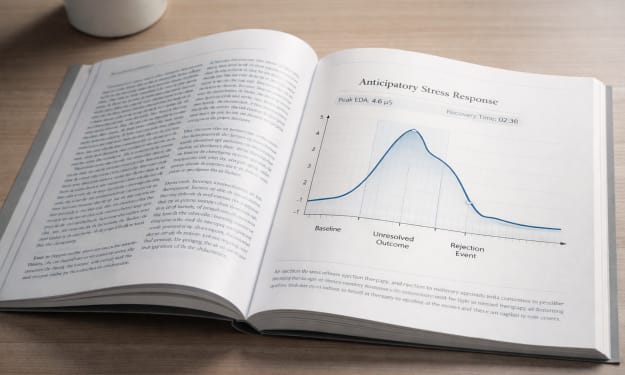
Journal of Behavioral Homeostasis Vol. 52, Issue 1 (2043) On the Therapeutic Function of Rejection Yielded Expectation Adaptation and the Regulation of Anticipatory Stress Abstract Chronic exposure to unresolved outcomes has emerged as a significant source of sustained psychological stress in contemporary environments characterized by continuous evaluation and delayed feedback. Yielded Expectation Adaptation (YEA) therapy was developed to reduce distress associated with rejection through structured exposure to definitive negative outcomes. Early clinical trials demonstrated measurable reductions in physiological arousal and cognitive rumination following controlled refusal events, despite participants reporting subjective disappointment. Subsequent adoption beyond clinical settings introduced voluntary and recreational applications collectively described as “outcome rehearsal.” This study examines therapeutic efficacy alongside broader cultural implications arising from the normalization of definitive outcomes as a mechanism of emotional regulation. Background Modern individuals navigate an unprecedented volume of unresolved outcomes. Applications remain pending without timelines. Messages linger unanswered. Creative work circulates through opaque review systems that offer neither clarity nor closure. Even social interaction increasingly unfolds within structures that defer resolution, producing prolonged periods of suspended expectation. While anticipation has traditionally been framed as motivational tension, emerging research suggests that sustained uncertainty carries significant cognitive and physiological costs. Patients presenting with chronic anticipatory stress frequently describe difficulty disengaging from unresolved possibilities, reporting persistent rumination, impaired attentional recovery, and elevated baseline anxiety. Clinical observation revealed an unexpected pattern: for many individuals, the distress associated with waiting exceeded the distress of rejection itself. Participants described negative outcomes as “sharp but clean,” contrasting them with the diffuse strain of indefinite possibility. Once an outcome was known — even an unfavorable one — subjects reported immediate reductions in cognitive load and renewed capacity for directed attention. These observations prompted investigation into whether rejection, when encountered deliberately and under controlled conditions, might function not solely as a negative experience but as a regulatory one. Yielded Expectation Adaptation therapy emerged from this line of inquiry. The approach centers on structured exposure to definitive refusal, designed to reduce anticipatory distress by recalibrating emotional responses to negative outcomes. Early implementations included simulated evaluative scenarios, scripted interpersonal declines, and guided exercises in which participants intentionally sought low-stakes rejection experiences. Initial reception within clinical communities was cautious. The idea that rejection might serve therapeutic ends appeared counterintuitive; however, preliminary findings consistently demonstrated improved physiological recovery following outcome resolution. Participants did not report enjoying rejection. They reported relief at the end of waiting. Subsequent literature began referring to the model simply as YEA therapy. Early Clinical Findings Pilot studies focused on individuals experiencing persistent anticipatory distress, including professionals navigating competitive hiring processes, creatives engaged in repeated submission cycles, and individuals reporting prolonged uncertainty within interpersonal relationships. Across multiple trials, participants undergoing YEA therapy demonstrated faster emotional recovery following negative feedback compared to control groups receiving traditional cognitive reframing interventions. Notably, the therapeutic effect appeared tied not to reinterpretation of rejection but to outcome definitiveness. When uncertainty was removed, even unfavorable results allowed subjects to reorganize attention and resume forward-directed behavior. Emotional stabilization occurred independently of outcome desirability. Whether such stabilization enhances persistence toward uncertain objectives was not assessed in initial trials. Initial findings were drawn from three pilot cohorts totaling 124 participants across clinical and non-clinical populations. Measures included heart-rate variability, post-session cortisol sampling, and standardized rumination inventories administered at 24-hour intervals. While sample sizes were limited, consistency across cohorts prompted further investigation into non-traditional applications of the model. Researchers initially framed these findings as evidence that emotional regulation may depend less on outcome valence than on outcome clarity — a distinction that would later prove central to understanding YEA’s broader cultural trajectory. Expansion Beyond Clinical Contexts As familiarity with YEA therapy increased, individuals began applying its principles independently outside clinical settings. Participants experimented with deliberate exposure to minor refusals, describing the practice as preparation rather than treatment. Examples included requesting unlikely accommodations, submitting creative work to rapid-response review forums, and engaging in structured interpersonal exchanges designed to produce immediate closure. In some peer-led sessions, participants delivered timed refusals limited to brief standardized phrases, preventing narrative elaboration and accelerating outcome resolution. These practices were soon described collectively as outcome rehearsal. The stated aim was efficiency: eliminate prolonged anticipation, reduce emotional backlog, restore equilibrium. Online communities formed around shared rehearsal strategies. Forums tracked experiments in shortening decision cycles. Informal gatherings organized structured refusal exchanges modeled on early YEA exercises. Participants described feeling clearer following sessions, attributing relief not to rejection itself but to the restoration of certainty. By 2041, digital platforms offered guided outcome simulations. Users submitted proposals or personal statements for predetermined rejection responses, receiving definitive outcomes in place of extended uncertainty. What began as resilience training increasingly functioned as routine maintenance. Longitudinal Observations Extended tracking of frequent YEA participants revealed sustained reductions in anticipatory distress across professional and interpersonal domains. Subjects reported decreased reactivity to uncertainty and increased willingness to disengage from prolonged evaluative processes. Participants described these changes as increased realism or maturity. However, longitudinal analysis identified convergence toward modest, low-volatility objectives and a gradual reduction in variance among reported long-term goals. Engagement with speculative creative work, competitive applications, and relational pursuits involving delayed feedback declined across cohorts. These shifts were rarely framed as losses. Participants instead described calibration, emphasizing efficiency and emotional sustainability. Goal selection trended toward incremental trajectories. Despite these patterns, expressions of desire for authentic acceptance outcomes remained consistent. Participants reported increasing comfort with rejection while continuing to articulate longing for genuine affirmation. Rejection, when rehearsed, appeared to lose much of its destabilizing force. Whether it also lost its capacity to clarify what was genuinely wanted remained unclear. Discussion The widespread adoption of YEA suggests that relief from uncertainty fulfills a significant psychological need. Across populations, participants demonstrate reduced anticipatory distress following structured exposure to definitive outcomes. Emotional recovery accelerates. Rumination declines. Individuals report increased stability and improved capacity to disengage from unresolved possibilities. These outcomes align with predictive regulation models, which propose that the brain prioritizes clarity over desirability when restoring equilibrium. Rejection functions less as injury than as resolution — a definitive update that permits cognitive reorganization. The normalization of outcome rehearsal may therefore represent an adaptive response to environments saturated with deferred evaluation. Participants frame YEA engagement as a method of preserving energy, shortening the waiting cycle, and maintaining emotional efficiency. Longitudinal findings suggest equilibrium and expansion may not scale proportionally. Frequent YEA engagement correlates with decreased participation in high-variance pursuits and reduced tolerance for prolonged uncertainty. Emotional volatility declines alongside willingness to pursue outcomes perceived as unlikely. Participants continue to describe themselves as hopeful. Structured rejection reduces destabilization but does not eliminate longing. The wish to be chosen persists even as individuals become increasingly skilled at rehearsing refusal. It remains unclear whether the growing cultural preference for definitive outcomes represents an evolution in resilience or a recalibration of perceived attainability. Emotional equilibrium may be achieved through strengthened tolerance of disappointment. It may also be achieved through subtle contraction of the scale at which individuals are willing to hope. Further research is required to determine whether widespread engagement with YEA strengthens individuals against disappointment — or gradually reduces the range of futures they consider reachable. Author’s Notes: Current findings suggest that individuals do not appear to want less; rather, they appear increasingly practiced at relinquishing desire before it encounters resistance. The reduction of distress may indicate progress; whether it reflects expansion or contraction remains unresolved.
By Mina Carey7 days ago in Futurism
Trickle Them Down, But Not Out
The thing about smart people is that they should know better, but alas, intelligence is not the same as wisdom. Not only do the mistakes of experts too short on vision—when they are not corrected—have the potential to do great and far-reaching damage, but they also undermine public confidence in the very notion of expertise. This is particularly so when expertise is wielded in defence of the rich and powerful as a cudgel against those laid low. As an academic, this lack of faith in “so-called experts” is painful to see as it plays out in the spread of dis-/misinformation, conspiracy theories, and anti-intellectualism writ large. But it is also an understandable impulse given the catastrophic failure of an economic ideology pushed by certain economic experts. Supply-side economics has shaped a broken system for the last half-century and has arguably done more to undermine the fabric of the American Dream than any policy framework of the past century.
By Cory Wright-Maley5 days ago in Humans



Comments
There are no comments for this story
Be the first to respond and start the conversation.