
Breathing on the Moon: How Scientists Plan to Generate Oxygen from Lunar Ice
Space

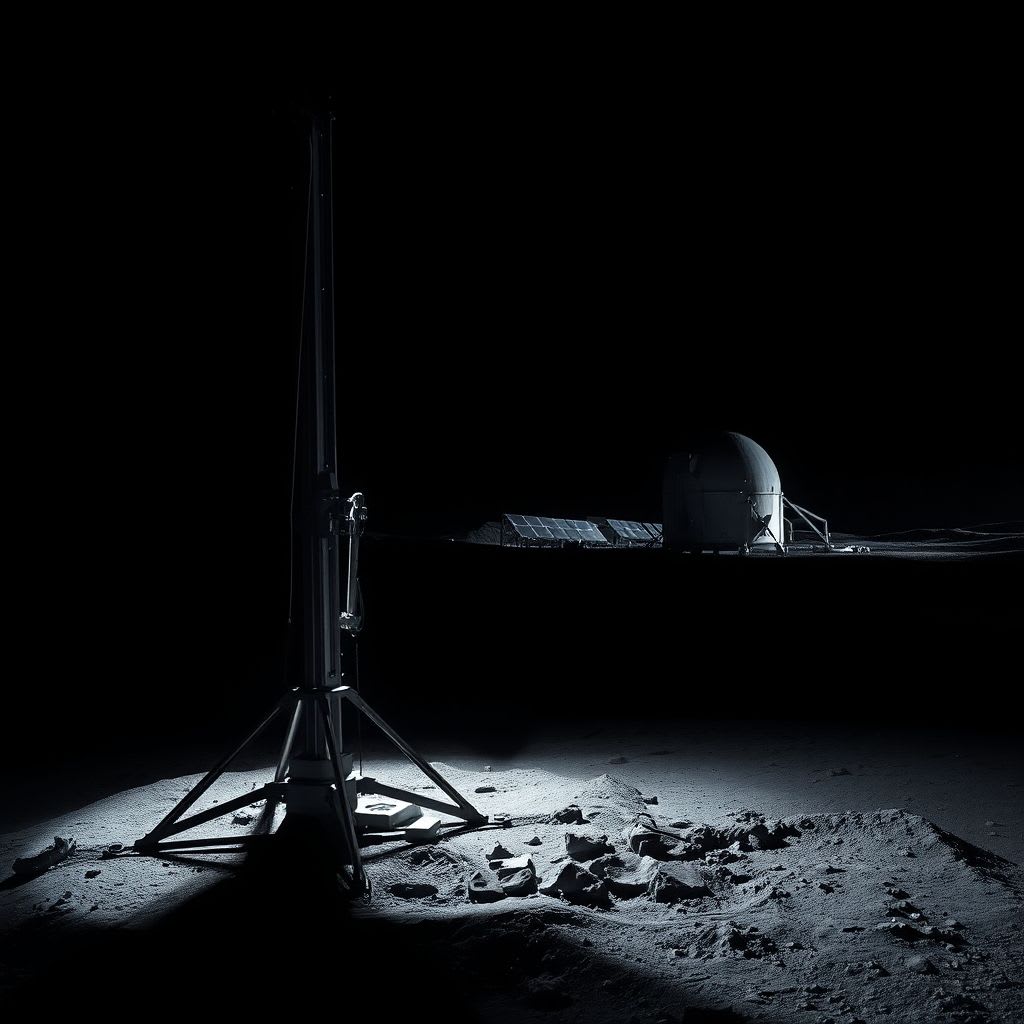
When we picture the Moon, we often imagine a desolate, grey landscape endless dust, massive craters, and complete silence under a black sky. With no breathable atmosphere and extreme temperatures, it seems like the last place where humans could live. But beneath this lifeless surface lies a surprising key to our future in space: frozen water hidden in the shadows of lunar craters. And from that ice, scientists are working on a groundbreaking solution producing oxygen on the Moon.
The Hidden Ice of the Moon
For decades, we believed the Moon was bone dry. The Apollo missions brought back dusty rocks, and early observations supported the idea that there was no water anywhere. But over the past 20 years, that assumption has changed dramatically.
Thanks to modern spacecraft like India’s Chandrayaan-1, NASA’s Lunar Reconnaissance Orbiter (LRO), and the LCROSS impactor mission, we now know there is water ice buried in permanently shadowed regions of lunar craters particularly near the Moon’s poles. These areas never receive sunlight, and temperatures there can drop to a bone-chilling -240°C (-400°F), cold enough to preserve ice for billions of years.
Extracting Ice in Harsh Lunar Conditions
Mining ice on Earth is one thing mining it on the Moon is an entirely different challenge. Lunar ice is often mixed with dust and rock (called regolith), and it doesn’t just lie in neat, frozen sheets. It may be scattered through the soil, a few inches to several meters below the surface.
To access it, future missions will need to deploy robotic drills equipped with heating systems and water separators. These machines will melt the ice, collect the resulting water, and prepare it for the next step: electrolysis.
Of course, none of this is possible without energy. Since lunar nights last for two Earth weeks, solar power alone might not be enough. That’s why researchers are also exploring small nuclear reactors or hybrid systems to power these life-supporting operations around the clock.
Turning Water into Oxygen: The Magic of Electrolysis
Once liquid water is collected from the ice, it can be broken down using a process called electrolysis. By applying an electric current, water (H₂O) is split into its two basic elements: hydrogen (H₂) and oxygen (O₂).
The oxygen can be stored and used for breathing inside habitats, while the hydrogen can be saved for fuel or reused in other chemical reactions for example, to create methane, which is useful for rocket propulsion.
This technology isn’t new. It’s already in use aboard the International Space Station (ISS), where astronauts rely on electrolysis to recycle water into breathable air. The challenge now is adapting those systems for lunar gravity, radiation, and temperature extremes all while keeping them lightweight and efficient.
Why Making Oxygen on the Moon Matters
1. Cutting Costs
Transporting supplies from Earth is expensive. A single kilogram of oxygen sent to the Moon can cost anywhere from $10,000 to $100,000. Being able to produce oxygen locally means enormous savings and far greater independence from Earth based resupply.
2. Creating a Closed Ecosystem
If we can generate oxygen on the Moon, we can also support plant growth in bio domes and greenhouses. Plants, in turn, produce more oxygen and recycle carbon dioxide. This creates a closed-loop life support system a vital step toward long term lunar habitats.
3. A Stepping Stone to Mars
The Moon is the perfect training ground. The technologies we develop for lunar oxygen generation will be crucial for future missions to Mars and beyond. If we can master resource extraction in the Moon’s challenging environment, we’ll be much better prepared for the Red Planet.
What’s Already Happening?
Major space agencies and private companies are racing to develop the tools for in-situ oxygen production:
- NASA, through its Artemis program, is investing in ISRU (In-Situ Resource Utilization) technology including experimental units that could extract oxygen from lunar ice and even directly from lunar soil (regolith, which contains oxygen rich minerals).
- Fleet Space Technologies, an Australian startup, along with European space initiatives, is developing compact electrolysis systems that could be deployed in early Moon missions.
- As early as 2024, we may see the first tests of lunar oxygen extraction systems, laying the foundation for human survival on the Moon.
A Breath of the Future
The idea of breathing air made on the Moon once sounded like science fiction. But today, it’s an engineering challenge one that humanity is quickly rising to meet. With each new mission, we’re getting closer to a future where lunar explorers won’t just visit the Moon they’ll live there.
Someday soon, an astronaut may step out of their lunar base, take a deep breath of locally produced oxygen, and gaze back at Earth hanging in the black sky. That moment will symbolize not just survival, but a bold new era of off-world living all made possible by the frozen water hidden in the Moon’s ancient shadows.
About the Creator
Keep reading
More stories from Holianyk Ihor and writers in Futurism and other communities.
Space Sleep: How Astronauts Rest—and What It Means for the Future of Humanity Beyond Earth
When we think of space exploration, images of rocket launches, floating astronauts, and distant planets come to mind. But few people consider one of the most fundamental human needs: sleep. In space, getting a good night’s rest becomes a serious challenge and the science of sleep physiology beyond Earth is far more fascinating (and critical) than it seems.
By Holianyk Ihor7 months ago in Futurism
About Binding Prometheus
I want to start actively advocating on behalf of my own work, and the most valuable part of my canon is, without a doubt, Binding Prometheus, the play I have been working on since 2019 and only finished in 2023 as part of my MA. The play itself is an amalgamation of a million different inspirations. On one end, it evokes the Ancient Greek myth-play, deriving its own title from the earliest extant work of Western drama we have, Aeschylus’s Prometheus Bound. On the other end, it borrows significantly from the sci-fi bulwarks from over the years, namely Mary Shelley’s Frankenstein and Karel Capek’s Rossum’s Universal Robots. The play could be an episode of Black Mirror, I fear. I don’t know. I’ve only ever seen one episode of Black Mirror.
By Steven Christopher McKnight15 days ago in Futurism
"Hear Me Out"
"Hear me out, what if we ran away together?" "Where do you want to go?" "Anywhere but here. We could move to a new city or to Canada, or we could disappear from society to live in the middle of the woods. Maybe a combination of two of those things would be good. What do you say?"
By Kay Husnick8 days ago in Fiction


Comments
There are no comments for this story
Be the first to respond and start the conversation.