
Aquaculture Market Outlook: Global Protein Demand and Industry Growth Opportunities
The aquaculture market is witnessing robust growth, driven by rising global demand for protein, increasing fish consumption, and advancements in sustainable aquaculture practices.

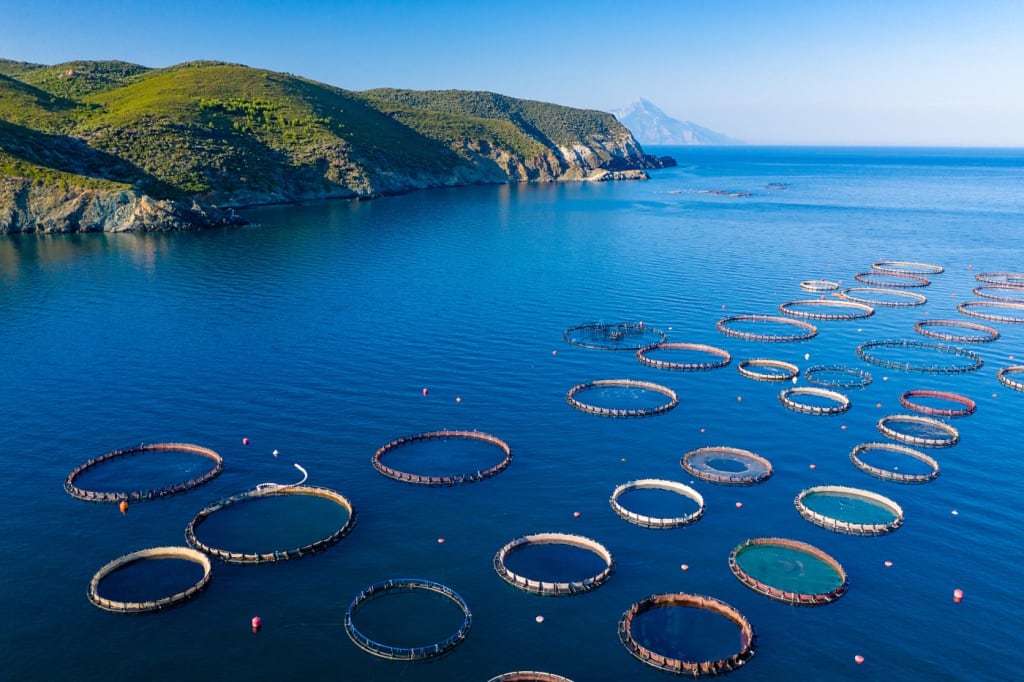
Rising global seafood demand, declining wild fish stocks, and focus on food security are driving growth in the aquaculture market. Increasing adoption of sustainable farming practices and advanced feeding technologies improves productivity and resource efficiency. According to IMARC Group's latest research publication, The global aquaculture market size was valued at 82.8 Million Tons in 2024. Looking forward, IMARC Group estimates the market to reach 122.9 Million Tons by 2033, exhibiting a CAGR of 4.03% during 2025-2033
How AI is Reshaping the Future of Aquaculture Market
- Smart Water Quality Monitoring and Control: IoT-enabled sensors continuously track temperature, pH, dissolved oxygen, and ammonia levels in real-time. These systems reduce water use by up to 50% while maintaining optimal conditions, sending instant alerts when parameters deviate, enabling immediate corrective actions before problems escalate.
- AI-Driven Disease Prediction and Prevention: Computer vision algorithms analyze fish images and sensor data to detect physical abnormalities and patterns indicating health issues. Early detection capabilities have reduced mortality rates by up to 40%, minimizing losses and cutting antibiotic use while supporting sustainable farming practices.
- Automated Precision Feeding Systems: AI algorithms monitor fish appetite, biomass, and growth data to optimize feeding schedules and portions automatically. These smart feeding platforms have achieved up to 40% reduction in feed waste, dramatically cutting costs and preventing nutrient runoff that harms aquatic ecosystems.
Aquaculture Industry Overview:
Government support is fueling unprecedented growth in sustainable aquaculture practices worldwide. The U.S. Department of Agriculture invested USD 75 million in aquaculture research throughout the year to advance sustainable production methods. NOAA's National Aquaculture Initiative allocated approximately USD 5 million in federal funds to strengthen coastal and marine aquaculture businesses. India's Pradhan Mantri Matsya Sampada Yojana committed USD 3 billion to enhance production capacity, while Saudi Arabia's Vision 2030 targets 600,000 tons annual production backed by USD 200 million in strategic investments.
Aquaculture Market Trends & Drivers
Rising global seafood consumption is creating massive opportunities for aquaculture expansion as traditional capture fisheries plateau. Over 72% of India's population—roughly 967 million people—now consume fish regularly, according to government research combining National Family Health Survey data spanning 15 years. The Asia-Pacific region dominates global production with China alone contributing over 60% of regional output. Major importing countries demonstrate substantial demand, with the U.S. representing 15% of global seafood trade by value, China at 12%, and Japan at 9%. This surging appetite for protein-rich seafood, driven by health-conscious consumers seeking omega-3 fatty acids and lean nutrition, is pushing aquaculture facilities to adopt advanced technologies that boost yields while meeting strict sustainability requirements.
Technology adoption is revolutionizing farm operations through integrated IoT and AI platforms that deliver measurable efficiency gains. The ICAR-Central Institute of Brackishwater Aquaculture organized Smart Aquaculture programs in March promoting AI and IoT implementation across farm management, water quality, feeding, health monitoring, and supply chains. Real-time sensor feedback enables timely interventions like adjusting aeration or feed inputs, achieving remarkable improvements in production metrics. Automated systems now handle up to 25% of manufacturing tasks in modern facilities, while precision feeding reduces feed waste by 40% and improves conversion ratios substantially. Countries like Norway deploy underwater robots for net inspection and fish behavior monitoring, Singapore operates offshore AI-controlled feeding systems, and even Rwanda pilots low-cost IoT sensors for tilapia ponds, demonstrating technology's scalability across diverse markets and farm sizes.
Sustainability mandates and resource optimization are reshaping industry practices as environmental concerns intensify. Recirculating Aquaculture Systems (RAS) have emerged as game-changers, using minimal water through advanced recycling that makes land-based operations highly competitive. South Korea launched its first land-based salmon farm in Busan with cutting-edge RAS technology targeting 500 tons annual production, representing a major shift from total import dependence. Lerøy Seafood Group is integrating chicken meal into fish feed, achieving projected 46% greenhouse gas emissions reductions while improving resource efficiency and fish health. Thai Union Group secured USD 150 million in Blue Loan financing—Thailand's first for the seafood industry—specifically to advance sustainable shrimp procurement and climate goals. These innovations address water scarcity, reduce chemical runoff, minimize habitat disruption, and help aquaculture operators meet both regulatory standards and growing consumer demand for responsibly sourced seafood.
Leading Companies Operating in the Global Aquaculture Industry:
- Blue Ridge Aquaculture
- Cermaq Group AS
- Charoen Pokphand Foods PCL
- Cooke Aquaculture
- Grieg Group
- Leroy
- Maruha Nichiro Corporation
- Mowi
- SalMar ASA
- Stehr Group
- Tassal Group
Aquaculture Market Report Segmentation:
By Fish Type:
- Freshwater Fish
- Molluscs
- Crustaceans
- Others
Freshwater fish represents the largest segment with approximately 46.2% market share, driven by high adaptability to farming environments, lower production costs, and strong demand for species like tilapia, catfish, and carp.
By Environment:
- Fresh Water
- Marine Water
- Brackish Water
Fresh water leads with around 46.2% market share owing to its widespread availability, lower operational costs, and suitability for cultivating popular commercial species.
By Distribution Channel:
- Traditional Retail
- Supermarkets and Hypermarkets
- Specialized Retailers
- Online Stores
- Others
Traditional retail dominates with approximately 32% market share due to broad accessibility, consumer confidence from physical product selection, and direct relationships with local producers ensuring fresh seafood availability.
Regional Insights:
- Asia Pacific (China, Indonesia, India, Vietnam, Philippines, South Korea, Japan, Thailand, Malaysia, Australia, Others)
- Latin America (Chile, Brazil, Ecuador, Mexico, Others)
- Europe (Norway, Spain, Russia, United Kingdom, France, Italy, Greece, Netherlands, Ireland, Denmark, Germany, Others)
- Middle East and Africa (Egypt, Turkey, Saudi Arabia, Others)
- North America (United States, Canada)
Asia-Pacific exhibits clear dominance in the aquaculture market, accounting for over 90.7% market share, driven by extensive production capabilities, optimal climatic conditions, rich biodiversity, abundant water resources, and strong government support.
Recent News and Developments in Aquaculture Market
- May 2025: Thai Union Group secured a landmark USD 150 million Blue Loan from the Asian Development Bank (ADB), the first of its kind in Thailand's seafood industry, to advance sustainable shrimp procurement and climate goals under its SeaChange® 2030 strategy. The loan supports sourcing shrimp certified by Global Sustainable Seafood Initiative-recognized schemes, promoting environmental sustainability and social responsibility.
- April 2025: South Korea's first land-based salmon farm, operated by Eco Aquafarm in Busan, began operations, aiming to produce 500 tons of Atlantic salmon annually using advanced recirculating aquaculture system (RAS) technology from AKVA group. This marks a major shift from total reliance on imports and supports the nation's Smart Aquaculture Cluster initiative.
- March 2025: Kelly Cove Salmon Ltd. (KCS), a division of Cooke Aquaculture Inc., acquired the defunct Aqua Bounty Canada Inc. operations on Prince Edward Island (PEI). KCS plans to use the acquired hatchery and RAS facilities to produce large smolts for its Atlantic Canadian ocean farms, supporting sustainable aquaculture and local job creation.
- March 2025: Stolt-Nielsen announced significant investments exceeding USD 400 million to expand and enhance its US operations in liquid logistics and land-based aquaculture. Additionally, Stolt Sea Farm plans to introduce sustainable RAS for responsible seafood farming, reinforcing the company's commitment to innovation and environmental safety.
- February 2025: Lerøy Seafood Group advanced its sustainability goals by integrating chicken meal into fish feed to reduce greenhouse gas emissions by 46% by 2030. Partnering with EWOS and supported by Bellona, Lerøy aims to industrialize by-product utilization, enhancing resource efficiency and fish health.
Note: If you require specific details, data, or insights that are not currently included in the scope of this report, we are happy to accommodate your request. As part of our customization service, we will gather and provide the additional information you need, tailored to your specific requirements. Please let us know your exact needs, and we will ensure the report is updated accordingly to meet your expectations.
About the Creator
Michael Richard
Michael Richard is a Market Research Expert specializing in market intelligence, competitive analysis, and data-driven insights. He helps organizations understand trends and emerging opportunities through in-depth research.
Keep reading
More stories from Michael Richard and writers in Futurism and other communities.
Underground Mining Equipment Market Outlook: Automation, Technology, and Growth Opportunities
Rising focus on infant nutrition, increasing number of working parents, and demand for convenient feeding solutions are driving growth in the baby food and infant formula market. According to IMARC Group's latest research publication, The global underground mining equipment market size reached USD 29.9 Billion in 2024. Looking forward, IMARC Group expects the market to reach USD 39.7 Billion by 2033, exhibiting a growth rate (CAGR) of 3.22% during 2025-2033.
By Michael Richardabout 4 hours ago in Futurism
About Binding Prometheus
I want to start actively advocating on behalf of my own work, and the most valuable part of my canon is, without a doubt, Binding Prometheus, the play I have been working on since 2019 and only finished in 2023 as part of my MA. The play itself is an amalgamation of a million different inspirations. On one end, it evokes the Ancient Greek myth-play, deriving its own title from the earliest extant work of Western drama we have, Aeschylus’s Prometheus Bound. On the other end, it borrows significantly from the sci-fi bulwarks from over the years, namely Mary Shelley’s Frankenstein and Karel Capek’s Rossum’s Universal Robots. The play could be an episode of Black Mirror, I fear. I don’t know. I’ve only ever seen one episode of Black Mirror.
By Steven Christopher McKnightabout a month ago in Futurism
Logistics Market Outlook: Supply Chain Transformation and Growth Opportunities
Rising global trade, rapid e-commerce expansion, and increasing demand for faster deliveries are driving growth in the logistics market. According to IMARC Group's latest research publication, The global logistics market size was valued at USD 5.65 Trillion in 2025. Looking forward, the industry is projected to reach USD 8.07 Trillion by 2034, exhibiting a CAGR of 4.02% during 2026-2034.
By James Whitmanabout 4 hours ago in Futurism


Comments
There are no comments for this story
Be the first to respond and start the conversation.