
AI in Daily Life : The Silent Revolution
How artificial intelligence is quietly transforming the way we live, work, and think.
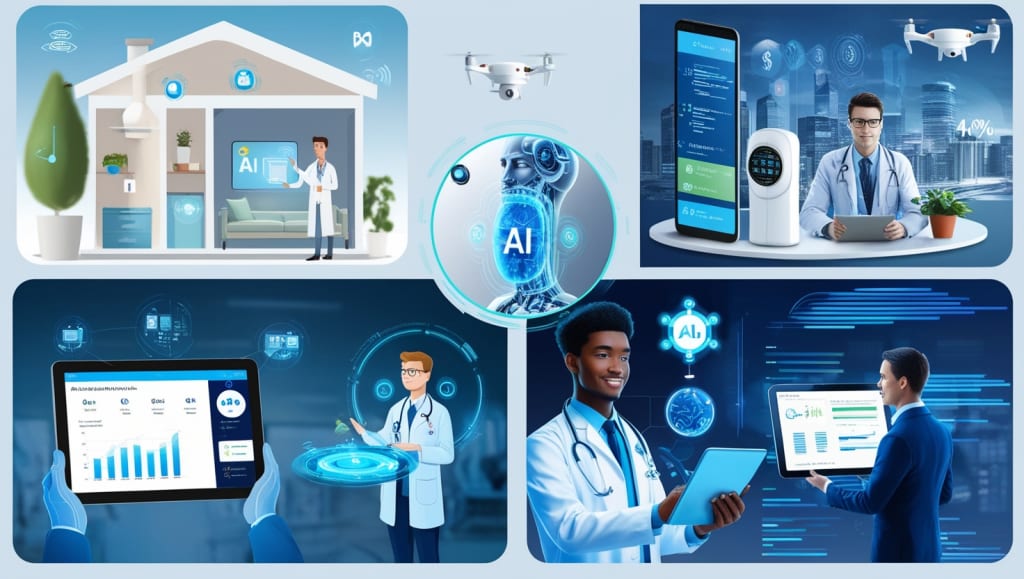
Artificial Intelligence (AI) has transitioned from science fiction to a very real part of our daily lives. It no longer exists solely in futuristic movies or complex labs; it’s right here, in our pockets, homes, and workplaces. While we may not always notice it, AI is rapidly becoming one of the most transformative technologies of the 21st century.
Let’s dive into how artificial intelligence is subtly — yet powerfully — reshaping the world around us, and what it means for the way we live and work.
What is Artificial Intelligence?
At its core, AI refers to the ability of machines to mimic human intelligence. These systems can learn from data, recognize patterns, make decisions, and even predict future outcomes — often more efficiently than humans.
From voice assistants like Siri and Alexa to recommendation systems on Netflix and Amazon, AI is everywhere. But its influence goes far beyond just convenience.
1. Smart Homes: Living with Intelligent Devices
The modern home is no longer just a physical space — it’s an intelligent environment.
Smart thermostats learn your schedule and adjust temperature automatically. AI-powered security cameras detect unusual behavior and alert you in real-time. Lights turn off when you leave the room, and your coffee starts brewing the moment your alarm rings.
These innovations are more than just luxuries — they save time, energy, and provide a new level of comfort and security.
2. AI in Healthcare: Smarter Diagnoses, Better Care
Perhaps the most meaningful use of AI is in the healthcare industry.
AI algorithms can scan medical images like X-rays and MRIs to detect diseases earlier and with higher accuracy than human doctors. They help doctors analyze symptoms, suggest treatment options, and even predict potential health risks based on patient history.
Remote monitoring tools powered by AI allow for continuous health tracking, reducing hospital visits and ensuring better patient care, especially in rural or underserved areas.
3. Personalized Education: Learning Tailored to You
AI has entered classrooms too. Intelligent tutoring systems analyze how students learn and adapt accordingly.
For example, an AI-powered learning app can detect when a student struggles with a concept and offer additional explanations, videos, or exercises tailored to their specific needs. This kind of personalized education has been shown to improve retention and engagement, especially in remote learning environments.
4. Financial Intelligence: Smarter Investments and Spending
In the world of finance, AI is transforming how we manage money.
AI-powered robo-advisors help investors choose stocks and manage portfolios based on real-time market analysis. Banks use AI to detect fraudulent transactions, automate customer service, and even offer spending advice.
Even budgeting apps now use AI to predict future expenses and help users save more effectively.
5. AI in Entertainment: The Content You Crave
Ever wondered how Netflix always seems to know what you want to watch next? That’s AI at work.
AI analyzes your viewing habits to recommend shows and movies you’re most likely to enjoy. The same happens on Spotify, YouTube, and even social media platforms like TikTok, where AI tailors content to your preferences — keeping you engaged (and often addicted).
Benefits of AI in Daily Life
Efficiency: Tasks that once took hours can now be done in minutes, or automatically.
Convenience: Personalized services make everyday life smoother and more comfortable.
Safety: From fraud detection to surveillance, AI contributes to personal and public safety.
Healthcare Access: AI-powered diagnostics are improving access and quality of healthcare worldwide.
Challenges and Ethical Questions
Despite its benefits, AI also comes with concerns:
Job Automation: Many fear that AI will replace human jobs, especially in manufacturing, customer service, and transportation.
Bias in AI Systems: If an AI learns from biased data, it can make unfair decisions — particularly in areas like hiring or law enforcement.
Privacy Issues: As AI systems collect more personal data, concerns over surveillance and data misuse are rising.
Dependence on Technology: There's also the risk of becoming too reliant on machines, losing critical thinking or interpersonal skills.
What Does the Future Hold?
Looking ahead, AI is expected to continue evolving rapidly. Self-driving cars, AI-powered cities, and advanced robotics are no longer ideas of tomorrow — they’re under development today.
But as AI grows smarter, the way we shape its development will determine whether it becomes a tool of liberation — or control.
Final Thought:
Artificial intelligence is not just a trend; it's a technological shift reshaping how we interact with the world. Understanding it today is crucial to navigating the future. The next time your phone suggests a shortcut, or your bank alerts you to a suspicious charge, remember: you’re already living in the age of AI.
So, how will you prepare for a world where machines may soon think — and possibly decide — for us?
About the Creator
Keep reading
More stories from RafiBinYousaf and writers in Futurism and other communities.
Rising Shadows, Shifting Powers
In the name of Allah, the Most Gracious, the Most Merciful The world stands at a delicate crossroads. Time is spinning swiftly, and the destinies of nations are being redrawn on new lines. Circumstances are changing before our eyes, yet the common person remains unaware. What lies ahead will not only shake global politics but also deeply impact the hearts and minds of the Muslim Ummah. All of this is happening silently, but those who can see, know that deep changes are taking root beneath the surface. The epicenter of this transformation is the Middle East, where countries like Israel, Arab states, Pakistan, Iran, and Turkey are preparing for monumental decisions.
By RafiBinYousaf9 months ago in History
About Binding Prometheus
I want to start actively advocating on behalf of my own work, and the most valuable part of my canon is, without a doubt, Binding Prometheus, the play I have been working on since 2019 and only finished in 2023 as part of my MA. The play itself is an amalgamation of a million different inspirations. On one end, it evokes the Ancient Greek myth-play, deriving its own title from the earliest extant work of Western drama we have, Aeschylus’s Prometheus Bound. On the other end, it borrows significantly from the sci-fi bulwarks from over the years, namely Mary Shelley’s Frankenstein and Karel Capek’s Rossum’s Universal Robots. The play could be an episode of Black Mirror, I fear. I don’t know. I’ve only ever seen one episode of Black Mirror.
By Steven Christopher McKnight28 days ago in Futurism
Europe Pen Needles Market Poised for Steady Expansion, Reaching US$1.10 Billion by 2031 Amid Diabetes Growth and Home-Care Shift
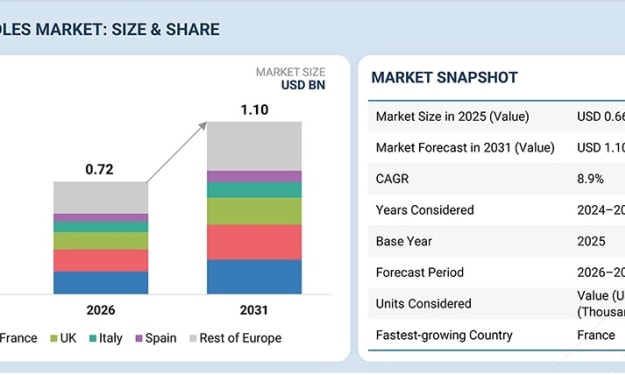
Europe’s pen needles market is entering a period of sustained, value-driven growth as chronic disease burden, demographic shifts, and home-based care adoption reshape injectable therapy delivery across the region. Valued at US$0.66 billion in 2025, the market increased to US$0.72 billion in 2026 and is projected to expand at a resilient CAGR of 8.9% from 2026 to 2031, reaching a forecasted US$1.10 billion by 2031.
By Juan Martinez2 days ago in Futurism



Comments
There are no comments for this story
Be the first to respond and start the conversation.