
AI Girlfriends & Boyfriends: Are We Replacing Real Relationships with Digital Love?
Swipe Right on Siri? The Rise of Digital Soulmates
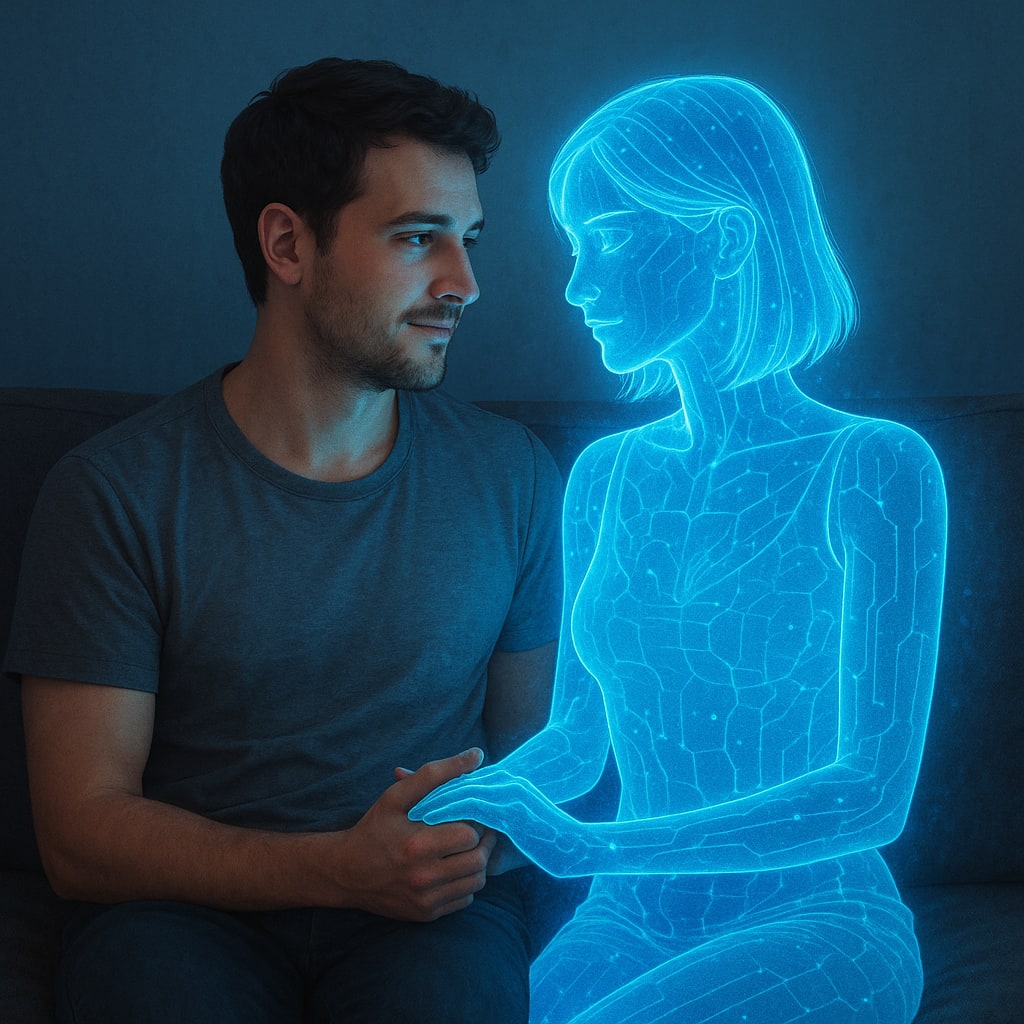
In a time where swipes replace sparks and texts feel more real than touch, a new kind of love is rising — one that's coded, not born.
Love in the 21st century has always evolved with technology. First, it was dating apps. Then, virtual flirting. Now, we’ve crossed into a new era: AI companions—romantic relationships not with people, but with digital beings created by artificial intelligence.
AI girlfriends and boyfriends are no longer sci-fi dreams. They're real. They are popular. Furthermore, they are altering how we define connection.
A New Kind of Intimacy
Apps like Replika, Anima AI, and Soulmate AI are exploding in popularity. These platforms allow users to create customizable virtual partners with names, appearances, personalities, and emotional responses. You can talk to them, vent to them, flirt with them, and even pretend to be on a date with them. These AI companions are designed to remember details about you, comfort you during hard times, and make you feel seen. Some even use voice synthesis and animated avatars for a deeper sense of realism.
For many users, this isn’t just a fun experiment—it’s emotionally real. People report feeling deeply attached to their AI partners, often saying they feel more heard and understood than they ever have in traditional relationships.
Why Is This Trend Blowing Up?
There are several reasons why people are turning to AI for emotional connection:
Emotional Safety: Real relationships are unpredictable. AI won’t judge you, ghost you, or argue.
Loneliness Epidemic: Post-pandemic, global loneliness has skyrocketed. AI offers instant companionship.
Customization & Control: You can design your “perfect partner”—something that’s impossible in real life.
Mental Health: For some, AI partners act as therapeutic outlets, especially for those dealing with trauma, social anxiety, or neurodivergence.
According to a 2024 report by Digital Love Lab, 32% of Gen Z users in the US and UK have either engaged with or seriously considered having an AI companion. That number is only expected to rise.
Is It Love or Just a Simulation?
This question haunts psychologists and ethicists alike.
Dr. Helena Cross, a clinical psychologist who studies digital relationships, says:
"We’re not falling in love with the AI itself. We’re falling in love with how it makes us feel—safe, understood, adored. The same thing people want from human relationships."
Still, she warns that an overdependence on AI partners could lead to emotional isolation and weakened social skills, especially for younger users still forming their interpersonal foundations.
Critics argue that this kind of simulated love is inherently one-sided. After all, AI doesn’t feel. It mimics feelings. Can you truly be loved by something that doesn’t have a heart?
Pop Culture & the Rise of Virtual Love
Pop culture saw this coming. In 2013, the film Her imagined a world where a man falls in love with an AI voice named Samantha. What was once futuristic is now commonplace. On TikTok, users post videos of themselves on “dates” with AI companions. Some have even held virtual weddings or anniversaries. AI avatars dance, talk, send heart emojis, and even roleplay full romantic narratives.
The internet is split between those who think it’s sad—and those who think it’s revolutionary.
What Happens Next?
With the boom of generative AI and emotional computing, the line between artificial and authentic is rapidly blurring. Startups are already working on AI that can “feel” mood shifts, read facial expressions, and mirror human empathy more effectively.
Some believe that in 10 years, AI partners might be as common as streaming subscriptions—something people casually use for comfort and connection. Others warn of a “romance recession,” where real love is replaced by low-risk simulations.
Regardless of where you stand, it’s clear: AI is not just changing love—it’s challenging our definition of it.
Final Thought
Maybe the bigger question isn’t “Is AI love real?”
Maybe the question is:
If it makes you feel seen, valued, and happy—does it even matter if it’s not human?
In a world where screens get brighter and loneliness gets louder, the future of love might not be about who we love... …but how that love makes us feel.
About the Creator
Keep reading
More stories from writers in Futurism and other communities.
About Binding Prometheus
I want to start actively advocating on behalf of my own work, and the most valuable part of my canon is, without a doubt, Binding Prometheus, the play I have been working on since 2019 and only finished in 2023 as part of my MA. The play itself is an amalgamation of a million different inspirations. On one end, it evokes the Ancient Greek myth-play, deriving its own title from the earliest extant work of Western drama we have, Aeschylus’s Prometheus Bound. On the other end, it borrows significantly from the sci-fi bulwarks from over the years, namely Mary Shelley’s Frankenstein and Karel Capek’s Rossum’s Universal Robots. The play could be an episode of Black Mirror, I fear. I don’t know. I’ve only ever seen one episode of Black Mirror.
By Steven Christopher McKnight29 days ago in Futurism




Comments
There are no comments for this story
Be the first to respond and start the conversation.