
A Historic Pact: Pakistan and Saudi Arabia Unite in Mutual Defense
How the new strategic agreement reshapes alliances, strengthens deterrence, and signals a shifting balance of power in the Middle East and South Asia
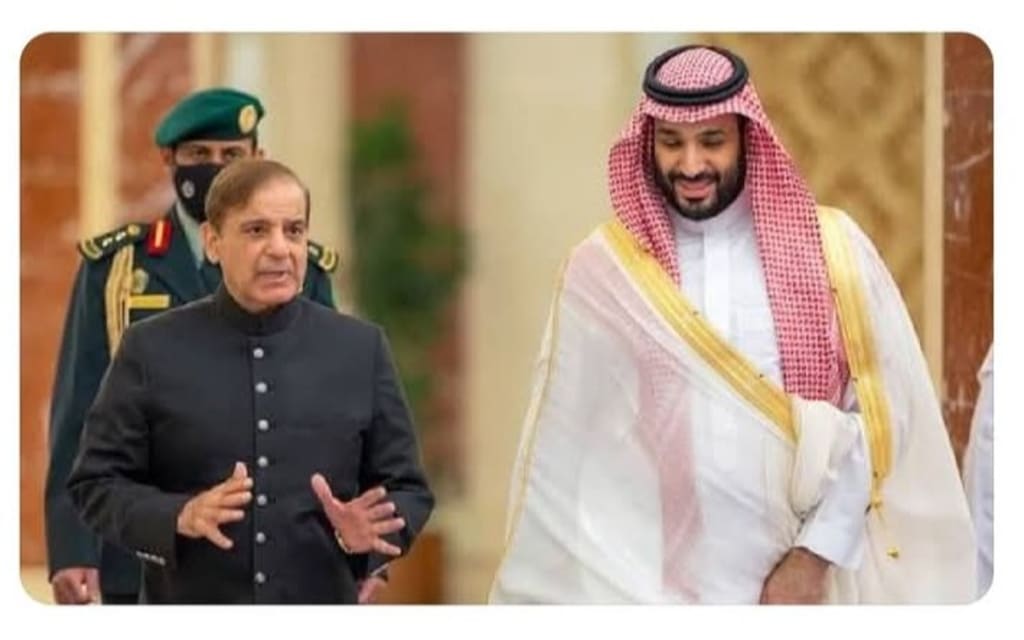
On September 17, 2025, Pakistan and Saudi Arabia signed a landmark mutual defense agreement, formalizing a strategic alliance that echoes through the geopolitics of South Asia and the Middle East. The pact, officially dubbed a “Strategic Mutual Defense Agreement,” binds the two countries in a commitment that an attack on one will be regarded as an attack on both.
---
Background and Context
This agreement takes place amid growing uncertainty over regional security, especially in light of recent events such as an Israeli airstrike in Doha, Qatar, which targeted leaders of Hamas. The attack has stirred deep unease among several Arab states.
Saudi Arabia has long maintained close defense, religious, and economic ties with Pakistan. Over the decades, Pakistan has been a key partner in securing Saudi Arabia’s interests, including helping to guard the holy cities, training Saudi forces, and participating in military exercises.
For Saudi Arabia, the pact reflects growing concerns about the reliability of existing security guarantees, especially those that depend on external powers. Gulf states have in recent years increasingly explored diversification of their strategic alliances.
---
Key Provisions
The core clause of the agreement states that “any aggression against either country shall be considered an aggression against both.”
The agreement speaks of “developing aspects of defense cooperation” and strengthening “joint deterrence” against any aggression.
It is described by officials as comprehensive, encompassing all military means deemed necessary depending on the threat. There is some ambiguity, but the discussion of Pakistan being a nuclear-armed state has led analysts to speculate whether Pakistan’s nuclear deterrence could play a role in this pact.
However, the pact does not explicitly mention any particular third country as a target, nor does it publicly commit Saudi Arabia to act in every situation; officials emphasized that the agreement is not in reaction to specific events or adversaries.
---
Strategic Significance
The timing, language, and content of this agreement carry multiple messages.
1. Deterrence Signal: By tying their security so closely together, both Pakistan and Saudi Arabia aim to deter potential aggression from external actors. For Saudi Arabia, it amplifies its defensive posture at a time of rising tensions—such as Israeli strikes, worries over Iran’s nuclear program, and fluctuating US involvement in the region.
2. Nuclear Implications: Pakistan is one of the few nuclear-armed states in the region. The pact has prompted discussion about whether Pakistan’s nuclear “umbrella” might extend to Saudi Arabia under certain circumstances. While nothing has been confirmed, the mention of “all defensive and military means” is taken by many as opening that possibility.
3. Regional Realignment: This agreement is a strong indicator of shifting defense alignments. Gulf states, including Saudi Arabia, have traditionally depended heavily on the United States for security. That reliance appears to be under reconsideration—either complemented or backed up by alternative alliances.
4. Message to Multiple Parties: While Israel’s recent operations (especially in Qatar) appear to have been a trigger, the agreement is also likely aimed at signaling to other regional and global players, including India, Iran, and Western powers. For instance, India has responded carefully, saying it will study the implications of the deal for its national security and regional stability.
---
Reactions and Implications
India: New Delhi has acknowledged the agreement and underscores that it formalizes what has often been informal cooperation. Officials in India are assessing how this pact might affect India’s strategic calculations, especially given its own shared history and rivalries with Pakistan. Bilateral trade between India and Saudi Arabia is large and growing, which may complicate any fully aligned support with Pakistan.
Saudi Arabia: Riyadh has been cautious in its public statements, stressing that the pact is not a response to any specific country or threat. Saudi officials also insist the kingdom’s ties with India remain strong.
Pakistan: Islamabad likely views this as a major diplomatic win. Not just because of the security guarantee, but also due to its symbolic importance—reinforcing Pakistan’s role in regional security affairs and elevating its strategic partnership with one of the richest and most influential states in the Arab world.
Other Regional Players: Iran, other Gulf monarchies, and smaller states may interpret this alliance in different ways—either as a strengthening of Sunni-led security frameworks or as potential escalatory. The dynamics with Iran, in particular, will be of interest, given Saudi Arabia’s somewhat eased tensions with Tehran in recent years but continuing strategic competition.
---
Challenges, Caveats, and Unknowns
Implementation: The strength of any mutual defense pact lies not only in its text but in its execution. Questions remain: How fast can joint forces mobilize? What rules of engagement will apply? Under what conditions will Saudi Arabia act militarily if Pakistan is attacked—and vice versa?
Nuclear Ambiguity: While there is speculation about Pakistan’s nuclear deterrent being part of the arrangement, there is no public confirmation that Saudi Arabia will formally be included under Pakistan’s nuclear umbrella. Such arrangements carry massive diplomatic risk.
Diplomatic Balancing: Saudi Arabia also has ties with many countries that may react poorly to this pact. Ensuring that economic, trade, and diplomatic relationships—especially with India and Western powers—are not strained will require delicate balancing.
Regional Spillovers: Any perception of escalation could heighten tensions—especially with Israel, Iran, or over issues in Yemen and the broader Gulf. There is a risk of misinterpretation or overreaction from other states.
---
Conclusion
The Strategic Mutual Defense Agreement between Pakistan and Saudi Arabia is a consequential move—both deeply symbolic and potentially transformative. It reflects not only shared strategic interests and long-standing ties, but also a changing regional security architecture where countries are reconsidering dependencies and aligning more closely based on perceived threats.
For Pakistan, the deal reinforces its security assurances and elevated status in regional affairs. For Saudi Arabia, it provides a stronger deterrent and a reaffirmation of defense ties beyond its usual alliances. For the region, the pact adds a new dimension—one that could either contribute to stability, through deterrence and shared responsibility, or heighten tensions, depending on how it is managed.
As with many such pacts, much will depend on clarity, credible commitment, and how external actors respond. The coming months and years will test whether this agreement remains a declaration of solidarity or becomes a central pillar of a new strategic order in the Muslim world.
About the Creator
Hasbanullah
I write to awaken hearts, honor untold stories, and give voice to silence. From truth to fiction, every word I share is a step toward deeper connection. Welcome to my world of meaningful storytelling.
Keep reading
More stories from Hasbanullah and writers in Futurism and other communities.
The Heart of Steel: The Story of the Robot Girl Who Learned to Feel”
In the year 2147, technology had reached a place that once only existed in science fiction. Cities floated above the clouds, AI managed every aspect of human life, and robots had become an extension of daily existence—cleaning, cooking, building, and even teaching. But there was one thing they were never supposed to do: feel.
By Hasbanullah6 months ago in Futurism
About Binding Prometheus
I want to start actively advocating on behalf of my own work, and the most valuable part of my canon is, without a doubt, Binding Prometheus, the play I have been working on since 2019 and only finished in 2023 as part of my MA. The play itself is an amalgamation of a million different inspirations. On one end, it evokes the Ancient Greek myth-play, deriving its own title from the earliest extant work of Western drama we have, Aeschylus’s Prometheus Bound. On the other end, it borrows significantly from the sci-fi bulwarks from over the years, namely Mary Shelley’s Frankenstein and Karel Capek’s Rossum’s Universal Robots. The play could be an episode of Black Mirror, I fear. I don’t know. I’ve only ever seen one episode of Black Mirror.
By Steven Christopher McKnight18 days ago in Futurism
Saudi Arabia Quinoa Market: Rising Health Awareness, Import Growth & Demand Expansion
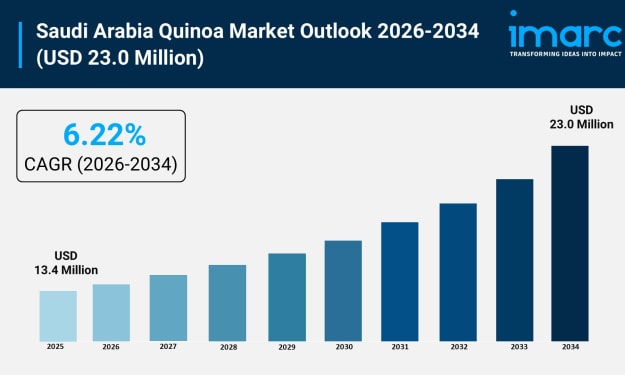
According to IMARC Group's latest research publication, Saudi Arabia quinoa market size reached USD 13.4 Million in 2025. The market is projected to reach USD 23.0 Million by 2034, exhibiting a growth rate of 6.22% during 2026-2034.
By Suhaira Yusufabout 8 hours ago in Futurism



Comments
There are no comments for this story
Be the first to respond and start the conversation.