
A 240-Million-Year-Old Dragon Fossil Unearthed in China: A Glimpse into Prehistoric Wonders
How a Stunning Fossil Discovery in China is Bridging the Worlds of Paleontology and Mythology with the Unearthing of a Real-Life Dragon

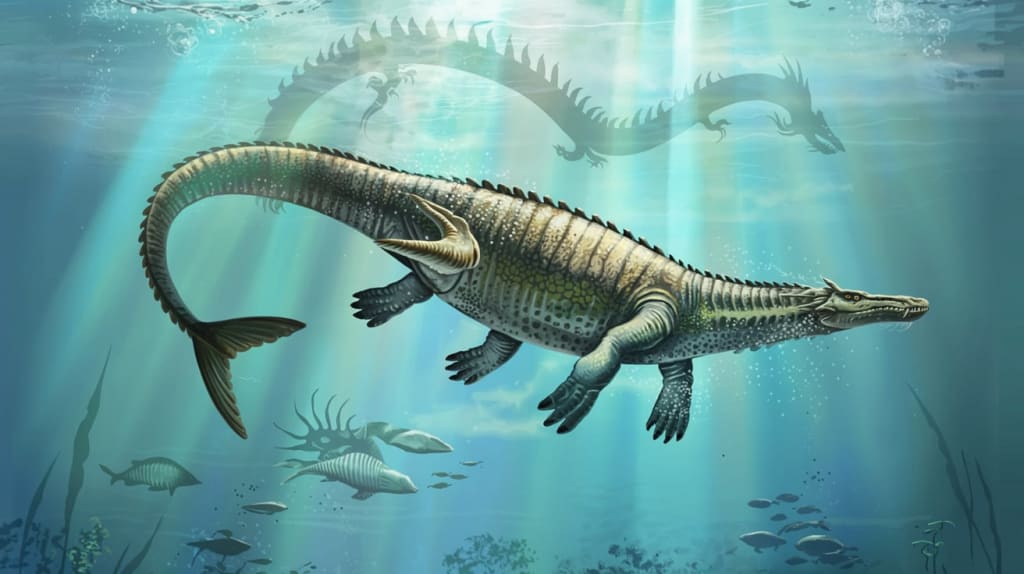
In a groundbreaking discovery that bridges the worlds of science and mythology, paleontologists have unearthed a remarkably preserved 240-million-year-old fossil in Guizhou Province, southern China. The fossil, belonging to a prehistoric marine reptile known as *Dinocephalosaurus orientalis*, has captured global attention due to its serpent-like body and extraordinary neck length—features reminiscent of the mythical Chinese dragon. This find not only deepens our understanding of prehistoric life during the Triassic period but also connects ancient biology with enduring cultural symbolism.
The Ancient “Dragon” of the Sea
The fossil in question represents the most complete specimen ever discovered of *Dinocephalosaurus orientalis*, a species that swam Earth's oceans long before dinosaurs roamed the land. Measuring approximately 16 feet (around 5 meters) in length, the creature’s body structure is unlike most known marine reptiles. It had an exceptionally long, flexible neck made up of over 30 vertebrae, more than any other reptile species known from that era. This evolutionary trait likely gave it a unique hunting advantage in the water, enabling it to strike at prey with precision.
The fossil was discovered in the Luoping Biota of the Yunnan-Guizhou Plateau, a region renowned for yielding well-preserved fossils from the Middle Triassic period. According to researchers, the *Dinocephalosaurus* belonged to a group of marine reptiles called archosauromorphs—relatives of modern-day birds and crocodiles.
A Marvel of Evolutionary Adaptation
What makes *Dinocephalosaurus orientalis* particularly fascinating is how it evolved its long neck. Unlike other marine reptiles such as plesiosaurs, which achieved long necks by elongating existing vertebrae, *Dinocephalosaurus* evolved its neck by **increasing the number of vertebrae**. This form of elongation allowed the animal to remain agile in the water while still maintaining structural integrity. The neck functioned much like a stealthy, whip-like appendage that could reach out and snatch small fish or other marine organisms before they had a chance to escape.
This evolutionary marvel is not just a testament to the complexity of life during the Triassic period, but it also showcases how nature can evolve different anatomical solutions to similar ecological challenges. The long neck is not just an adaptation—it’s a signature trait that blurs the line between paleontology and mythology.
Echoes of the Chinese Dragon
The visual similarities between *Dinocephalosaurus* and the traditional Chinese dragon are striking. With its elongated, sinuous body and aquatic nature, it’s easy to see why this fossil has been likened to the dragons of Chinese folklore. These mythical creatures are often depicted as powerful, benevolent water-dwellers with long bodies and commanding presence—traits that this prehistoric marine reptile might have embodied in real life.
In Chinese culture, dragons are symbols of strength, wisdom, and prosperity, often associated with rainfall and water bodies. The discovery of a real creature from ancient Earth that resembles this mythological icon offers a fascinating cultural resonance. It also serves as a reminder that many legends may have been inspired by remnants or sightings of ancient creatures that lived long before human civilization began.
A Triumph of International Collaboration
The discovery of this “dragon” fossil was made possible through the combined efforts of scientists from multiple countries, including China, the United States, the United Kingdom, and various European nations. This level of international cooperation highlights the global importance of paleontological research and the collective desire to uncover Earth’s prehistoric past.
Professor Li Chun of the Institute of Vertebrate Palaeontology and Palaeoanthropology (IVPP) in China led the research team and emphasized the uniqueness of the find. “Among all the extraordinary fossils found in the Triassic strata of Guizhou Province, *Dinocephalosaurus orientalis* stands out as particularly remarkable,” said Professor Li.
Their work was recently published in the scientific journal *Earth and Environmental Science Transactions of the Royal Society of Edinburgh*, where researchers detailed the anatomy and ecological implications of the fossil. The article emphasized how this discovery enhances our understanding of marine ecosystems from 240 million years ago, offering clues about predator-prey dynamics and evolutionary adaptations during the Triassic period.
A Window into the Past
This discovery doesn’t just add a new chapter to our understanding of ancient life—it opens a window into a world that existed hundreds of millions of years ago. During the Middle Triassic, Earth’s continents were joined in a supercontinent called Pangaea, and the oceans teemed with a variety of marine reptiles, many of which are now extinct. The presence of such a sophisticated predator as *Dinocephalosaurus orientalis* indicates that complex ecosystems were already well-established, long before the rise of the dinosaurs.
Furthermore, the exceptional preservation of this fossil allows scientists to study the soft tissues and skeletal structure in great detail, helping to answer long-standing questions about the anatomy and lifestyle of early marine reptiles. The fossil’s near-perfect condition provides a rare opportunity to reconstruct its movement, feeding behavior, and even possible reproductive strategies.
Conclusion: Science Meets Legend
The discovery of *Dinocephalosaurus orientalis* is more than just a scientific breakthrough—it’s a moment where science and legend converge. In this fossilized “dragon,” we find a real creature that once ruled the seas of prehistoric Earth, echoing the imagery and majesty of dragons found in myth and folklore. This blend of natural history and cultural symbolism makes the discovery deeply meaningful not only to scientists but also to the wider public.
As research continues, this ancient reptile will undoubtedly serve as a symbol of nature’s ingenuity and the enduring power of myth. Whether viewed as a scientific marvel or a living echo of a dragon’s tale, *Dinocephalosaurus orientalis* has secured its place in both the fossil record and the human imagination.
About the Creator
Tech Horizons
Exploring the future of technology, AI, gadgets, and innovations shaping tomorrow. Stay updated with Tech Horizons!
Keep reading
More stories from Tech Horizons and writers in Futurism and other communities.
Pi Network Unveils Tokenomics Plan with 100 Billion Pi Token Supply: A Game-Changer for Web3 Mining
In a landmark announcement that’s set to redefine the landscape of mobile mining and community-driven crypto economies, Pi Network has officially released the long-awaited tokenomics for its native cryptocurrency, the Pi token. According to the details published on April 22, 2025, by Crypto Times, the Pi Network will operate with a **fixed total supply of 100 billion Pi tokens**, laying the foundation for a scalable and sustainable token economy.
By Tech Horizons9 months ago in Futurism
About Binding Prometheus
I want to start actively advocating on behalf of my own work, and the most valuable part of my canon is, without a doubt, Binding Prometheus, the play I have been working on since 2019 and only finished in 2023 as part of my MA. The play itself is an amalgamation of a million different inspirations. On one end, it evokes the Ancient Greek myth-play, deriving its own title from the earliest extant work of Western drama we have, Aeschylus’s Prometheus Bound. On the other end, it borrows significantly from the sci-fi bulwarks from over the years, namely Mary Shelley’s Frankenstein and Karel Capek’s Rossum’s Universal Robots. The play could be an episode of Black Mirror, I fear. I don’t know. I’ve only ever seen one episode of Black Mirror.
By Steven Christopher McKnight19 days ago in Futurism
Food Service Equipment Market: Smart Kitchens, Operational Efficiency & Industry Trends
According to IMARC Group's latest research publication, global food service equipment market size reached USD 40.1 Billion in 2024. Looking forward, IMARC Group expects the market to reach USD 59.6 Billion by 2033, exhibiting a growth rate (CAGR) of 4.5% during 2025-2033.
By Andrew Sullivan5 days ago in Futurism
Silver Screen Magic with Mae West
American actress and singer Mae West became a popular film actress during the Great Depression. She started entertaining in vaudeville, then performed on Broadway, and finally went to Hollywood. She signed up with Paramount Pictures and made her debut in the 1932 film “Night After Night.” She also starred in musicals, comedies, and crime dramas. The American Film Institute named her one of the best classic Hollywood actresses.
By Rasma Raisters7 days ago in Geeks




Comments
There are no comments for this story
Be the first to respond and start the conversation.