
59 Missions to Mars: Why Only Half Have Succeeded and What It Means for Humanity
Space

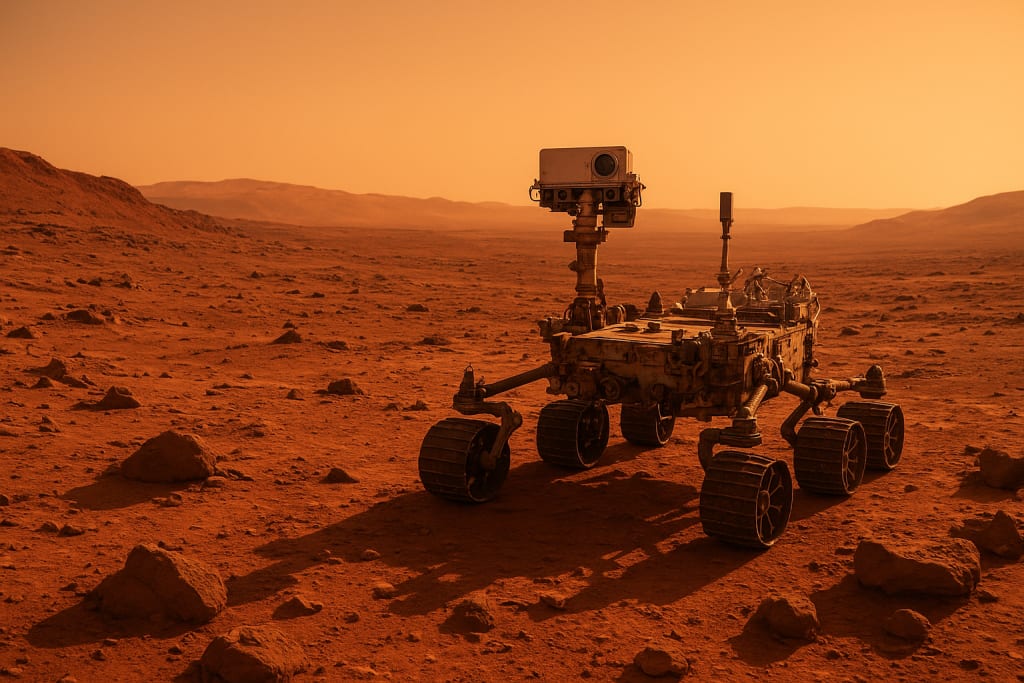
Mars has long been humanity’s ultimate frontier. The Red Planet has captured our imagination for decades, promising answers to questions about the origins of life, the history of our solar system, and even the future of humanity itself. Yet despite decades of effort, reaching Mars has proven to be far more difficult than many expected.
As of today, humans have launched 59 missions to Mars, but only about half of them have succeeded. This isn’t just a statistic — it’s a story of courage, failure, and innovation, showing the immense technical and psychological challenges involved in exploring another world.
Why Reaching Mars Is So Difficult
At first glance, Mars seems close enough — only tens of millions of kilometers away at its nearest approach. But the planet is highly unpredictable, and even tiny miscalculations can turn a multi-million-dollar mission into a permanent loss. Here are some of the main reasons why missions fail:
1. Vast Distances
The average distance to Mars ranges from 56 million to over 400 million kilometers, depending on Earth’s and Mars’ positions in their orbits. A minor navigation or timing error can result in a spacecraft missing the planet entirely. Unlike Earth missions, there’s no “turn back” button — once the spacecraft is en route, the mission is largely at the mercy of physics.
2. A Hostile Atmosphere
Mars’ atmosphere is extremely thin, with less than 1% of Earth’s air pressure. This makes landing particularly treacherous: parachutes provide limited deceleration, heat shields behave differently than on Earth, and retro-rockets must fire with precision down to milliseconds. Engineers often call Martian landings “seven minutes of terror” for good reason.
3. Early Technical Limitations
Many missions to Mars occurred decades ago, when onboard computers were far less capable than even today’s smartphones. Early missions often failed due to simple technical issues, such as software bugs or sensor malfunctions that modern technology could easily correct.
4. Radiation and Environmental Hazards
Space is full of hazards. Solar flares, cosmic rays, and extreme temperature fluctuations can fry electronics, degrade materials, and disrupt communications. Even the smallest component failure can doom a mission millions of kilometers from Earth.
5. Martian Weather
Mars is notorious for its massive dust storms, sometimes covering the entire planet. These storms can block sunlight, drain solar power, damage instruments, and even interfere with communications.
Famous Failures — and What They Taught Us
Mars’ exploration history is full of both spectacular failures and valuable lessons:
- In 1999, the Mars Climate Orbiter was lost due to a simple mix-up between metric and imperial units — a $125 million mistake.
- In 1971, the Soviet Mars-3 lander became the first craft to touch Mars’ surface but lost contact after just 20 seconds.
Several missions have vanished completely, becoming silent “ghosts” orbiting or crashing on the planet, leaving only fragments of data for scientists to study.
Each failure, however, contributed to better technology, refined procedures, and safer designs. Today’s missions are built on decades of hard-won experience.
Success Stories That Changed Everything
Despite the setbacks, there have been monumental achievements:
- Spirit and Opportunity (2004): Spirit was designed for a 90-day mission but lasted over six years, and Opportunity exceeded 14 years, traveling across Martian terrain far beyond expectations.
- Curiosity Rover (2012): Demonstrated that Mars once had conditions capable of supporting life.
- Perseverance Rover (2021): Collecting samples for future return missions and operating Ingenuity, the first helicopter on another planet.
- Orbiters like Mars Reconnaissance Orbiter, MAVEN, and ExoMars Trace Gas Orbiter: Provided detailed maps, weather data, and clues about Martian atmosphere and geology.
These successes weren’t just triumphs of engineering; they were the result of meticulously studying past failures.
Why We Keep Going Back
Despite the high risk of failure, humanity keeps returning to Mars for several reasons:
- Search for life: Ancient microbial life or its remnants could be hidden in Martian soil and rocks.
- Resources for future colonies: Water, minerals, and even energy from the sun could support human habitats.
- Pushing boundaries: Each mission proves that humans can explore environments far beyond Earth, testing our technology, endurance, and ingenuity.
Every successful landing is a small victory against the chaos of the universe, and every failure is a step closer to understanding and improvement.
The Future of Mars Exploration
- The next decade promises an explosion of Mars activity:
- Sample-return missions that bring Martian rocks back to Earth.
- More sophisticated autonomous landers and rovers.
- Plans for human missions, with NASA, ESA, and private companies like SpaceX leading the charge.
- New technologies for habitats, energy systems, and life support that can withstand years on a distant planet.
Modern missions are far more reliable than early attempts. While the historical success rate hovers around 50%, each mission adds to the collective knowledge, slowly tipping the odds toward success.
Mars: A Planet That Tests Us
Mars reminds us that space exploration is never easy. The Red Planet tests our engineering skills, our patience, and even our courage. But it also pushes humanity to learn, adapt, and imagine possibilities beyond Earth.
We’ve sent 59 missions to Mars — a number that will keep growing. Half have failed, but the other half have expanded our knowledge, inspired generations, and prepared the way for the first human footsteps on another world.
And one day, when humans finally walk on Martian soil, the statistics will change forever — a testament to the perseverance, creativity, and daring of humankind.
About the Creator
Keep reading
More stories from Holianyk Ihor and writers in Futurism and other communities.
Salyut-1: The First Space Station That Changed Humanity’s Future
In April 1971, humanity crossed a threshold it had only imagined for decades. A massive cylindrical structure, covered in panels and antennas, rose into the sky atop a roaring launch vehicle. This structure—later known to the world as Salyut-1—became the first human-made space station ever placed into orbit. Until that moment, astronauts and cosmonauts could only leap into space briefly before quickly returning home. Salyut-1 changed everything. For the first time in history, humans could live and work in space for weeks at a time.
By Holianyk Ihor2 months ago in Futurism
About Binding Prometheus
I want to start actively advocating on behalf of my own work, and the most valuable part of my canon is, without a doubt, Binding Prometheus, the play I have been working on since 2019 and only finished in 2023 as part of my MA. The play itself is an amalgamation of a million different inspirations. On one end, it evokes the Ancient Greek myth-play, deriving its own title from the earliest extant work of Western drama we have, Aeschylus’s Prometheus Bound. On the other end, it borrows significantly from the sci-fi bulwarks from over the years, namely Mary Shelley’s Frankenstein and Karel Capek’s Rossum’s Universal Robots. The play could be an episode of Black Mirror, I fear. I don’t know. I’ve only ever seen one episode of Black Mirror.
By Steven Christopher McKnight16 days ago in Futurism
DIY Furniture Market Size and Forecast 2025–2033
Introduction: The Rise of Hands-On Home Design Furniture is no longer just something we buy—it is increasingly something we build, customize, and take pride in creating. Across the world, consumers are embracing a hands-on approach to home décor, driven by a desire for personalization, affordability, and sustainable living. This shift has given rise to the fast-growing DIY (Do-It-Yourself) furniture market, where flat-pack kits, modular designs, and ready-to-assemble products empower individuals to become co-creators of their living spaces.
By Janine Root 2 days ago in Futurism



Comments
There are no comments for this story
Be the first to respond and start the conversation.