
DIY Furniture Market Size and Forecast 2025–2033
How Self-Assembly, Sustainability, and Digital Design Are Reshaping Global Home Décor


Introduction: The Rise of Hands-On Home Design
Furniture is no longer just something we buy—it is increasingly something we build, customize, and take pride in creating. Across the world, consumers are embracing a hands-on approach to home décor, driven by a desire for personalization, affordability, and sustainable living. This shift has given rise to the fast-growing DIY (Do-It-Yourself) furniture market, where flat-pack kits, modular designs, and ready-to-assemble products empower individuals to become co-creators of their living spaces.
According to Renub Research, the DIY Furniture Market is expected to reach US$ 212.59 billion by 2033, up from US$ 115.44 billion in 2024, expanding at a compound annual growth rate (CAGR) of 7.02% from 2025 to 2033. This growth reflects a fundamental change in how people furnish their homes—favoring flexibility, cost-efficiency, and creativity over traditional, pre-assembled furniture.
As urban living becomes more compact, sustainability gains importance, and digital platforms redefine shopping behavior, DIY furniture is evolving from a niche trend into a mainstream global industry.
DIY Furniture Industry Overview
DIY furniture refers to furniture products that consumers assemble themselves, often using minimal tools and step-by-step instructions. These products are typically sold as flat-pack kits or modular components that can be configured according to individual needs. From bookshelves and desks to beds and kitchen units, DIY furniture spans nearly every category of home furnishings.
What makes this segment unique is its blend of affordability, personalization, and accessibility. By reducing manufacturing, storage, and transportation costs, DIY furniture allows brands to offer stylish products at competitive prices. At the same time, consumers gain the freedom to customize layouts, colors, and configurations, aligning their furniture with their personal lifestyle and spatial constraints.
The rise of e-commerce, instructional videos, and digital design tools has further accelerated adoption. Online platforms now provide not only easy purchasing but also assembly tutorials, augmented reality (AR) previews, and user-generated inspiration—making DIY furniture less intimidating and more appealing to first-time buyers.
Market Size and Forecast: Renub Research Perspective
Renub Research estimates that the global DIY furniture market will expand from US$ 115.44 billion in 2024 to US$ 212.59 billion by 2033, growing at a CAGR of 7.02% during 2025–2033. This robust trajectory is driven by multiple structural changes in consumer behavior:
Rising interest in home improvement and interior personalization
The influence of social media and lifestyle influencers
Growing demand for eco-friendly and sustainable furniture
Expansion of e-commerce platforms and direct-to-consumer sales
Increased millennial and Gen Z homeownership
Desire for experiential, hands-on creativity
As homes become reflections of personal identity rather than standardized spaces, DIY furniture is positioned as a core solution for modern living.
Key Growth Drivers in the DIY Furniture Market
1. Rising Urbanization and Compact Living
Rapid urbanization is reshaping how people live. As populations concentrate in cities, apartments and smaller homes have become the norm. This shift creates demand for space-saving, multifunctional, and modular furniture—all hallmarks of DIY design.
DIY furniture allows urban residents to adapt furniture to tight spaces, reconfigure layouts, and move easily when relocating. Its lightweight construction and flat-pack format are ideal for city living, where flexibility and mobility are essential. Moreover, the convenience of online ordering fits seamlessly into the fast-paced, digitally connected urban lifestyle.
2. Growing Homeownership Among Younger Consumers
Millennials and first-time homeowners are playing a pivotal role in expanding the DIY furniture market. For many, DIY furniture represents the perfect balance between budget-friendliness and style. Instead of investing in expensive, fully assembled products, homeowners can furnish their spaces affordably while enjoying the creative satisfaction of building it themselves.
DIY furniture also supports personal expression. Young homeowners value individuality, and customizable furniture allows them to shape interiors that reflect their tastes, values, and evolving lifestyles. This emotional connection—owning something you built yourself—adds a unique layer of consumer appeal.
3. Technological Advancements in Design and Shopping
Technology is transforming how DIY furniture is designed, marketed, and experienced. Advanced manufacturing techniques improve product precision, durability, and ease of assembly. At the same time, digital tools enhance the customer journey.
Technologies such as augmented reality (AR), 3D visualization, and AI-driven design platforms allow consumers to preview furniture in their homes before purchasing. In June 2022, for instance, IKEA launched an AI-powered digital experience enabling users to design and visualize rooms on smartphones and computers. These innovations reduce uncertainty, increase confidence, and encourage consumers who may otherwise hesitate to attempt DIY assembly.
4. Sustainability and Eco-Conscious Consumption
Sustainability has become a defining trend across consumer markets, and furniture is no exception. DIY furniture often uses efficient manufacturing processes, recyclable packaging, and modular components, which minimize waste and carbon footprint.
Many consumers now seek long-lasting products that can be repaired, repurposed, or reconfigured rather than discarded. DIY furniture aligns with this mindset by enabling upgrades and modifications over time. The growing popularity of upcycling, repurposing, and environmentally responsible design further strengthens market demand.
Challenges in the DIY Furniture Market
1. Complex Assembly Processes
Despite its appeal, DIY furniture can be intimidating. Complex instructions, small components, and tool requirements often frustrate consumers. Poorly designed manuals or unclear steps may lead to incorrect assembly, damaged products, or abandoned projects. This can negatively impact customer satisfaction, increase product returns, and harm brand reputation.
To sustain growth, manufacturers must prioritize user-friendly designs, simplified instructions, and digital support—such as video tutorials and interactive guides—that make assembly accessible to all skill levels.
2. Limited Durability and Quality Perception
Another challenge is the perception that DIY furniture lacks durability. Cost-efficient materials such as MDF, particleboard, or lightweight composites are sometimes viewed as inferior to solid wood or premium alternatives. Incorrect assembly can further compromise product stability.
Balancing affordability with quality is critical. Brands that invest in better materials, innovative joints, and improved engineering can overcome this perception and build long-term trust with consumers.
Regional Market Insights
United States: Personalization Meets Convenience
The U.S. DIY furniture market is expanding rapidly due to rising urbanization, increasing homeownership, and a growing preference for customized living spaces. E-commerce platforms offer extensive product ranges and delivery convenience, while sustainability considerations are influencing purchasing decisions. Although assembly complexity remains a concern, technological innovation and changing consumer tastes continue to drive steady growth.
Germany: Craftsmanship and Sustainable Living
Germany’s market is shaped by a strong culture of craftsmanship and a deep commitment to sustainability. DIY furniture resonates with consumers who value quality, individuality, and environmental responsibility. Social media, online tutorials, and the popularity of upcycling have fueled a do-it-yourself culture. Online retailers provide easy access to kits, parts, and materials, reinforcing market expansion.
India: Urban Growth and Digital Access
In India, rising urbanization, increasing disposable incomes, and a growing interest in personalized interiors are accelerating DIY furniture adoption. E-commerce platforms have significantly improved accessibility, offering a wide variety of affordable products. Sustainability trends and creative reuse of materials are also gaining traction. While challenges such as limited awareness and infrastructure persist, India’s market holds strong long-term potential.
Saudi Arabia: Customization Under Vision 2030
Saudi Arabia’s DIY furniture market is evolving alongside rapid urban development and economic diversification under Vision 2030. Younger consumers, in particular, are seeking customizable and multifunctional furniture solutions. The expansion of online retail has made DIY furniture widely accessible, while increasing environmental awareness is encouraging demand for sustainable materials and designs.
Recent Developments in the DIY Furniture Market
July 2023 – IKEA’s Anniversary Collection: On its 80th anniversary, IKEA launched a nostalgic line inspired by the bold designs of the late 1970s and early 1980s. The collection blends classic aesthetics with modern materials and colors, reinforcing IKEA’s leadership in affordable, build-it-yourself furniture.
September 2022 – Semi Exact Funding: Semi Exact, a provider of “ready-to-make” furniture parts, raised US$ 600,000 to expand its product portfolio and distribution. The company’s model allows customers to buy individual components and assemble them using design templates and tutorials, highlighting the growing market for modular, customizable furniture solutions.
Market Segmentation Overview
By Material
Metal
Plastic
Wood
Glass
Others
By Product Type
Storage & Organization
Seating
Tables & Desks
Shelving Units
Beds & Bedroom
Kitchen & Dining
Others
By End User
Individual Consumers
Retailers
Contractors
Interior Designers
Others
By Distribution Channel
Offline
Online
By Geography
North America: United States, Canada
Europe: France, Germany, Italy, Spain, United Kingdom, Belgium, Netherlands, Turkey
Asia Pacific: China, Japan, India, Australia, South Korea, Thailand, Malaysia, Indonesia, New Zealand
Latin America: Brazil, Mexico, Argentina
Middle East & Africa: South Africa, United Arab Emirates, Saudi Arabia
Competitive Landscape and Key Players
Major companies shaping the global DIY furniture market include:
Global Upholstery
Herman Miller
Steelcase
IKEA
Wipro Furniture
Godrej & Boyce
Williams-Sonoma
Creative Wood
Kinnarps
Kokuyo
These players compete across five strategic dimensions: company overview, leadership, recent developments, SWOT analysis, and sales performance. Their focus on innovation, digital integration, sustainability, and customer experience continues to define market dynamics.
Final Thoughts: A Market Built by Consumers
The global DIY furniture market represents more than a shift in how furniture is sold—it reflects a transformation in how people interact with their living spaces. From urban apartments to suburban homes, consumers increasingly seek furniture that is affordable, adaptable, and personally meaningful.
With Renub Research forecasting growth from US$ 115.44 billion in 2024 to US$ 212.59 billion by 2033, the future of DIY furniture looks robust. Technology, sustainability, and evolving lifestyle preferences will continue to fuel demand, while companies that simplify assembly, improve durability, and enhance digital experiences will emerge as market leaders.
In an era where homes are both personal sanctuaries and creative canvases, DIY furniture empowers consumers to design not just their spaces—but their stories.
About the Creator
Janine Root
Janine Root is a skilled content writer with a passion for creating engaging, informative, and SEO-optimized content. She excels in crafting compelling narratives that resonate with audiences and drive results.
Keep reading
More stories from Janine Root and writers in Futurism and other communities.
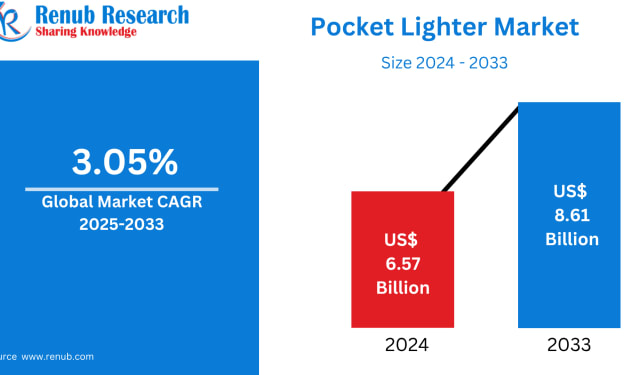
Pocket Lighter Market Size and Forecast 2025–2033
Pocket Lighter Industry Overview The Pocket Lighter industry represents a resilient and dynamic segment of the global consumer goods market, characterized by everyday utility, portability, and evolving design. Pocket lighters are compact ignition devices used for lighting cigarettes, candles, gas stoves, grills, and outdoor equipment. Over the decades, they have transitioned from basic fuel-based tools to modern, refillable, windproof, and electric alternatives that combine safety, efficiency, and aesthetics.
By Janine Root 6 days ago in Futurism
About Binding Prometheus
I want to start actively advocating on behalf of my own work, and the most valuable part of my canon is, without a doubt, Binding Prometheus, the play I have been working on since 2019 and only finished in 2023 as part of my MA. The play itself is an amalgamation of a million different inspirations. On one end, it evokes the Ancient Greek myth-play, deriving its own title from the earliest extant work of Western drama we have, Aeschylus’s Prometheus Bound. On the other end, it borrows significantly from the sci-fi bulwarks from over the years, namely Mary Shelley’s Frankenstein and Karel Capek’s Rossum’s Universal Robots. The play could be an episode of Black Mirror, I fear. I don’t know. I’ve only ever seen one episode of Black Mirror.
By Steven Christopher McKnight18 days ago in Futurism
Fungicides Market: Precision Agriculture, Yield Protection & Market Opportunities
According to IMARC Group's latest research publication, global fungicides market size reached USD 20.5 Billion in 2024. Looking forward, IMARC Group expects the market to reach USD 29.3 Billion by 2033, exhibiting a growth rate (CAGR) of 4.02% during 2025-2033.
By Andrew Sullivanabout 10 hours ago in Futurism



Comments
There are no comments for this story
Be the first to respond and start the conversation.