
Under the Skin: The Secret History of Women’s Pleasure
From medical myth to erotic revolution—uncover the hidden history of the vibrator, female pleasure, and the fight for sexual autonomy across centuries.

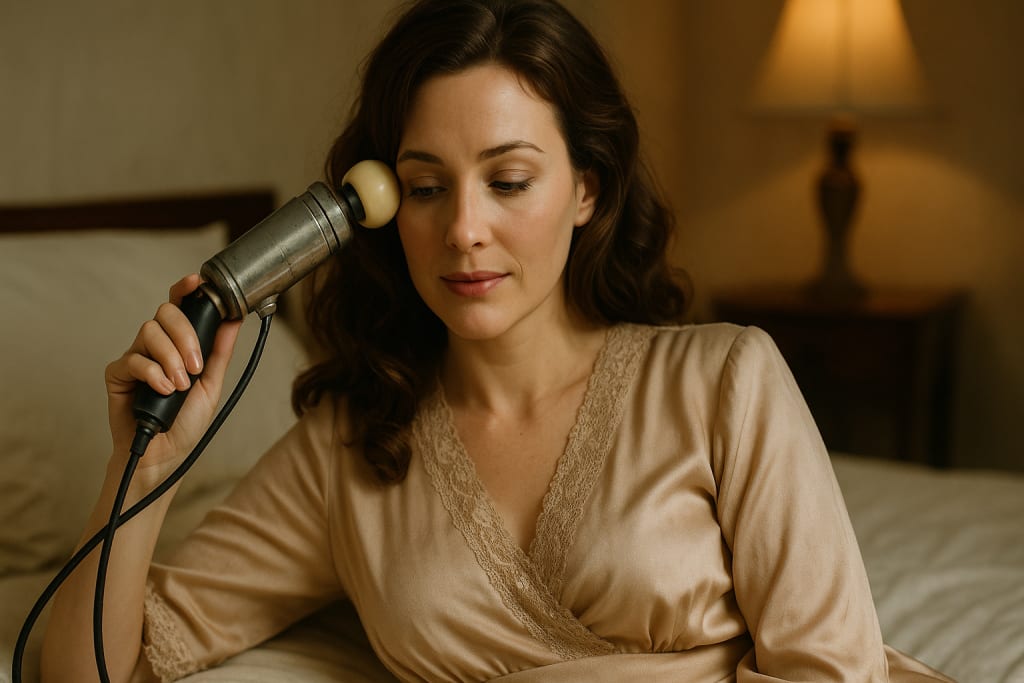
She lay back, breath shallow, fingers knotting the folds of her skirt. The room was dim—heavy curtains drawn against the noise of the outside world. Only the low hum of the machine filled the silence, a mechanical purr like a whisper at the base of the spine. The physician's hands were firm, clinical. And yet—her body knew what his books refused to name.
She came like a confession. And no one spoke of it.
For centuries, the female body was a battleground—a terrain charted by men in coats, men in robes, men with scalpels and scripture. It was dissected, silenced, worshipped, and punished. But it was never truly understood. Certainly not in terms of desire.
In the Middle Ages, women who hungered were burned as witches. In the Renaissance, their pleasure was ignored—reduced to duty, reproduction, or madness. Even the Enlightenment, with its obsession with knowledge, looked away from the wet, quivering truth between women’s thighs.
So by the time Victorian doctors began massaging their patients to orgasm—under the rigid guise of “curing hysteria”—it wasn’t the beginning of female sexuality. It was a crack in the dam.
The tremors they provoked weren’t just physical. They were cultural.
These women—corseted, respectable, refined—were receiving orgasms at the hands of doctors who could barely name what they were doing. The procedure wasn’t taught in universities. It passed in whispers, guided by instinct, cloaked in ritual. The term hysterical paroxysm was carefully chosen to avoid the vulgarity of truth.
But bodies are not bound by vocabulary. And as fingers worked tired flesh, something ancient stirred.
Desire. Not male. Not mutual.
Female. Independent. Dangerous.
By the late 1800s, when electromechanical vibrators emerged, that danger became portable. No longer dependent on a physician’s schedule or discretion, women could take pleasure into their own hands—literally.
Imagine the first woman who locked her bedroom door, unwrapped the brass-and-ivory instrument, and laid back in candlelight. The first hum that passed through her fingers. The jolt of sensation where once there was silence.
Imagine her breath catching, her thighs parting, her moan muffled by embroidered pillows.
Imagine the look in her eyes when she realized: I don’t need anyone else to feel this.
It was ecstasy born in secrecy. A climax disguised as health.
And yet, the revolution it sparked was anything but subtle.
Behind silk drapes, housewives came again and again—not just in their bodies, but into a sense of self no one had allowed them. Their orgasms weren’t dirty. They were sovereign. And each one chipped away at the granite wall of patriarchy that insisted women were creatures of duty, not delight.
But the world caught on.
And men—as they often do when female power grows loud—grew nervous.
As vibrators crept into erotic films, their mask of medical respectability began to crack. The public started to connect the dots. What women called “nervous relief” looked suspiciously like satisfaction.
Vibrators were rebranded as indecent, smutty, obscene.
Advertisements vanished. Doctors withdrew.
And women were once again expected to suffer silently—or pretend not to want.
Still, the hum never stopped.
Through decades of repression, vibrators lived in velvet boxes, hidden in dresser drawers, passed between daring friends or wrapped in brown paper at sex shops. They buzzed under blankets, on bathroom floors, in college dorms and lonely kitchens. And with each secret climax, they kept the memory alive: that women were more than vessels or wives or mothers.
They were lovers—even when alone.
When the sexual revolution erupted in the 1960s and '70s, it didn’t just bring birth control pills and topless protests.
It brought self-knowledge.
Feminist pioneers like Betty Dodson led masturbation workshops where women sat naked in circles, mirrors between their knees, vibrators in hand.
They didn’t just orgasm. They spoke about it.
Named it. Claimed it.
The vibrator was no longer a medical tool or a dirty secret.
It was a declaration.
And today? It’s everywhere. In rose-gold silicone, whisper-quiet pulses, wrapped in gift boxes for bachelorette parties and lovers who know better.
It appears on Instagram, in rom-coms, on bedside tables. Some are controlled by smartphones. Some are paired with lovers in other countries. Some are shaped like lipstick tubes, others like alien flowers.
They are designed not to hide—but to be seen.
Still, the erotic charge lingers—not just in what they do, but in what they mean.
To hold a vibrator now is to hold history.
To press it between your thighs is to echo the sighs of generations—of widows in Victorian parlors, of suffragettes in silk stockings, of 1950s housewives behind locked bathroom doors.
It’s not just about coming.
It’s about coming back to yourself.
Pleasure, for a woman, was never just about sex.
It was about rebellion.
Survival.
Power.
And the hum beneath the skin—soft or savage—still sings the same song:
You are allowed to feel this.
You were always allowed.
References
Hvistendahl, M., 2009. The Vibrator. Scientific American. Available at: https://www.scientificamerican.com/article/the-vibrator/
Horwitz, R., 2020. Medical Vibrators for Treatment of Female Hysteria. Embryo Project Encyclopedia. Available at: https://embryo.asu.edu/pages/medical-vibrators-treatment-female-hysteria
The Conversation, 2012. Vibrators and hysteria: how a cure became a female sexual icon. Available at: https://theconversation.com/vibrators-and-hysteria-how-a-cure-became-a-female-sexual-icon-8200
Guardian, 2012. The buzz: how the vibrator came to be. The Guardian. Available at: https://www.theguardian.com/lifeandstyle/2012/sep/07/how-the-vibrator-caused-buzz
About the Creator
Jiri Solc
I’m a graduate of two faculties at the same university, husband to one woman, and father of two sons. I live a quiet life now, in contrast to a once thrilling past. I wrestle with my thoughts and inner demons. I’m bored—so I write.
Europe Online Travel Market Size and Forecast 2025–2033
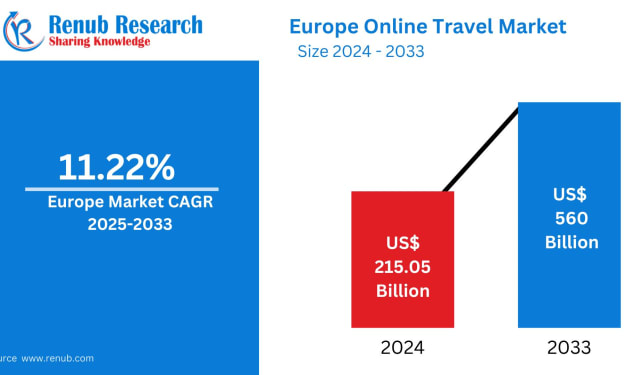
Europe Online Travel Market Outlook (2025–2033) The Europe Online Travel Market is undergoing a powerful transformation as digital innovation, changing consumer preferences, and sustainability-driven choices redefine how Europeans plan and book their journeys. According to Renub Research, the market is expected to expand from US$ 215.05 billion in 2024 to US$ 560 billion by 2033, registering a strong CAGR of 11.22% from 2025 to 2033.
By Janine Root about 5 hours ago in Filthy
You Know Her
Many people say, “I know her,” when they hear the name Mia Khalifa. They say it with confidence, as if they truly understand who she is and what her life means. But knowing a name is not the same as knowing a person. Mia Khalifa is one of the most searched names on the internet, yet she is also one of the most misunderstood public figures of our time.
By John Smith6 days ago in Filthy



Comments (1)
Fascinating how female sexuality was suppressed. The emergence of vibrators was a huge step, finally giving women some control.