
From One Sex Worker to Another: What Bonnie Blue Got Right — and What Worries Me
She plays the villain on purpose. But underneath the latex and backlash, is Bonnie Blue just another woman navigating trauma, sex, and survival?


Who Is Bonnie Blue — and Why Is Everyone Talking About Her?
In recent weeks, Bonnie Blue has become a household name. With her Channel 4 documentary making headlines, she’s been splashed across tabloids and timelines, dubbed everything from a “monster” to a “marketing genius.” As someone with lived experience in sex work, I watched the coverage — and the documentary itself — with interest, concern, and unexpected admiration.
Bonnie Blue, known for her hypersexualised, taboo-defying content, has built a multimillion-pound empire on OnlyFans. She’s become infamous for her “rage bait” videos, which provoke outrage by walking a tightrope of societal norms. With her exaggerated persona, she presents herself in ways many find offensive — and that’s part of the point.
She’s gone viral for controversial videos and interviews, and her social media presence is as confrontational as it is curated. Her approach has led to millions of views and an undeniable cultural moment — hence the documentary. But with notoriety comes scrutiny.
Hate for Hire: How Rage Bait Became Her Brand
What fascinates me most — and arguably many of us in or around sex work — is her unapologetic use of hate as fuel. Bonnie isn’t trying to be liked. In fact, she’s counting on being hated.
By provoking outrage, she manipulates the algorithm, getting her content into the hands of people who despise it — and can’t look away. Every angry share, every disgusted stitch, every hate-watch adds up. It’s visibility. And visibility, in this industry, is currency.
But it also creates a moral paradox. Many women feel she’s reinforcing damaging stereotypes, perpetuating hypersexual tropes, and undoing progress. And to some extent, I understand that concern. It’s complicated.
My First Impressions: Concern, Curiosity, and a Question of Consent
Before watching the documentary, I had questions — genuine, non-judgemental ones. I worried about Bonnie’s mental health. Was this performative hypersexuality a response to trauma? Was she okay?
As someone who has navigated their own trauma, I recognise how easy it is to weaponise your body when it feels like the only power you’ve ever had. Bonnie has spoken openly about losing her virginity at 13 and being exposed to porn even earlier. That’s not unusual — sadly — but it raised a flag for me. Is she performing autonomy, or is this the only script she was ever given?
Watching the Documentary: What Surprised Me Most
Despite my concerns, what stood out most in the documentary was Bonnie’s awareness. She didn’t seem like a victim — not of men, not of patriarchy, and not of the internet. She seemed in control, deliberate, strategic. She talked business. She talked boundaries.
When asked if she saw herself as a role model, she gave a response I didn’t expect: “Mass murderers are represented in the media all the time and your children know not to become those. Ultimately, it’s down to you to have conversations about sex, consent, and behaviour with your children.”
It was glib, sure — but it made a point. Maybe the issue isn’t Bonnie. Maybe the issue is how little honest conversation we’re having about sex, shame, and media literacy.
Isolated by Fame: The Real-Life Risks Behind the Persona
There’s a cost to Bonnie’s choices. She talks about needing to live in near-isolation because of the number of death threats she receives. Her image is recognisable. Her persona is provocative. There’s real danger in that.
And I still can’t shake my original question: are we sure she isn’t a victim?
She’s built her brand around sexual dominance and rebellion, but that early exposure to sex still haunts me. She’s entitled to enjoy what she does — and she says she does. But I wonder if anyone ever gave her space to explore what she would have chosen, had she been given a slower, safer start.
Kink, Consent, and Power: What Makes Bonnie Different — or Does It?
If Bonnie were doing the same acts at a private club, or in a BDSM scene, would anyone care? If she were making feminist porn or working as a dominatrix, would people be applauding her instead?
She says she enjoys the sex. She says it’s consensual. So what, exactly, is the problem?
For many, it’s that she’s loud about it. That she’s unashamed. That she’s visible. But sex workers have always been punished for visibility. Bonnie’s no exception — she’s just monetised the backlash.
Final Thoughts
Bonnie Blue is polarising. That’s by design. But behind the character, there’s a young woman navigating fame, sex, trauma, and power on her own terms. I don’t have to like her methods to respect the fact that she’s playing a rigged game — and winning.
I still have questions. I still have worries. But I also see the brilliance in what she’s built. Maybe the problem isn’t Bonnie at all. Maybe it’s our discomfort with women who make money, noise, and meaning out of their own sexuality — especially when they do it without apology.
About the Creator
No One’s Daughter
Writer. Survivor. Chronic illness overachiever. I write soft things with sharp edges—trauma, tech, recovery, and resilience with a side of dark humour.
Keep reading
More stories from No One’s Daughter and writers in Filthy and other communities.
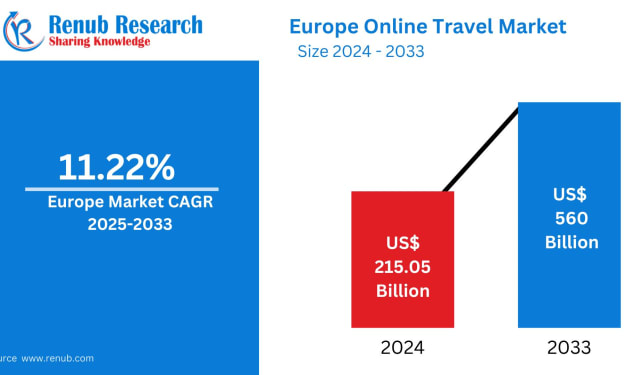
Europe Online Travel Market Size and Forecast 2025–2033
Europe Online Travel Market Outlook (2025–2033) The Europe Online Travel Market is undergoing a powerful transformation as digital innovation, changing consumer preferences, and sustainability-driven choices redefine how Europeans plan and book their journeys. According to Renub Research, the market is expected to expand from US$ 215.05 billion in 2024 to US$ 560 billion by 2033, registering a strong CAGR of 11.22% from 2025 to 2033.
By Janine Root a day ago in Filthy
Digital Signage Market Size and Forecast 2025–2033
Global Digital Signage Market Outlook: A New Era of Visual Communication The global digital signage market is undergoing a major transformation as organizations across industries shift from static displays to dynamic, data-driven visual communication platforms. Digital signage—encompassing LED, LCD, OLED, projection systems, and interactive kiosks—has become a cornerstone of modern advertising, information delivery, and customer engagement.
By Janine Root about 17 hours ago in Filthy



Comments
There are no comments for this story
Be the first to respond and start the conversation.