
Digital Signage Market Size and Forecast 2025–2033
Smart Cities, Interactive Displays, and the Future of Visual Communication


Global Digital Signage Market Outlook: A New Era of Visual Communication
The global digital signage market is undergoing a major transformation as organizations across industries shift from static displays to dynamic, data-driven visual communication platforms. Digital signage—encompassing LED, LCD, OLED, projection systems, and interactive kiosks—has become a cornerstone of modern advertising, information delivery, and customer engagement.
According to Renub Research, the Digital Signage Market is expected to reach US$ 57.78 billion by 2033, growing from US$ 29.22 billion in 2024, at a CAGR of 7.87% from 2025 to 2033. This growth reflects a global movement toward smarter cities, more immersive consumer experiences, and real-time content communication.
From retail stores and airports to hospitals and government buildings, digital signage is redefining how information is presented, consumed, and interacted with. The rapid rise of smart infrastructure, artificial intelligence (AI), Internet of Things (IoT), and cloud-based content management systems is accelerating adoption across both developed and emerging economies.
What Is Driving the Digital Signage Revolution?
Digital signage is no longer limited to simple advertising screens. Today’s systems integrate analytics, sensors, AI, and cloud connectivity to deliver context-aware, personalized, and interactive content. The market’s strong momentum is being shaped by several converging factors:
Smart Cities as a Major Growth Engine
One of the most powerful catalysts for digital signage adoption is the global expansion of smart city initiatives. Governments are investing heavily in digital infrastructure to improve urban mobility, public safety, and citizen engagement. Digital signage plays a central role by enabling:
Real-time public announcements
Traffic and transit updates
Emergency alerts
Wayfinding and navigation
Interactive citizen services
For example, India’s Smart Cities Mission, launched in 2015, aims to develop 100 smart cities using technology-driven solutions. By July 2024, over 7,200 projects had been completed, representing more than ₹144,000 crores in investment, many of which included digital display systems for public communication.
Globally, it is estimated that over 500 cities will adopt digital twin technologies by 2025, potentially generating US$ 280 billion in savings by 2030. Digital signage acts as the public-facing interface of these digital twins, visualizing data and enabling real-time interaction between cities and citizens.
Advancements in Display Technologies
Rapid innovations in display hardware are significantly boosting market growth. The adoption of LED and OLED technologies has enhanced brightness, resolution, durability, and energy efficiency, making digital signage more attractive across indoor and outdoor environments.
Key advancements include:
Ultra-thin OLED panels with superior contrast
High-brightness outdoor LED displays
Flexible and transparent screens
Ultra-large video walls above 100 inches
Energy-efficient displays supporting sustainability goals
In September 2023, Samsung introduced “The Wall for Virtual Production” in Europe, offering advanced LED walls designed for immersive content creation, virtual production, and realistic visual experiences. Such innovations are pushing digital signage beyond advertising into entertainment, education, and corporate collaboration.
Digital Advertising and Customer Engagement Expansion
Businesses across retail, hospitality, transportation, healthcare, and corporate sectors are adopting digital signage to enhance customer engagement and brand presence.
Retailers, in particular, are using digital displays for:
Personalized promotions
In-store navigation
Dynamic pricing
Interactive product discovery
Loyalty program integration
In February 2022, Hughes Network Systems partnered with BurgerFi International to optimize network infrastructure and digital signage across restaurant chains, improving operational efficiency and customer experience.
The healthcare sector is also emerging as a strong adopter, using digital signage to provide:
Patient information
Appointment updates
Health education
Emergency alerts
Cloud-based platforms such as Mvix CMS, launched in 2022, are enabling secure, scalable, and efficient content management across multiple healthcare facilities.
Rising Demand for Visually Engaging and Interactive Content
The shift from static signage to interactive, immersive content is accelerating market expansion. Touchscreens, motion sensors, facial recognition, and AI-driven content personalization are becoming standard features.
Outdoor signage is also evolving. In February 2023, Winmate Inc. introduced advanced outdoor displays for smart cities, bus shelters, and digital drive-thru menus, improving visibility, brightness, and reliability under harsh environmental conditions.
As consumers increasingly expect engaging, visually rich experiences, businesses are investing in high-impact digital displays to stand out in competitive environments.
Challenges Facing the Digital Signage Market
Despite its strong growth outlook, the market faces several challenges:
High Initial Costs and Integration Complexity
Digital signage requires significant upfront investment in hardware, software, installation, and content creation. Small and medium-sized enterprises (SMEs) often struggle to justify the cost, especially when integrating signage with existing IT systems. Customization, network setup, and ongoing maintenance can further increase total ownership costs.
Data Security and Content Management Risks
As digital signage becomes cloud-connected and data-driven, it becomes more vulnerable to cybersecurity threats. Unauthorized access or hacking could lead to misinformation, brand damage, or operational disruption. Robust encryption, access control, and real-time monitoring are essential to mitigate these risks.
Regional Market Overview
United States Digital Signage Market
The United States remains one of the most mature markets for digital signage, with widespread adoption across retail, transportation, corporate offices, education, and public institutions. High digital literacy, advanced infrastructure, and strong cloud adoption support market growth.
The hospitality and tourism industries are major users of interactive kiosks and dynamic displays. According to the U.S. Bureau of Economic Analysis, travel and tourism output grew 21% in 2022, fueling demand for signage solutions that enhance guest experiences.
AI-driven displays, real-time analytics, and immersive user interfaces are shaping the next phase of growth in the U.S. market.
United Kingdom Digital Signage Market
The UK’s digital signage market is driven by digitization in government, retail, transportation, and healthcare. Airports, railway stations, and shopping centers increasingly rely on smart displays for real-time information and advertising.
Government initiatives supporting digital transformation, sustainability, and accessibility are encouraging wider adoption. Touchscreens, kiosks, and interactive displays are becoming standard in retail and hospitality environments.
India Digital Signage Market
India is one of the fastest-growing digital signage markets globally, fueled by urbanization, infrastructure development, and a rapidly expanding digital economy. Smart city projects, metro rail expansions, airports, and retail chains are driving large-scale deployments.
With over 398 million rural internet users in 2024 and growing digital literacy, digital signage is reaching even semi-urban and rural markets. Educational institutions, corporations, and public services are increasingly adopting interactive displays for communication and engagement.
United Arab Emirates Digital Signage Market
The UAE is a regional leader in digital signage adoption, particularly in retail, tourism, and smart city projects. Dubai and Abu Dhabi feature advanced digital displays across malls, airports, hotels, and public spaces.
Government-backed smart infrastructure initiatives, high connectivity, and a strong focus on customer experience are sustaining long-term market growth.
Recent Developments in the Digital Signage Industry
May 2025: Daktronics partnered with the University of Delaware to install a state-of-the-art LED video screen with integrated Show Control systems for sports and events.
February 2025: NoviSign partnered with BrightSign, LLC to enhance scalability and security of digital signage systems, offering seamless hardware-software integration with advanced interactive features.
Market Segmentation
By Type
Video Wall
Video Screen
Kiosk
Transparent LCD Screen
Digital Poster
Billboard
Other Types
By Component
Hardware
Software
Services
By Deployment
On-Premise
Cloud-Based
Hybrid
By Screen Size
Below 32"
32"–52"
Above 52"
Ultra-Large (Above 100")
By Location
Indoor / In-store
Outdoor
By End-Use Industry
Retail
Transportation
Hospitality
Corporate
Education
Healthcare
Government
Sports & Entertainment
Banking & Financial Services
Manufacturing Facilities
Key Companies Covered
Panasonic Corporation
Sony Group Corporation
Hitachi Ltd.
Cisco Systems Inc.
Scala Inc.
Appspace Inc.
Mvix Inc.
Daktronics Inc.
JCDecaux SA
Sharp Corporation
(Each company is analyzed with overviews, SWOT, key persons, recent developments, and revenue analysis.)
Final Thoughts: The Future of Digital Signage
The digital signage market is entering a golden era where technology, creativity, and data converge. As smart cities expand, retail transforms, and organizations demand real-time engagement, digital signage will continue to evolve from simple display screens into intelligent communication platforms.
With a projected value of US$ 57.78 billion by 2033, digital signage is no longer optional—it is essential for businesses and governments seeking to stay connected, competitive, and visually relevant in a digital-first world.
As hardware becomes more affordable, software more intelligent, and content more immersive, digital signage will define the future of visual communication across every industry.
About the Creator
Janine Root
Janine Root is a skilled content writer with a passion for creating engaging, informative, and SEO-optimized content. She excels in crafting compelling narratives that resonate with audiences and drive results.
Keep reading
More stories from Janine Root and writers in Filthy and other communities.
Europe Online Travel Market Size and Forecast 2025–2033
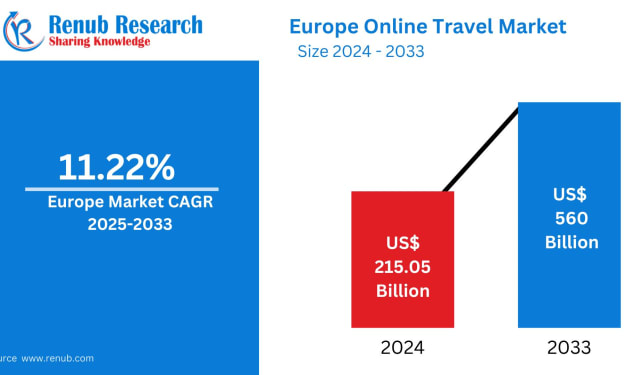
Europe Online Travel Market Outlook (2025–2033) The Europe Online Travel Market is undergoing a powerful transformation as digital innovation, changing consumer preferences, and sustainability-driven choices redefine how Europeans plan and book their journeys. According to Renub Research, the market is expected to expand from US$ 215.05 billion in 2024 to US$ 560 billion by 2033, registering a strong CAGR of 11.22% from 2025 to 2033.
By Janine Root about 7 hours ago in Filthy
United States Hotel Market Size & Forecast 2025–2033: Experience-Driven Travel Fuels a New Era of Growth
United States Hotel Market Outlook The United States hotel market is poised for steady and resilient expansion, rising from US$ 255.33 billion in 2024 to US$ 422.10 billion by 2033, reflecting a compound annual growth rate (CAGR) of 5.76% during 2025–2033. Growth is being driven by strong domestic travel demand, rising interest in experience-based stays, continued investment in hotel development, and the digital transformation of guest services. As leisure and business travel stabilize across the country, hotels of all categories—from luxury resorts to economy motels—are benefiting from shifting traveler preferences and renewed mobility.
By Marthan Sir5 days ago in Filthy
You Know Her
Many people say, “I know her,” when they hear the name Mia Khalifa. They say it with confidence, as if they truly understand who she is and what her life means. But knowing a name is not the same as knowing a person. Mia Khalifa is one of the most searched names on the internet, yet she is also one of the most misunderstood public figures of our time.
By John Smith6 days ago in Filthy


Comments
There are no comments for this story
Be the first to respond and start the conversation.