
Write a myth to explain the fabled origin story of why something exists.
why unicorn has one horn.


In ancient times, when the world was young and magic thrived, there lived a mystical forest hidden deep within a realm unknown to mortals. Within this enchanted woodland, a group of extraordinary creatures roamed freely, guarded by the benevolent spirit of the forest, Aurora.
Among these wondrous creatures was a majestic horse named Luna, with a coat as white as moonlight and eyes that shimmered like stars. Luna possessed a kind and gentle spirit, and her grace was unmatched by any other creature in the forest. She was beloved by all, for her presence brought peace and harmony to the realm.
One fateful night, under the silvery glow of the full moon, a dark and sinister force crept into the enchanted forest. It was a malevolent creature known as the Shadow Serpent, a being of darkness and envy. The serpent was jealous of the forest's beauty and the love and admiration that Luna received from all who knew her.
The Shadow Serpent devised a wicked plan to steal Luna's radiance and tarnish her purity. Under the cover of darkness, it slithered its way toward Luna, seeking to poison her with its venom and drain her of her light. Luna sensed the lurking danger but could not escape the serpent's malevolent intentions.
As the serpent struck, Luna valiantly fought back with all her strength, but in the midst of the battle, the serpent managed to land a single, venomous bite on Luna's forehead. The poison coursed through her veins, causing immense pain and agony.
In her darkest hour, Luna's spirit reached out to Aurora, the guardian of the forest. Aurora, feeling Luna's distress, appeared before her. With tears in her eyes, Luna expressed her fear that the serpent's darkness would consume her and that the forest's peace would be forever lost.
Aurora, touched by Luna's bravery and pure heart, placed her hand upon the wounded horse's forehead. With a burst of radiant energy, she banished the serpent's venom and healed Luna's wound. However, the venom had left its mark - a single, spiraling horn had emerged from Luna's forehead.
But Luna did not see it as a curse; instead, she embraced the horn as a symbol of her strength and resilience. She saw it as a reminder of the power of love and the sacrifices she was willing to make for the forest she held dear.
From that moment on, Luna became the first unicorn, a beacon of hope and wonder in the enchanted forest. Her one horn shone with the light of the moon, casting a radiant glow that banished darkness and evil from the realm.
And so, the legend of the unicorn with one horn spread throughout the lands, a testament to the enduring power of love, courage, and the magic that still exists in the hearts of those who believe. The unicorn became a symbol of purity and grace, a creature of dreams and enchantment, forever carrying Luna's spirit and the legacy of her fabled origin story.
Unicorns, though often thought to be creatures of myth and fantasy, have captured the imaginations of people for centuries. Their existence has been a subject of debate and wonder, with some believing in their reality, and others dismissing them as mere products of folklore and imagination.
Historically, the concept of unicorns can be traced back to various ancient civilizations, including the Indus Valley, Mesopotamia, and ancient China. These civilizations depicted unicorn-like creatures in their art and writings, attributing them with symbolic significance such as purity, grace, and strength.
In Western folklore, unicorns are often described as magnificent white horses with a single, spiraling horn growing from their foreheads. This horn, known as an alicorn, was believed to possess magical properties capable of purifying water and healing sickness. Legends also spoke of the horn being an antidote to poisons and a protection against malevolent forces.
The idea of unicorns as real creatures gained traction during the Middle Ages when explorers and traders returned from distant lands with tales of exotic animals and encounters with unusual beings. Some accounts from these travelers described encounters with creatures resembling unicorns, leading to speculation that such beings might exist in the far reaches of the world.
In the realm of natural history, some have suggested that the concept of unicorns might have originated from real animals with single horns, such as the Indian rhinoceros or the narwhal, a marine mammal known for its long, spiral tusk. Misinterpretations or exaggerations of these animals' traits could have contributed to the unicorn legends.
In modern times, cryptozoologists and enthusiasts continue to explore the possibility of unicorns' existence, drawing connections to rare and elusive creatures like the Siberian unicorn (Elasmotherium), an extinct species of rhinoceros that lived during prehistoric times. However, definitive scientific evidence supporting the existence of unicorns remains elusive.
While the existence of unicorns in the literal sense remains unproven, their symbolism and allure endure in our culture. Unicorns have become beloved figures in art, literature, and popular culture, representing purity, magic, and the power of imagination. Regardless of their physical existence, unicorns continue to thrive as a timeless reminder of the wonders that lie beyond the boundaries of our understanding. Their mystique and charm serve as a testament to the human capacity to believe in the extraordinary and embrace the magical in our world.
About the Creator
Keep reading
More stories from Matthew Olushola Oke and writers in Fiction and other communities.
How do plants with seedless fruit reproduce
Introduction: Plants with seedless fruit have fascinated humans for centuries. These unique fruits lack seeds, and yet they are able to propagate and reproduce successfully. The absence of seeds in these fruits has significant implications for both horticulture and botany. In this note, we will explore the fascinating mechanisms behind the reproduction of plants with seedless fruit.
By Matthew Olushola Oke3 years ago in Education
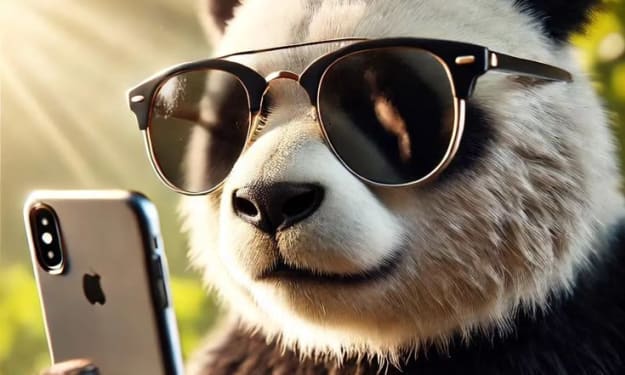
Panda and smartphone
Once upon a time, there was a panda whose father owned a smartphone. One day, when his father went out for some work, the panda picked up the smartphone and began exploring it. Soon, he discovered a game. Excitedly, he exclaimed, “Wow! A game! Now I can play games on dad’s smartphone!” and immediately started playing.
By Sudais Zakwanabout 4 hours ago in Fiction



Comments
There are no comments for this story
Be the first to respond and start the conversation.