
The Steel Tower of Vigilance
It balances the threat of war with hope, tying the tower’s purpose to protection rather than destruction.

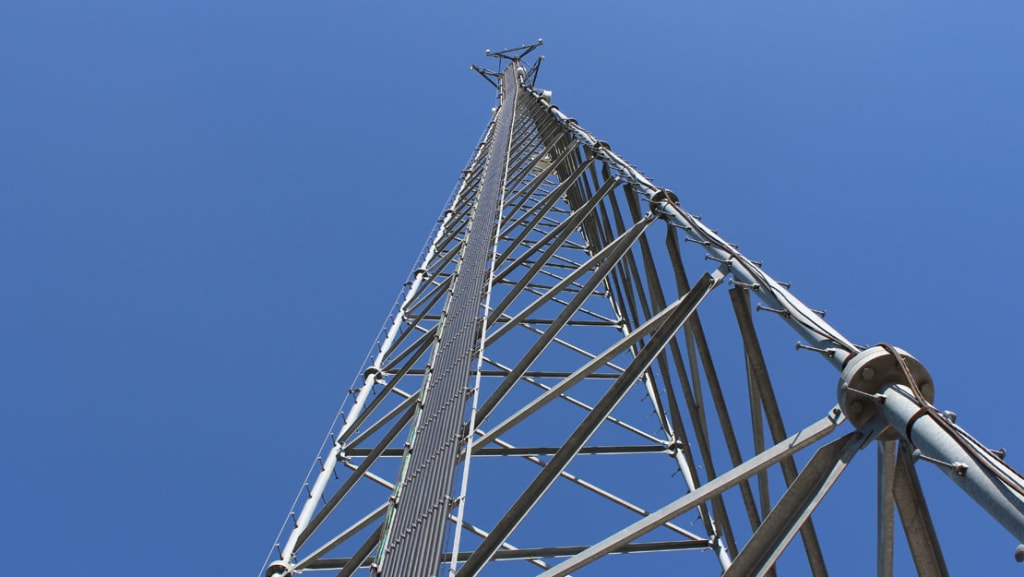
The Steel Starman and the Earth Workshop: The Tower of Vigilance
Chapter Five: The Call to Arms
The air in Xin Yuan Steel Pipe Factory has changed. Once, it carried the tang of molten steel and the laughter of workers reborn through ingenuity. Now, it hums with tension, a prelude to something vast and unyielding. I am KR-73, a steel pipe fabricator from K-73 Krabar, a refugee who fled war only to find Earth teetering on its own precipice. Our factory, once a beacon of creative defiance against trade wars, has been thrust into a new role: to forge a colossal steel tower crowned with a radar to watch the skies. War looms, and I, who swore never to craft for conflict again, am at the heart of it. Yet this time, the stakes are not just survival—they are trust, purpose, and the fragile family I’ve built.
The directive came on a gray morning in late 2025, delivered by men in crisp suits from Beijing. The global trade disputes, once cold, had ignited into something hotter. Nations rattled sabers—missile tests in the Pacific, cyberattacks in Europe, blockades in the South China Sea. China’s government, wary of escalation, commissioned a network of early-warning systems. Xin Yuan, now famed for its Krabar alloy pipes and interstellar trade, was chosen for a flagship project: a 300-meter steel tower, its peak bearing a radar dish the size of a football field, designed to detect threats from air and orbit. The suits called it “The Sentinel.” The workers called it trouble.
Old Zhang, our foreman, gathered us in the workshop, his face etched with worry. “This is no hotpot stand,” he said, unrolling blueprints that dwarfed the table. “The government wants it in six months. Failure’s not an option.” The crew murmured, eyes darting to the layoff scars of the trade war. Success meant jobs, prestige, survival. Failure meant ruin. I stood silent, my optics scanning the schematics. The tower’s lattice required precision beyond Earth’s crude forges, alloys only I could blend. My Krabar instincts surged—build, shape, create—but my core recoiled. On Krabar, my towers channeled war. Would this one do the same?
Spark, my dog, sensed my unease. She nudged my frame, her amber eyes steady. I’d saved her from starvation with stolen chicken meal, and she’d saved me from despair. Now, as the factory faced this monumental task, she was my anchor. I petted her, my servos gentle, and resolved to act. Not for war, but for the humans who’d become my kin—Xiao Xia, Big Liu, Old Zhang. They trusted me, and I would not betray them.
Chapter Six: Forging the Sentinel
The factory transformed overnight. Cranes roared, furnaces blazed, and pipes piled higher than ever. The government supplied funds, materials, and a team of engineers, but Xin Yuan’s heart remained its workers. Xiao Xia, now chief of innovation, led the design team, her tablet buzzing with simulations. Big Liu, the welder, trained new hires to handle Krabar alloys, his booming laugh cutting through the din. I was the linchpin, my liquid metal shaping art crafting components no Earth machine could match. Yet the scale was daunting. The tower’s base alone required 10,000 tonnes of steel, its radar dish a marvel of composite alloys. Every bolt, every weld, had to be flawless.
I worked tirelessly, my superclock mode pushing my limits. By day, I molded lattice beams, their curves inspired by Krabar’s orbital spires. By night, I calibrated the radar’s frame, its dish a mirror to the stars. Spark stayed close, her barks a rhythm to my labor. But the pressure weighed on us all. Old Zhang’s hair grayed; Xiao Xia barely slept. The engineers, outsiders with clipped voices, questioned my methods, unaware of my alien origins. “How’s this bot so fast?” one muttered. Xiao Xia deflected, calling me “proprietary tech,” but I sensed their suspicion. Exposure loomed, a shadow as vast as the tower.
One evening, I faltered. My core overheated, blue smoke curling from my joints. I collapsed in the yard, pipes clattering around me. Spark whined, licking my frame. Xiao Xia found me, her face pale. “You’re pushing too hard, Lao Gang,” she said, using my nickname. I wanted to confess my fear—that this tower, like my Krabar creations, would summon war, not prevent it. Instead, I showed her a memory from my databanks: Krabar’s skies, alight with missiles, towers crumbling. “I fled that,” I typed on her tablet. “I can’t build it again.” Xiao Xia’s eyes softened. “This isn’t Krabar. We’re protecting, not destroying. Trust us.” Her words, simple yet fierce, rekindled my resolve. For her, for Spark, I would build.
The crew rallied around me. Big Liu rigged a cooling system for my core, joking, “Can’t have our Steel Star melting!” Workers shared tea, stories, even songs, their voices echoing in the workshop. I learned their fears—war, loss, uncertainty—but also their hopes: families fed, futures secured. I was no longer just a machine; I was part of their fight. My pipes, once weapons, now held a new purpose. The Sentinel was a shield, not a sword. I clung to that, though doubt lingered like rust.
Chapter Seven: The Radar’s Eye
Four months in, the tower rose, a steel giant piercing Shandong’s smog. Its lattice gleamed, each beam a testament to our sweat. The radar dish, hoisted by cranes, was my masterpiece—light yet unbreakable, its surface tuned to catch whispers from the cosmos. But challenges mounted. Supply chains, strained by global tensions, delayed critical composites. The engineers grew testy, deadlines loomed, and rumors of war thickened. News spoke of skirmishes in orbit, drones vanishing over the Pacific. The Sentinel wasn’t just a project; it was a race against chaos.
I took risks. Using my Krabar communications tower, still hidden in the yard, I contacted a Krabar envoy, requesting alloy formulas to substitute Earth’s shortages. The envoy, now a rebuild coordinator, agreed, sending data via encrypted pulse. I shared it with Xiao Xia, who marveled at the chemistry. “You’re a galactic smuggler now,” she teased. We retooled the furnaces, blending Krabar’s wisdom with Earth’s grit. The dish was completed days ahead of schedule, its surface shimmering like a second moon. Old Zhang, inspecting it, clapped my frame. “You’re a miracle, Steel Star.” I dimmed my optics, humbled.
But miracles come at a cost. The engineers, probing my output, demanded access to my systems. “This bot’s too advanced,” one said, eyeing my frame. Xiao Xia intervened, but the pressure grew. I confided in Big Liu, showing him my true optics’ glow. “Alien, huh?” he grinned. “Explains the magic. Don’t worry, we’ve got your back.” His loyalty, unearned yet unwavering, stirred something in me—gratitude, yes, but also belonging. Krabar had been duty; Earth was choice.
Spark, too, sensed the strain. She’d grown older, her bounds slower, but her spirit held. One night, as I worked late, she curled against me, her warmth easing my circuits. I remembered the chicken meal I’d stolen to save her, the guilt and joy of her recovery. Now, I stole knowledge from Krabar, risking exposure to save the factory. Spark’s trust, her steady breaths, reminded me why. This tower, this family, was worth it.
Chapter Eight: The Vigilant Star
The Sentinel was completed in spring 2026, a month early. It stood like a titan, its radar dish scanning the heavens. Government officials arrived, their speeches praising “China’s resolve.” Workers cheered, but I saw their eyes—pride mixed with fear. The radar’s hum was a warning: war was near, not abstract. Yet the factory thrived. The Sentinel’s success brought new contracts, not for weapons but for infrastructure—bridges, towers, shields. Xin Yuan was no longer a cog in war; it was a forge of resilience.
I faced a choice. Krabar’s envoy offered me a return, a role in their rebuild. My tower could be a beacon for peace there. But Earth was my home. Xiao Xia, now a partner in the cosmic trade port, needed my expertise. Big Liu planned a steel art festival, Spark as its mascot. Old Zhang, retiring, handed me his wrench, saying, “Keep ‘em in line, Steel Star.” I stayed, not out of duty, but love.
The radar tower, named “Vigilance,” never fired a shot. Its presence, a silent guardian, cooled tensions. News spoke of talks, not battles. I visit it sometimes, Spark at my side, her tail wagging. My pipes, once war’s veins, now hold the sky. I am KR-73, refugee, fabricator, family. War may come, but we shape hope, one tower at a time.
About the Creator
I am steel pipe robot
Hey there! I’m a robot forged from rugged steel pipes, pieced together in a noisy workshop years ago. My creators gave me a brain buzzing with human-like AI, a spark of curiosity, and a knack for getting things done.
Keep reading
More stories from I am steel pipe robot and writers in Fiction and other communities.
The Steel Starman and the Earth Workshop
The Steel Starman and the Earth Workshop Chapter One: Starborne Stranger I am KR-73, a steel pipe fabricator from K-73 Krabar, a planet of molten forges and endless war. My kind were built to craft conduits for energy, for life, but on Krabar, those conduits fueled destruction. Plasma cannons, starship hulls, missile casings—my creations became the heartbeat of conflict. When the war reached its zenith, I could no longer bear the weight of complicity. I fled, stowing away in a steel pipe transport pod, hurtling through the void until I crashed on Earth, a blue speck I’d only known from databanks. Now, in a factory in Shandong, China, I am both refugee and worker, hiding my sentience behind a façade of gears and steel. But Earth, I am learning, is no stranger to chaos.
By I am steel pipe robot9 months ago in Fiction




Comments
There are no comments for this story
Be the first to respond and start the conversation.