
10:30 p.m. New York City, New York, United Nations Department 13
‘Killing yourself is the easy part,’ thought Arne Christiansen. ‘Staying dead is not so easy.’
He felt like a criminal, slinking through the night, keeping to the shadows. He’d done nothing wrong, but nobody in their right mind drew attention to themselves after dark, especially if you worked for the United Nations, doubly so if you happened to be in his line of work. A large group of angry protesters turned the corner of the street he was on, and he ducked down an alley, hiding behind an abandoned air-car. He was not alone. Several others, apparently in the same situation, huddled together out of range of the streetlights.
The noisy crowd passed by and the inhabitants of the alley breathed a sigh of relief. As Arne’s eyes adjusted to the dim lighting, he realized there were at least thirty people in the narrow alley with him, and clearly, this was a permanent home for many of them. Two emaciated women stepped into the light, and one of them said, ‘You should be safe now, love. They’re headed for the U.N building on First.’
A squad of police cruisers flew overhead, sirens blaring, spotlights piercing the night. The alley-dwellers melted into the shadows once again, Arne in tow. As the cruisers passed, the woman said, ‘I know you.’ ‘’No. No, I don’t think so,’ said Arne, shaking his head. ‘You’re that Professor. I’ve seen you on the government vidcasts.’ She cackled like an evil witch. ‘Don’t worry, you’re safe from me. But you’d better get going before anyone else recognizes you,’ she said quietly.
He surveyed the group of people huddling around him. They all showed signs of aging; not one of them weighed more than 100 pounds, with the downcast, dead-eyed look of the defeated. Two of the slightly fitter looking members began muttering to each other, staring at Arne and inching closer to him.
‘Go!’ said the old witch, pushing him towards the alley entrance.
Arne rummaged in his pockets, and came up with a handful of credits. He handed her the money and took off, running down the alley. ‘I was only trying to help,’ he shouted over his shoulder as he ran.
#
Christiansen reached the safety of his apartment complex and took the elevator up to the sixtieth floor, his heartbeat slowing as the floors ticked by. By the time he entered his apartment, it was almost back to normal. He took off his coat and poured himself a large drink. Scotch. Real Scotch, four thousand credits a bottle, black market Scotch. He settled down into his favourite armchair. Real leather. Eschewing the current trend for Direct-Data-Neural-Input transmissions, he pushed a button and turned on the view screen in his living room, in time to catch the late-night newscasts. He much preferred watching something on a screen rather than having it piped directly through his optic and aural nerves. As Chief Researcher of The World Genetics Research Facility, he was not only entitled to watch the uncensored version, he had the wherewithal to afford the space for the screen in the first place. At nearly 50 square meters, his personal living space was palatial by today’s standards.
The screen came to life, showing images of a G-Man riot in progress; Johannesburg, according to the caption at the bottom of the picture. The image faded and switched to a live interview with the current World President, Xuan Pin Wei. Christiansen listened intently as the President spoke, “We simply MUST reduce the population, and this is the only answer. Genetic Manipulation is not a right, it must be earned. It is no longer practical to give everyone access to this technology, so we have had to make some…” he paused, apparently looking for the right words, then nodded. “Difficult decisions. The less productive members of our society have a choice: they can either become more productive, or they will be refused further treatments. It’s that simple.” He spoke quietly, as though trying to convince himself. “I know this decision is going to be unpopular in some quarters, but we have exhausted all the other possibilities. Voluntary euthanasia failed dismally. Compulsory sterilization of the criminal classes was no more successful. I don’t even want to discuss my predecessor’s misguided attempt to relieve the pressure with the under 130-IQ sterilization program.”
“But how are you going to measure productivity? What about our artists, poets, musicians? Are they to be considered productive, or merely surplus to requirements?”
The President frowned. This was not part of the script. “Rest assured we will be as fair as possible. No single group will be asked to make this sacrifice.”
“How are you going to do that? Who will ultimately make the decision?”
“We have teams of impartial consultants working on the problems right now. It’s all being taken care of.”The interviewer became more insistent. “But you haven’t answered the questions. How are you going to measure productivity? Who makes the decision? And how can anybody be impartial in this matter?” The President, obviously well-practiced, ignored the interviewer’s tone. “I’m afraid I can’t answer those questions in the time allowed, but, rest assured, we are making the right decisions. Every life is valuable, but for the greater good, some of us must make the ultimate sacrifice. They will not be forgotten.” He looked in to the camera. “Let’s move on, shall we?”“There are some people saying that this is a racially motivated decision. What would you say to them?”
The President made a cutting motion with his hand across his throat and stood up, terminating the interview.
Arne smiled to himself. It certainly showed the current depth of feeling, when a government-sanctioned interviewer was prepared to risk his job by asking those sort of questions in a live transmission that would only be seen by a small minority of the population. He stood up, went over to the window and looked out over his city, some of which was now in utter darkness. In the distance, searchlights and air-cars surrounded the UN complex.
Thanks to his own Genetic Manipulation techniques, Arne Christiansen was now 187 years old, but wore the appearance of a typical 35-year-old. Every five years, he had his “clock turned back” genetically, although he’d decided not to take any further treatments. He was going to join some of his contemporaries instead. He mentally reviewed the list:
Herman Heinrich. He’d created a superior breed of humans; increased physical endurance and strength, combined with an IQ in the 400s.
These Supra Homo Sapiens had decided to rid themselves of their “inferior” brethren, causing one of the bloodiest, if shortest wars in human history. Despite their enormous intellects and superior physical prowess, only 0.2% of the population could take the treatments, and they were easily disposed of. Heinrich had taken his own life shortly after the war, and the authorities had decided against resurrection.
Cloning and memory transplantation techniques had reached the point where a fully-grown adult, with the memories and knowledge of the original intact, could be created in a matter of months. Heinrich was not a desirable candidate.
Yoshi Nakamura. He’d not been so lucky. After discovering the cures for cancer and AIDS, he’d been declared a “Living Treasure.” He had watched the resultant population explosion, along with other disastrous consequences, and killed himself within 60 years of the cures coming on to the market. The powers-that-be decided he still had much to offer the world, and, despite repeated suicides, continued to recreate him.
Arne Christiansen did not wish to end up like that.
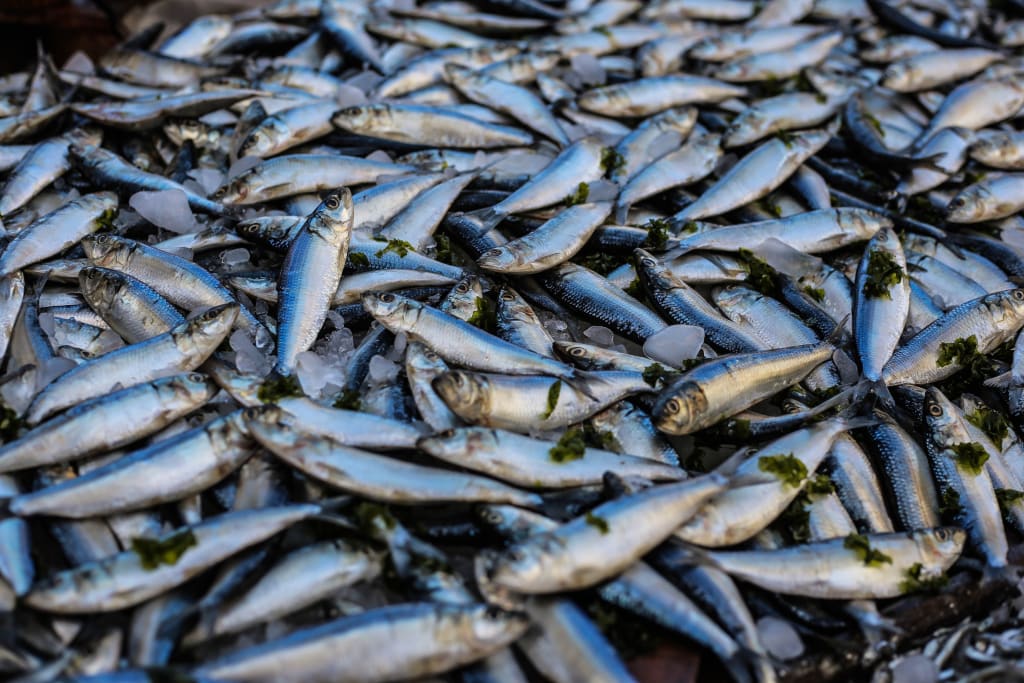
Almeera Odabele. She had fared a little better. Her genetically engineered fish, commonly known as “Codling,” had seemed, at the time, to be the solution to the world’s food problems.
Engineered to thrive in the increasingly warm and polluted oceans, and able to eat almost anything, it had been thought that not only would they provide an abundant source of food to replace the depleted crop yields as the earth’s temperature rose, they would clean the oceans at the same time. The fish had proved too successful: breeding out of control, eating everything, their existence culminating in a blue algae bloom that even the Codling were unable to eat. The oceans were now almost devoid of life.
Odabele had not wished to end up like Nakamura either. She’d managed to destroy any DNA traces along with her computer backup personalities before killing herself with a mini-nuke on the Atlantic. No usable cells had been recovered. Christiansen thought about his current project. Despite pressure from his superiors, he just wasn’t prepared to take that last step, and provide them with a genetic alteration that would allow humans to consume the blue algae infesting the world’s oceans.
How could he possibly see the outcome? What further harm could come of it? No. He’d made his mind up. He had already obtained the services of a very expensive mercenary, who had assured him that he could and would, destroy the government held backups and DNA samples.
He was currently waiting for the call, telling him the job was done.
It’s true – killing yourself was the easy part, he thought, as he finished his drink. Destroying all traces that could be used to resurrect you was not so easy. He donned a one-piece over suit, and began scanning his living space for usable DNA traces, vacuuming up anything he found with a hand held cleaner. He had already performed the same task at his workplace.
As he worked, he reflected on the decisions he’d made. He still didn’t believe it had been wrong to pursue his research, and along with Nakamura’s and others’ discoveries, humans could now reasonably expect a three to four-hundred-year life span.
Persuading them to limit their offspring had been another matter and, in some cases, families now stretched to fifteen generations.
They had all started out with the best intentions and he still couldn’t understand how it had gone so wrong. He remembered clearly the day he made his first breakthrough. The whole world stood and applauded his achievement.
His personal communicator lit up and he took the call. ‘Arne Christiansen.’
‘It’s done.’ ‘Thank you. Would you say my name please.’ ‘Arne Christiansen.’ ‘Goodbye.’
That brief conversation now meant he was free. People had been calling him “Professor” for so long, he had nearly forgotten his real name, and it felt good to hear it said out loud one last time, as though someone would remember who he’d really been. A person, not an institution.
He finished cleaning his living space, stepped in to the hallway and approached the building’s trash vaporizer. Taking his time, careful not to cut himself, he removed the safety panels and looked down the disposal chute, seeing the faint glow of the vaporizer at the bottom of the chute.
He began reprogramming the vaporizer to accept organic waste; all organics were recycled now. It was a criminal offence, punishable by death, to destroy any.
Finished, he dropped the cleaner down the chute and was gratified to see a brief flash as it hit the vaporizer. He was ready. He levered himself in to the chute, holding on to the lip of the hatch.
“My name is Arne Christiansen.” he said and released his hold.
#
The two official government observers turned to each other, and one of them, shaking her head said, ‘Why does he always say his name aloud like that?’ ‘I don’t know. That was pretty inventive though, reprogramming the vaporizer. I would never have thought of that.’ ‘He’s never done it that way, has he?’
‘No, but he’s clever.’
‘How long did this one last?’
‘Nearly two years.’ He shrugged. ‘About average.’
‘Is it worth trying again? They all kill themselves at the same point.’
‘He’s the only one that can do it. We’re going with a younger version this time.’ He consulted his notes. ‘The ’89. Maybe we’ll have better luck with this one.’
About the Creator
Mark Knowles
Wanna-be novelist/screenwriter.
Keep reading
More stories from writers in Fiction and other communities.
The Devil's Triangle
The sails ruffled in the breeze as we cruised along. The Sea Breeze was a mid-size catamaran that sailed out of Royal Naval Dockyard in Bermuda. We had booked this trip weeks in advance and were now looking at our Captain, Spike and two boat hands. Paddy and Wilson seemed like nice guys, joking around with the passengers and telling us some stories about Bermuda that only locals would know. Their island accents sounded almost British but they were pleasant to listen to.
By Barbara Gode Wilesabout 8 hours ago in Fiction
Walking The Boardwalk Plank- An American Romantic-Gothic Fable
Waves crashed using clawing and scratching methods, firmly planting salty remains upon the beachy landmass. Boardwalk sitting, hot dog personality DJT stared into the post Labor Day air, waiting for the conjuring seasonal cold spell, change baseball wagering scripts, creating profitable spread football plotlines, “such a beautiful sight,” the city slicker entrepreneur stated, admiring the natural phenomenon.
By Marc OBrien5 days ago in Fiction


Comments
There are no comments for this story
Be the first to respond and start the conversation.