
The Last Message
A grieving daughter keeps replaying the final voicemail her father left before he passed. But one day, the voicemail changes—and he says something she never heard before.

The Last Message
By [Mustafa Amin]
The first time she played it, she was still numb.
Her father had been gone for less than twenty-four hours. A heart attack in his sleep. No goodbyes. No warnings. Just… silence where his voice used to be.
That night, wrapped in the hoodie he always wore during winter, Layla opened her voicemail and pressed play on the last message he’d ever left her.
> “Hey sweetie. Just calling to check in. Hope your week’s going okay. I love you. Talk to you tomorrow. Bye.”
His voice was warm. Familiar. The kind of casual affection that feels eternal—until it isn't.
She listened to that message again the next night. And the next. It became a ritual, something sacred. The message never changed. She knew every pause, every inflection. It was the only thing that made sleep come at all.
Until one night, it changed.
---
She almost missed it the first time.
The message was the same—until the very end. After the usual “Talk to you tomorrow,” there was a small click. And then:
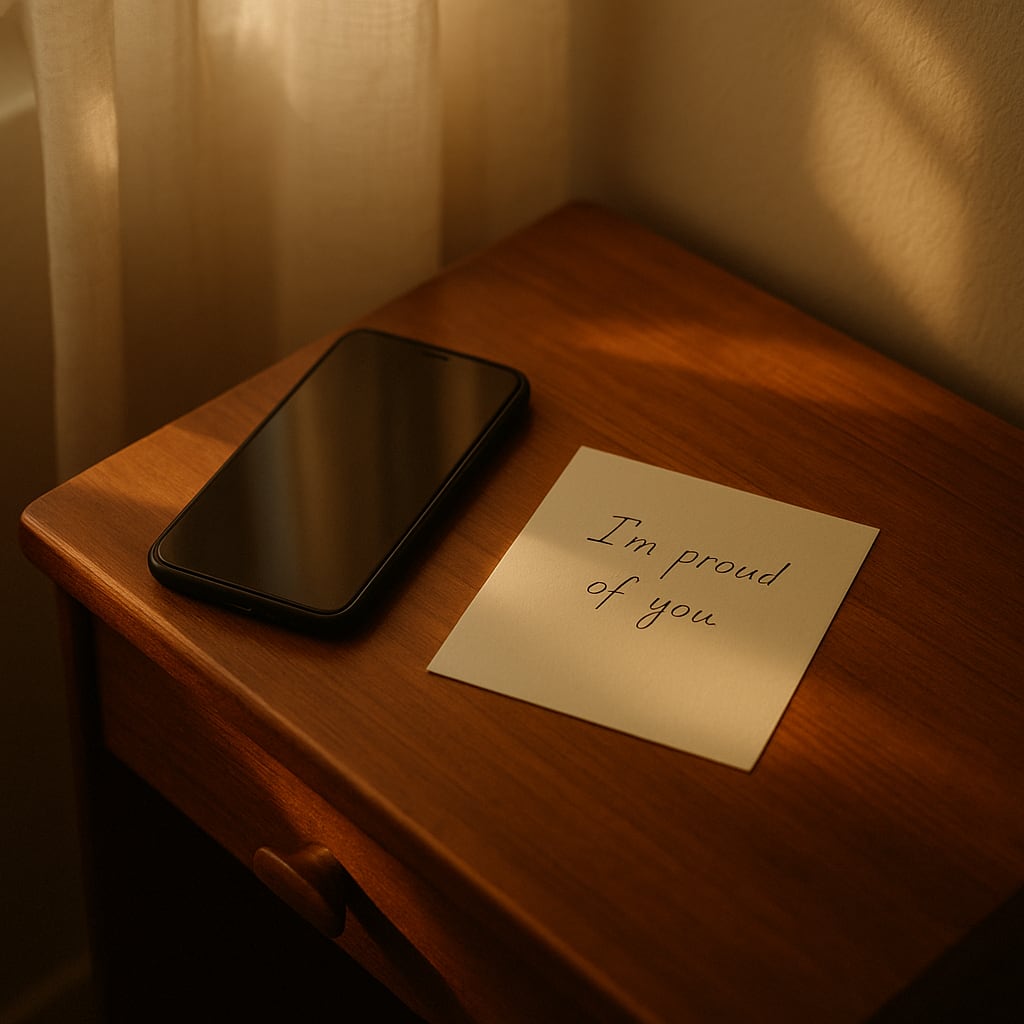
> “And hey… I’m proud of you.”
Layla sat up. That wasn’t there before. She was sure.
She replayed it. The line was still there.
> “I’m proud of you.”
Her chest tightened. She opened the message details. Same date. Same time. Same file size.
Confused, she called her cell provider the next morning. The technician was polite, but blunt.
> “Voicemail data is stored securely. If it changed, it wasn’t from our end.”
“But it did change,” Layla whispered.
---
Over the next week, it kept happening.
A few nights later, another line appeared:
> “You were always stronger than you believed.”
Layla sat in the dark, tears sliding down her cheeks. She clutched the phone to her chest, trying to steady her breath.
She knew her father. He wasn’t poetic. He wasn’t dramatic. But these words—these were his. Quiet truths he had never said out loud, now arriving in broken pieces.
She started writing them down.
A running list:
I’m proud of you.
You were always stronger than you believed.
I wish I told you that more.
You don’t have to carry everything alone.
Each addition was just a few seconds longer. As though the message was unraveling in real-time, revealing a hidden goodbye.
---
She asked herself over and over:
Was she imagining this?
Was her grief warping reality?
She tried recording the message, sent it to a friend. The friend heard only the original version. Nothing more.
Was it just for her?
---
One evening, Layla returned home to find her apartment cloaked in a soft, golden dusk. She made tea, sat by the window, and pressed play again—knowing something new might appear.
> “Hey sweetie. Just calling to check in... I love you. Talk to you tomorrow.”
Then silence.
And then:
> “And remember… it’s okay to let go.”
This time, her sobs came freely. Not the gasping, painful kind from the beginning. These were quieter. Softer. A grief that had found its voice.
She understood now.
Maybe it wasn’t really about the message changing.
Maybe she was.
---
The next night, she didn’t play the voicemail.
Instead, she opened her own recording app, took a breath, and spoke:
> “Hi Dad. I’m okay now. I miss you every day. But I think… I think I’m ready to keep going.”
She paused, smiled faintly, and added:
> “And I’m proud of you too.”
She didn’t save the recording. It wasn’t meant to last. Some messages don’t need to.
She looked at the phone on the table, its screen dark and still.
For the first time in weeks, she didn’t need to press play.
---
*Some messages never truly end.
They just arrive when we’re ready to hear them.
By. Mustafa Amin). I write this story when I was about of 15 years and I loved it
About the Creator
Keep reading
More stories from Mustafa Amin and writers in Fiction and other communities.
Mars: Earth’s Quiet Little Brother, and Maybe Our Second Chance
I remember the first time I saw Mars through a telescope. It looked like a rusty marble suspended in a black ocean. They call it Earth’s little brother, and honestly, that makes sense. He’s smaller, quieter, a little colder—but still part of the same family. Not as flashy, not as full of life, but somehow just as fascinating.
By Mustafa Amin6 months ago in Futurism
Affection and Healing for Yourself
During the night of the last quarter moon, I gathered my ritual supplies. I carefully handled the chunk of black tourmaline that would protect me from your overall negative and narcissistic energy. I carefully walked the house with my stick of selenite in hand, asking the universe to cleanse our working space.
By Alisha Wilkins ✒️🦋🖋️a day ago in Fiction


Comments
There are no comments for this story
Be the first to respond and start the conversation.