
The assassination of President John F. Kennedy
MYSTERY
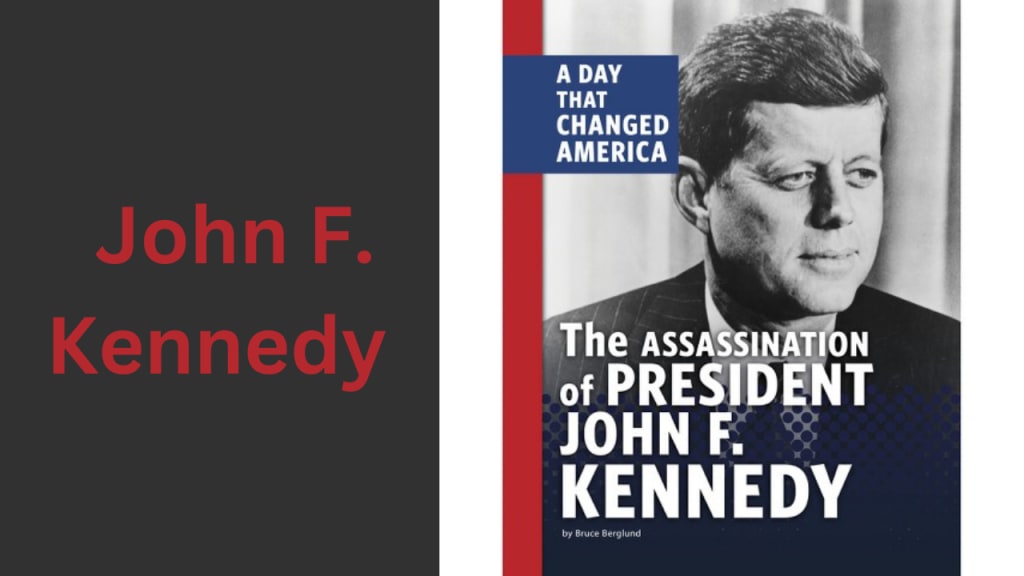
The assassination of President John F. Kennedy
I. Introduction
John Fitzgerald Kennedy, commonly known as President Kennedy or JFK, was the 35th President of the United States. He served from 1961 until his assassination in 1963. Kennedy was a charismatic leader and a symbol of youth, optimism, and energy for many people around the world. He faced a number of significant challenges during his presidency, including the Cold War, the Cuban Missile Crisis, and the civil rights movement. Kennedy was also known for his ambitious domestic and foreign policy initiatives, including the creation of the Peace Corps, the signing of the Nuclear Test Ban Treaty, and the efforts to send a man to the moon. On November 22, 1963, Kennedy was assassinated while riding in a motorcade through Dallas, Texas. The event shocked the nation and the world, and it remains one of the most significant and controversial events in American history.
II. The assassination
On November 22, 1963, President Kennedy was assassinated while riding in a motorcade through Dallas, Texas. The motorcade was traveling through Dealey Plaza when shots were fired at approximately 12:30 PM. Kennedy was hit by two bullets, one in the head and one in the neck. He was rushed to Parkland Memorial Hospital, where he was pronounced dead at 1:00 PM.
Lee Harvey Oswald, a 24-year-old former Marine and Marxist, was arrested and charged with the assassination. Oswald was shot and killed by nightclub owner Jack Ruby while in police custody on November 24, 1963. The Warren Commission, a panel appointed by President Lyndon B. Johnson to investigate the assassination, concluded in 1964 that Oswald acted alone in killing Kennedy. However, the Warren Commission's findings have been disputed over the years, and there have been numerous theories and suspects put forward in connection with the assassination.
III. The investigation
The investigation into the assassination of President Kennedy was led by the Warren Commission, a panel appointed by President Lyndon B. Johnson to investigate the events of November 22, 1963. The Warren Commission was tasked with determining the facts surrounding the assassination and establishing a timeline of events. The Commission conducted a thorough investigation, including interviews with over 500 witnesses and the examination of thousands of pieces of evidence.
In its report, released in September 1964, the Warren Commission concluded that Lee Harvey Oswald acted alone in killing Kennedy. The Commission found that Oswald fired three shots from the sixth floor of the Texas School Book Depository, where he was employed as a warehouse clerk. The Warren Commission also concluded that Oswald was not part of any conspiracy and that he acted alone in killing Kennedy.
However, the Warren Commission's findings have been disputed over the years. Many people have raised questions about the Commission's conclusions and have put forward various theories and suspects in connection with the assassination. Some of the most notable theories include the idea that the assassination was the result of a conspiracy involving the CIA, the Mafia, or other groups, or that Oswald was not the lone gunman but was instead part of a larger plot. Despite the ongoing debates and theories, the Warren Commission's report remains the official investigation into the assassination of President Kennedy.
IV. The impact of the assassination
The assassination of President Kennedy had a profound impact on the nation and the world. The event was a shock to the American people and a tragedy for Kennedy's family and supporters. Kennedy was a popular and charismatic leader, and his assassination was seen as a loss for the nation and for the ideals he represented.
Politically, the assassination had significant consequences. Kennedy's vice president, Lyndon B. Johnson, succeeded him as president and went on to implement many of the policy initiatives that Kennedy had proposed. However, the assassination also contributed to a sense of national turmoil and division, as many people questioned the government's handling of the investigation and the Warren Commission's conclusions.
In the years since the assassination, Kennedy has become a symbol of hope, youth, and optimism for many people. His assassination and the events surrounding it have been the subject of numerous books, films, and documentaries, and the event continues to be studied and debated by historians and the general public. The assassination of President Kennedy remains one of the most significant and controversial events in American history.
V. Conclusion
In conclusion, the assassination of President John F. Kennedy was a major event that had a significant impact on the nation and the world. The event occurred on November 22, 1963, when Kennedy was assassinated while riding in a motorcade through Dallas, Texas. Lee Harvey Oswald was arrested and charged with the assassination, but he was shot and killed by Jack Ruby while in police custody two days later. The Warren Commission, a panel appointed by President Lyndon B. Johnson to investigate the assassination, concluded in 1964 that Oswald acted alone in killing Kennedy. However, the Warren Commission's findings have been disputed over the years, and there have been numerous theories and suspects put forward in connection with the assassination. The assassination of President Kennedy remains one of the most significant and controversial events in American history.
About the Creator
Keep reading
More stories from Azhagu malai kannan and writers in Fiction and other communities.
The Lost City of Atlantis
The Lost City of Atlantis I. Introduction The legend of Atlantis has captivated the minds of historians and adventurers for centuries. This mysterious city, believed to have existed around 11,000 years ago, has been shrouded in mystery and shrouded in legend. The ancient Greek philosopher Plato first mentioned Atlantis in his dialogues, describing it as a powerful and advanced civilization that was ultimately destroyed. The search for Atlantis has led to countless theories and expeditions, with many people trying to uncover the truth behind this legendary city. In this paper, we will explore the search for Atlantis, the possible existence of this ancient civilization, and the enduring legend that surrounds it.
By Azhagu malai kannan3 years ago in Fiction
So You Decided To Become a Nurse Practitioner:
So you decided to become an "Advanced Practice" nurse. Congratulations!... is what I would say if this was a good idea. Grad school? In this economy? What were you thinking? Likely it was something along the lines of either 1) “I've seen these other chucklefucks do it— Why can't I?” or even 2) “I've got a nice career, I should shake it up. I miss feeling like I have no clue what I'm doing.”
By Sandor Szabo6 days ago in Fiction
Pyro's Spell, Friday, May 18th, 2007
“Here you are ladies, early as usual.” Anton informed his six gorgeous passengers. “Same time again tonight?” Anton had landed one hell of a gig this time. All he had to do was pick up six exotic dancers at the same place and time, then drive them 20 minutes down the road. Each girl gave him $20 to drop them off, and another $20 when he picked them back up.
By Anton Mathias Heft 7 days ago in Fiction


Comments
There are no comments for this story
Be the first to respond and start the conversation.