
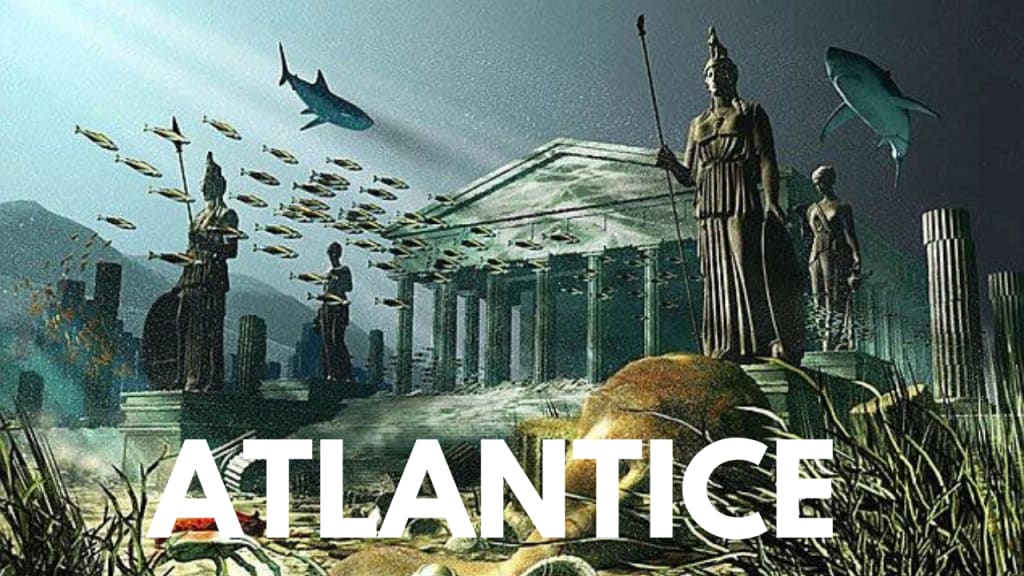
The Lost City of Atlantis
I. Introduction
The legend of Atlantis has captivated the minds of historians and adventurers for centuries. This mysterious city, believed to have existed around 11,000 years ago, has been shrouded in mystery and shrouded in legend. The ancient Greek philosopher Plato first mentioned Atlantis in his dialogues, describing it as a powerful and advanced civilization that was ultimately destroyed. The search for Atlantis has led to countless theories and expeditions, with many people trying to uncover the truth behind this legendary city. In this paper, we will explore the search for Atlantis, the possible existence of this ancient civilization, and the enduring legend that surrounds it.
II. The Search for Atlantis
The search for Atlantis has been a long and tumultuous journey, with countless theories and expeditions trying to uncover the truth behind this mysterious city. Many people have tried to locate Atlantis, with various theories about where it might be found. Some believe that Atlantis is located somewhere in the Mediterranean Sea, while others believe that it may be located in the Caribbean or even in Antarctica. Despite the many theories and expeditions, the exact location of Atlantis remains a mystery.
One of the most well-known expeditions to search for Atlantis was led by the American explorer, psychic, and author Edgar Cayce. In the early 20th century, Cayce claimed to have psychic visions of Atlantis and its location, leading him to search for the city in the Caribbean and South America. While Cayce's expeditions were ultimately unsuccessful, they helped to fuel the enduring interest in Atlantis and the search for this lost city.
Other expeditions have focused on using scientific methods to try and locate Atlantis. These efforts have included underwater mapping and exploration of sunken ancient cities, as well as geological and archaeo astronomical analysis of potential locations. While these efforts have yielded some interesting findings, the exact location of Atlantis remains a mystery.
III. The Possible Existence of Atlantis
Despite the lack of concrete evidence, many people believe that Atlantis was a real city that existed in the distant past. There are several pieces of evidence that have been cited as supporting the existence of Atlantis, including:
• Ancient texts: Plato and other ancient Greek writers describe Atlantis in detail, providing a detailed account of the city and its culture. While some have questioned the accuracy of these accounts, others argue that they provide valuable insight into the possible existence of Atlantis.
• Underwater discoveries: There have been several underwater discoveries that some believe could be linked to Atlantis, including the sunken city of Heracleion in Egypt and the city of Pavlopetri in Greece. These discoveries have led some to believe that Atlantis could be an ancient sunken city.
• Geographical and geological evidence: Some have argued that the geography and geology of certain locations, such as the Caribbean and Antarctica, match the descriptions of Atlantis provided by ancient writers. While this evidence is not conclusive, it has been used to support the idea that Atlantis could have existed in these areas.
Despite these pieces of evidence, there are also many arguments against the existence of Atlantis. Some argue that the ancient texts that describe Atlantis are purely mythological, and that there is no concrete evidence to support the idea that Atlantis was a real city. Others have pointed out that the geography and geology of certain locations do not match the descriptions of Atlantis provided by ancient writers. Ultimately, the question of whether Atlantis was a real city or simply a legend remains a mystery.
IV. The Legend of Atlantis
The legend of Atlantis has been passed down through the ages, and has taken on many different forms over time. According to ancient Greek writers, Atlantis was a powerful and advanced civilization that was located in the Atlantic Ocean. The city was said to be ruled by a powerful king, and was home to a thriving culture and society.
Atlantis was described as being a city of great wealth and luxury, with many beautiful palaces and gardens. It was also said to have been a center of learning, with a highly advanced system of education. The people of Atlantis were said to be highly skilled in various fields, including architecture, engineering, and science.
The legend of Atlantis has inspired many works of fiction, and has become a popular subject in literature, film, and other media. The enduring mystery of Atlantis and its possible existence has continued to captivate the imagination of people around the world.
V. The Fall of Atlantis
According to the legend of Atlantis, the city eventually met its demise in a catastrophic event. According to ancient Greek writers, Atlantis was destroyed by earthquakes and floods, causing the city to sink beneath the ocean. Some have speculated that the destruction of Atlantis may have been caused by a volcanic eruption or other natural disaster, while others believe that it may have been caused by the actions of the people of Atlantis themselves.
Despite the many theories about the cause of Atlantis' destruction, the exact circumstances of the city's fall remain a mystery. Some believe that the legend of Atlantis was simply a myth, and that the city never actually existed. Others argue that the legend of Atlantis may be based on a real event that has been exaggerated over time. Ultimately, the question of what caused the fall of Atlantis remains one of the enduring mysteries of this legendary city.
VI. Conclusion
The search for Atlantis and the quest to uncover the truth behind this mysterious city has captivated the minds of people for centuries. While the exact location and existence of Atlantis remains a mystery, the legend of this ancient city continues to endure. Whether Atlantis was a real city or simply a myth, the enduring fascination with this lost city speaks to the enduring power of the human imagination and the enduring appeal of ancient mysteries.
About the Creator
Keep reading
More stories from Azhagu malai kannan and writers in Fiction and other communities.
The Mythical Beast of Loch Ness: The Legend of the Loch Ness Monster
"The Mythical Beast of Loch Ness: The Legend of the Loch Ness Monster" I. Introduction The legend of the Loch Ness Monster has captivated the imaginations of people around the world for centuries. This mythical beast, said to inhabit the depths of Scotland's Loch Ness, has been described as a large, serpent-like creature with a long neck and humped back. Despite numerous sightings and reported encounters with the monster, its existence has never been definitively proven. Despite this, the legend of the Loch Ness Monster remains an enduring and iconic part of popular culture and folklore. In this essay, we will explore the history of the legend, theories about the monster's identity, and efforts to find and study the mythical beast.
By Azhagu malai kannan3 years ago in Fiction
THE EMBER AND THE ECHOES
Episode 7: The Hollow Lord The groan of the rising portcullis was the sound of the world shifting. Kaelen walked through the gate’s shadow, the eyes of the Talons boring into him. No one moved to stop him. No one touched him. The name ‘Morvath’ had acted as a key more potent than any steel.
By Akua Anita2 days ago in Fiction
Ludacris and Nelly draw backlash over bookings at MAGA-coded music festival
Ludacris and Nelly headlining a mostly right-wing event is good for them. It’s also great for the genre of hip hop. The two rap veterans have showcased their talents on other stages. Why can’t they perform for mostly MAGA folks and grab that bag?
By Skyler Saunders7 days ago in Beat




Comments
There are no comments for this story
Be the first to respond and start the conversation.