
Shards
All the world was a tomb, and it consumed those who sat idle

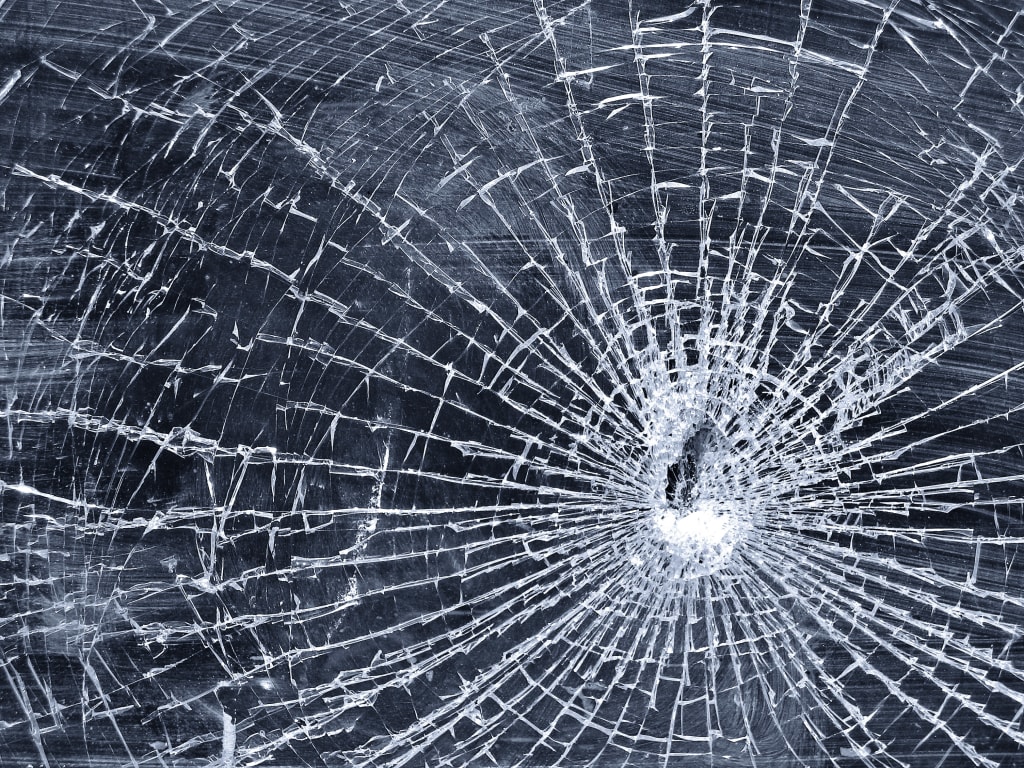
The endless asphalt crumbled beneath her feet. She kept moving. The desert wind stirred the hardpan into a maelstrom of grit. Still she kept moving. The sun baked the water from her pores, and her emaciated limbs ached with each step, and the carrion birds marked her passage with their greedy beaks at the ready for the day that finally she fell – but she kept moving. For all the world was a tomb, and it consumed those who sat idle.
It was always best to keep moving.
She hummed in rhythm with her steps. It wasn’t a particular tune, just noise to bide the time, and it kept the dust from her throat so to speak the clearer. A town lay up ahead, and if there was to be a confrontation, she didn’t want her voice to crack. It was important to project strength when you came across a stranger.
As the girl approached she unshouldered her rifle, and cocked the bolt-action to chamber a round. The metallic click echoed downwind toward the line of dilapidated buildings, but nothing stirred, save the tumbling of weeds and the dust devils to the east. Either there was nobody around that heard, or they were waiting for her in the shadows.
She continued with a cautious step.
The outskirts of the town was marked by a pile of wrecked automobiles. All of them rusted and mangled and crumbling to be reclaimed by the earth. The heap may once have served as a sort of fort from which to defend the town, but it looked as if many years had passed since that time. There wasn’t a footprint she could spot among the ruins.
She fell to her knees behind the barricade, and perched the barrel of her rifle upon the crumpled bonnet of one of the vehicles, peering along the sights to scan the buildings up ahead. Towns were always dangerous. There were too many dark windows, and too many hungry bellies that had had their fill of horse and rat and had cultivated a preference for the long-pork. The girl would take her time – it wouldn’t cost her anything to be patient.
Eventually the sun peaked overhead, but still she remained hunkered behind the barricade, searching for any sign of movement. Crows gathered along the eaves, their soulless eyes cast downward, their mournful caws ringing in her ears like an omen of death. She waited some more. By now she was familiar with each of the derelict structures that lined the street. Most of the doors hung ajar, and the roofs were all caving, and there wasn’t a window that had endured the bad-times intact, but this didn’t come as a surprise. There was no longer glass left anywhere in the world. All that remained was shards.
For a time she had travelled in the company of an old man who had told her that glass used to be everywhere, that entire cities had been built of it. The girl could scarcely imagine such a wonder. She released her grip on the rifle and scooped her hand into the shattered remains of the car windows that was littered about her feet, and then blew away the dust. The handful sparkled in the sun like diamonds, like a collection of little stars. How marvelous that once there were cities of this, but it was unlikely to ever be so again. Not for a hundred years had there been anyone who knew how glass was made. The old man seemed to believe that it was a simple matter of melting sand, but she didn’t think that was true.
She missed travelling with a companion. Everything from collecting firewood to hunting was made simpler, and it was always nice to have someone to talk to. There was much she had learned from the old man, but eventually his age had caught up with him. She had returned to their camp one day to discover him writhing in agony. In her absence, he had slipped and broken his femur, and the muscle had bundled the limb into a bulging disfigured mess. Even though she valued his company, there was no way to treat such a wound, and no way for her to carry him. So she had collected her things, and abandoned him there by the fire. She never said goodbye, and he had made no effort to convince her to stay, they had both known that his days were at an end.
The girl tipped her hand and watched as the pile of gleaming rubble tumbled from her fingers, then tentatively she rose to her feet. There were none that called out to her, and no gunshots that pierced the dry air, so she ventured beyond the safety of the barricade, and out into the vacant street. Her gaze was fixed along the barrel of her rifle, and she swung it here and there as she made way. She didn’t blink, even though the dust stung her eyes and sweat trickled down her face to muddy her vision. But the shadowed ruins didn’t spill any secrets.
The buildings were mostly gaping and empty, having been ransacked long ago, but there was one homestead near the center of town that had been boarded up and maintained to some degree. There were clear signs where the roof had once been mended. Someone at some stage had barricaded themselves inside, and there was no way of knowing if they remained there still.
She approached with a wary step, the rifle shaking in her hand, and her eyes darting side to side to keep an eye on the gaps between the planks that covered the windows. The landing gave a tired creak as it took up her weight, and her breaths became short and sharp. If the occupants had earlier been oblivious to her presence, they would surely be alerted by now. She considered calling out to demand that they show themselves, but in the end she thought better of it. Best she not forfeit the element of surprise without good reason. She tucked the stock of the rifle under one arm, and with the other she reached for the door knob, and although it was reluctant to turn in its socket, it definitely wasn’t locked.
As the door swung inward her hand snatched back to the rifle. She was shaking terribly, and gasping for each lungful of air, but she ventured inside just the same. Where else was she likely to find food? The air was stale and stagnant, as if it hadn’t moved in a long time. It was almost a certainty that nobody lived here, but still she proceeded with caution. It took a moment for her eyes to adjust to the dim light, and then she scanned the murky innards of the building, her ears cocked for the slightest disturbance. It should have come as a relief that all was quiet and still, but terror tends to hide in the silence.
Suddenly there was a burst from the corner of the room, and an arching flash of fluttering white accompanied by an ungodly cacophony. She screamed and spun the rifle in the direction of the disturbance, and was only just in time to see a bird flee for the safety of the front door. It had been nesting in the corner and had managed to escape her notice. She snarled as she lowered the rifle. She should have recognized the smell of bird shit.
She crossed the space to check the bedrooms toward the rear of the house. The one on the left was stacked with old furniture, most of it damaged, and none that would be of any use to her. She closed the door, and instead tried the room on the right. She turned the knob, and booted the door aside so that both hands could be on her rifle, and as the chamber came into view she let out a gasp.
In the center of the room was an ancient iron-framed bed with a straw-filled mattress, and aside it stood an armchair with the corpse of the previous tenant. The skin was mottled and grey and flaking like charred paper, and the lips had peeled backwards into a horrifying sort of grin. Even so, it was easily recognizable as an old woman. Still she donned much of the dress she was wearing the day she died, and her hair, although now wiry and brittle, fell to well beyond her shoulders. The girl let out a long exhale as she lowered her rifle. She didn’t expect any trouble from the lady of the house.
Now that the coast was clear the girl returned to the main room and began searching high and low. She upended every container, and checked through each cupboard, but the state of the house made it clear that she was not the first. Other than a few unmarked cans that she discovered behind a shelving unit, there was little left that was worth taking. She let out a sigh, and loaded her meagre fare into her knapsack, then returned to the bedroom for a final look around.
As she spied the corpse grinning from the corner, she noticed a metallic glint from about the woman’s neck. It was a fine golden chain, and it descended toward her withered cleavage where it vanished beneath her dress. The girl rounded the foot of the bed, and reached out to withdraw the necklet from its keep, and from the collar emerged a heart shaped pendant. It was an odd sort of possession she thought, vain and entirely pointless, much better melted down and made into something useful. She turned the trinket over in her hand, and noticed that a split ran round its edge, and that a small hinge was skirting one side. Perhaps something of value was within.
She picked apart the locket with her finger nails, and as the contents were revealed her eyes widened in disbelief. She giggled quietly despite herself, and quickly checked her surroundings to make sure she was not being watched. Inside was a flawless piece of glass, immaculate, perfectly transparent and entirely unmarred, and behind it was the faded image of a young man. She had come across fotagraffs many times before, but never such a splendid piece of glass. Her eyes began to well, and she wiped away a tear with the heel of her hand.
It was the most wonderful thing she had ever seen.
The girl had no intention of leaving the necklace behind, so she worked it over the corpse’s head, and then took a moment to inspect her newfound treasure. It turned out that not only was the outer shell of the pendant set on the hinge, so too was the sheet of glass itself. She swung the miniature pane aside and plucked the fotagraff from underneath. She turned it over in her hand, and on the back she saw that a single word was writ, but she was unable to make much sense of it. She wasn’t even sure what a Henry might be. The necklace she snapped shut and secured around her neck, and the image she let tumble to the ground. The picture had over the years begun to spoil, and she was worried that the pane of glass might spoil with it.
The girl shouldered her rifle, and she left the old woman to her business. She would have liked to stick around and tuck into one of the cans of food, but as always, it was best to keep moving. As her footsteps faded, and the town fell silent once again, the man in the fotagraff stared hopelessly toward the woman with whom he had been locked in an eternal embrace. It wouldn’t be long before they were both reclaimed by the approaching desert. So what sense was there in burying the dead?
About the Creator
Terrence Hart
I quite like to pen them words. It makes me happy
Keep reading
More stories from writers in Fiction and other communities.
So You Decided To Become a Nurse Practitioner:
So you decided to become an "Advanced Practice" nurse. Congratulations!... is what I would say if this was a good idea. Grad school? In this economy? What were you thinking? Likely it was something along the lines of either 1) “I've seen these other chucklefucks do it— Why can't I?” or even 2) “I've got a nice career, I should shake it up. I miss feeling like I have no clue what I'm doing.”
By Sandor Szabo3 days ago in Fiction




Comments
There are no comments for this story
Be the first to respond and start the conversation.