
Nostradamus Predictions for 2026.
True or false time alone will tell the story

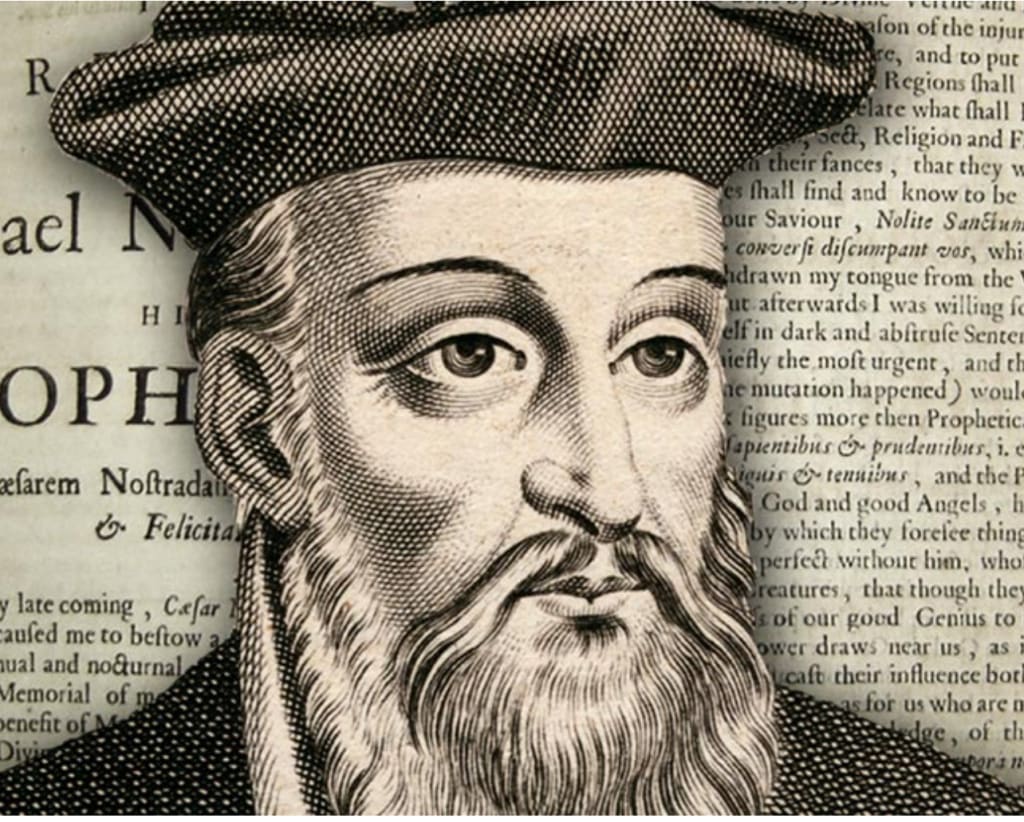
Nostradamus Predictions for 2026
Nostradamus remains one of the most enduring names in prophecy. Born Michel de Nostredame in sixteenth-century France, he worked as a physician, astrologer, and writer, a man who turned observation into prediction. His book Les Prophéties has travelled through centuries, its cryptic verses sparking argument and awe in equal measure. Some see his work as poetic philosophy, others as proof that the future leaves shadows long before it arrives. Whatever the truth, his name still rises whenever the world trembles.
Many of his predictions appear strangely close to history. He seemed to foresee the great fire of London, the French Revolution, the rise of dictators, and the fall of empires. He wrote in symbols and riddles to escape persecution, yet those riddles have outlived entire kingdoms. Scholars have spent generations decoding his quatrains, tracing every metaphor for signs of truth. Estimates of his accuracy vary, but most agree that around seventy percent of his words have found some echo in real events.
When his readers turn to the year 2026, they find verses that speak of turmoil and renewal side by side. He hinted at shifting alliances in the north, of nations joined by necessity rather than trust. Some believe this points to political change in Europe, others to new global treaties born from crisis. He described waters rising against the coastlines, the sea reclaiming the land that was stolen from it, and humanity learning humility through loss.
He also mentioned a light in the sky, a sign mistaken for fire. Many interpret this as a comet, a natural wonder that will pass near the earth and cause both fear and fascination. He wrote that it would not destroy but awaken, a reminder that mankind is small in the face of creation. In that same sequence of predictions, he spoke of the economy trembling, gold turning to poison, and the mighty learning how fragile their fortunes truly are.
To modern readers, these words feel like a mirror of the present. Markets rise and fall with impossible speed, climate change reshapes coasts, and technology changes lives faster than minds can adapt. It is no wonder that Nostradamus is read again, not only by believers but by those seeking meaning in chaos. His prophecies offer both warning and comfort, suggesting that every collapse carries the seed of rebirth.
Among his most discussed visions for 2026 is the rise of an unexpected leader. He will emerge from obscurity, Nostradamus wrote, a figure who speaks softly but holds great influence. The world will divide in its opinion of him, some calling him saviour, others calling him the architect of confusion. Yet from the divisions he stirs, a new understanding may grow. The prophet suggested that peace would come not from power but from exhaustion, when nations finally realise that endless struggle serves no one.
Nature also moves through his prophecies like a restless spirit. He foresaw long summers of unbearable heat, rivers reduced to dust, and the air itself becoming a currency more precious than gold. Still, he saw hope in human ingenuity, writing of machines that would clean the skies and of people learning once again to live with the rhythm of the earth. For him, destruction and renewal were never separate; they were steps in the same eternal dance.
By his measure, 2026 stands as a year balanced between reckoning and recovery. Nostradamus believed destiny was not fixed, that the stars offer guidance, not control. His words suggest that if humanity chooses humility over pride, compassion over ambition, the century ahead could yet shine.
Centuries after his death, the book of quatrains remains open on countless desks, its verses translated, debated, and believed. Perhaps that is his greatest prophecy — that people will always search for order in the storm. Whether his 2026 predictions unfold or not, Nostradamus continues to hold a mirror to human nature. In that reflection lies the same choice he warned of long ago: to learn before it is too late, or to ignore the lessons written in the stars.

About the Creator
Marie381Uk
I've been writing poetry since the age of fourteen. With pen in hand, I wander through realms unseen. The pen holds power; ink reveals hidden thoughts. A poet may speak truth or weave a tale. You decide. Let pen and ink capture your mind❤️
Keep reading
More stories from Marie381Uk and writers in Fiction and other communities.
Baba Vanga Predictions for 2026
Baba Vanga Predictions for 2026 Baba Vanga remains one of the most fascinating figures in the world of prophecy. Though blind from childhood, she saw further than most people could imagine. Her name has become a symbol of mystery, a whisper passed between believers and skeptics whenever the world feels uncertain. For decades, her visions have been revisited each time a new disaster unfolds, as if her words continue to echo through time.
By Marie381Uk 3 months ago in Fiction
Miss Persephone's Manual to a Seemingly Ordinary Life
Miss Persephone was found at the dining table, her blue eyes swollen, her tears arriving and retreating like the tides of the ocean. Earlier that day, her family had visited her in the retirement home where she had lived for eight years. It was her eightieth birthday.
By Imola Tóth5 days ago in Fiction
Silver Screen Magic with Mae West
American actress and singer Mae West became a popular film actress during the Great Depression. She started entertaining in vaudeville, then performed on Broadway, and finally went to Hollywood. She signed up with Paramount Pictures and made her debut in the 1932 film “Night After Night.” She also starred in musicals, comedies, and crime dramas. The American Film Institute named her one of the best classic Hollywood actresses.
By Rasma Raisters6 days ago in Geeks


Comments (2)
Very nicer, Maire. "Nostradamus wrote, a figure who speaks softly but holds great influence." Thank goodness that Donald Trump doesn't sound like Donald Duck. There is nothing about him that speaks softly. We need another assurance so someone with a sense of decency, compassion and love for what the world would be.
This is another great lecture about and for the future. Great job.