
Bill Gates: From Tech Visionary to Global Humanitarian
How the Microsoft Co-Founder Transformed Innovation and Philanthropy

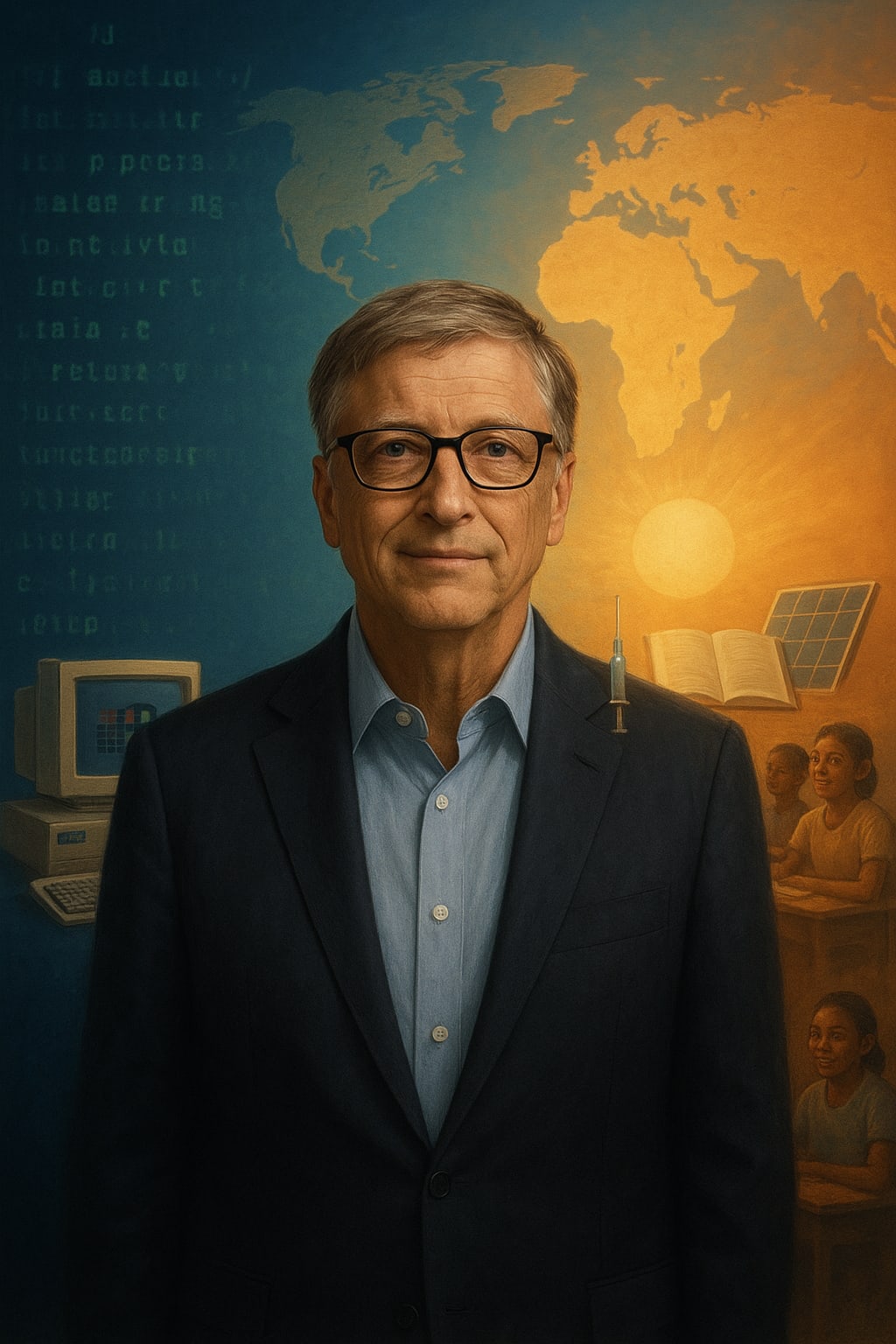
Bill Gates: From Tech Visionary to Global Humanitarian
How the Microsoft Co-Founder Transformed Innovation and Philanthropy
Few names in the modern era carry as much weight as Bill Gates. Known first as the co-founder of Microsoft, Gates’ journey has gone far beyond technology. Over the decades, he has shifted from building a digital empire to tackling some of the world’s greatest challenges in health, education, and poverty. His story is not just about business success; it’s about reinvention, responsibility, and the evolving role of wealth in shaping humanity’s future.
The Early Spark of Curiosity
Bill Gates was born in Seattle in 1955, and from an early age, he displayed an unusual fascination with computers. At a time when most people had never seen a computer, Gates was already writing code. His curiosity and persistence set him apart. Together with his childhood friend Paul Allen, Gates envisioned a world where computers would not be limited to corporations or universities but would instead sit on every desk in every home.
That bold vision led to the birth of Microsoft in 1975. At a time when the computer industry was still finding its identity, Gates’ insistence on making software the heart of the digital revolution became the foundation for what we now know as the personal computing era.
Building Microsoft Into a Giant
Microsoft’s big breakthrough came with MS-DOS, the operating system that powered IBM’s first personal computers. From there, Gates and his team continued to innovate, introducing Microsoft Windows in the mid-1980s. With its graphical interface and ease of use, Windows became the standard for personal computers worldwide.
By the 1990s, Microsoft was no longer just a company—it was a symbol of the digital age. Gates became one of the wealthiest people in the world, and Microsoft’s products became fixtures in homes, schools, and offices. However, Gates’ leadership was not without controversy. Microsoft faced antitrust lawsuits and criticism for its aggressive business practices. Despite these challenges, Gates proved resilient, guiding Microsoft through turbulent times while solidifying his reputation as a shrewd and relentless innovator.
The Turning Point: From CEO to Philanthropist
In 2000, Gates made a surprising move: he stepped down as Microsoft’s CEO to focus more on philanthropy. Alongside his then-wife, Melinda, he established the Bill & Melinda Gates Foundation, one of the largest private charitable organizations in history.
The foundation’s mission was clear but ambitious: to improve healthcare, reduce extreme poverty, and expand educational opportunities across the globe. Gates redirected billions of dollars into initiatives aimed at fighting malaria, polio, and HIV/AIDS. His belief that technology and resources should be used to solve humanity’s greatest problems marked a profound shift in how billionaires were expected to use their wealth.
Impact on Global Health and Education
Perhaps Gates’ most lasting legacy will not be Windows or Microsoft, but the millions of lives improved through his foundation’s work. The Gates Foundation has funded vaccine research, distributed mosquito nets to prevent malaria, and worked with governments to strengthen public health systems. These efforts have contributed to significant declines in child mortality rates in several countries.
Education has been another cornerstone of Gates’ philanthropy. He has supported initiatives to improve U.S. public schools, expand access to technology in classrooms, and fund scholarships for underprivileged students. His belief that education is the pathway to opportunity mirrors the same optimism he once brought to the world of computing.
Criticism and Controversy
Despite his achievements, Gates has not been immune to criticism. Some argue that the immense influence of the Gates Foundation on global health policy gives unelected billionaires too much power over international priorities. Others have raised questions about Microsoft’s early dominance and Gates’ competitive style.
More recently, Gates’ personal life has also drawn public attention, particularly his divorce from Melinda French Gates in 2021. Yet, even amid scrutiny, Gates continues to devote his time and resources toward philanthropy, often shrugging off controversy by returning focus to the work at hand.
Legacy of a Modern Icon
Bill Gates’ story is a reminder that success is not static. He transformed himself from a tech mogul into a global humanitarian, proving that reinvention is possible even after reaching the pinnacle of wealth and achievement. His journey highlights the responsibility that comes with influence—and the potential to reshape the world for the better when vision is matched with action.
While Gates may forever be remembered as the man who brought personal computers into the mainstream, his true legacy may lie in his efforts to reduce inequality, improve global health, and inspire others to use their resources for good. In a world still facing immense challenges, Gates represents both the promise of technology and the power of human generosity.
About the Creator
LONE WOLF
STORY
The Devil's Cut
“Comrade, finally you’re awake.” The voice was smooth, sensual. A flickering incandescent bar was all that lit the white, sterile room. All Vladimir remembered was everything going black. He tried to move his arms and found them strapped to the gurney.
By Matthew J. Fromm6 days ago in Fiction




Comments
There are no comments for this story
Be the first to respond and start the conversation.