
Amensalism
As Told By The Incomparable Madam Sinclair

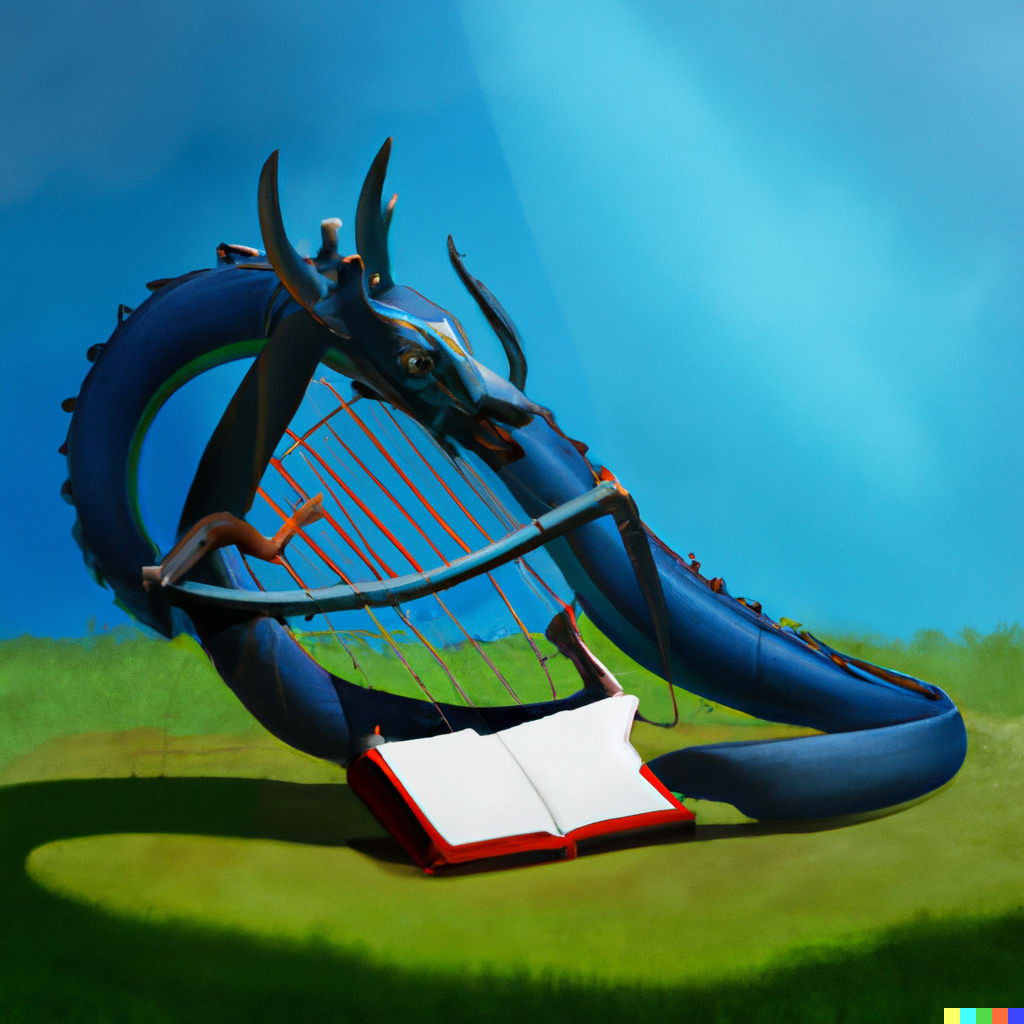
I hear you asking for a tale, but what you really need is a lesson.
Now, don’t you try to play dumb, young one. Madam Sinclair sees all, and aye, that includes you. I’ve seen you and your merry band of rogues frolicking out there in them woods, taking advantage of your beleaguered mother and her poor tired eyes that are kept so doggedly set on her waning craft. You’ll worry her out of a livelihood if you keep on that way, and what’ll you do for food when her spiralling fires have no crowd’s worries nor wallets to lighten? Will you find salvation in your infernal forest then? Hmmmm? I think not; there’s nothing in there but stubbed toes and hefty woes for you.
Now, don’t you dare darken your eyes at me, lad. Do NOT dare! For what I tell you now could save the life you seem so intent on throwing away with your fruitless traverses into the umbrageous realms beyond our torches. There are things in them woods that your paltry wooden spears and clubs cannot save you from. What did you s—tall? Do you dare suggest that I—I, the great Madam Sinclair—would tell a tale that is tall? Listen here, you little wad of sap—I have been trundling along these roads since before wheels were round, and I know what of what I tell is tall and what of what I speak is otherwise. And this is that: otherwise.
Of course you’re confused; your brain is a blob of clay awaiting a master sculptor to shape it. Fortunately, you’ve found yourself smack dab in the right place, for I can give you a tale and a lesson in one fell swoop. No need to thank me, child—for the weaving of a life-changing yarn is nothing for the greatest storyteller in any of the twelve Travelling Caravans. And yes, that includes that damnable Gulbert Gore with all his yakking about sword fights and blood and such. Despicable man...
What? Yes, yes, the story—I haven’t forgotten. You can’t rush art, and art is what I ply today. The tale I have for you has been cloaked in many names, but perhaps the most appropriate one it ever donned was gifted to it by my third husband, Charles. A great scholar he was—a knower of those words that are uttered aloud but once every five years in the whole kingdom. It was one such word that he gifted to this tale—a word he’d use when he prattled on about the peculiar reason why nothing grows under Shillshell trees. Those are them tall trees with the dark bark on them, boy. See, Shillshell trees release an oily elixir into the dirt around them for no reason that does them any good; it’s a “bye product,” he said, which is a useless thing that you make and then say “bye” to, I believe. But while it doesn’t help the tree, you best believe it doesn’t do anything else any favours either. Anything that aims to be green and living in the shade of a Shillshell is going to have a rough time of it, for that bye product is a deadly poison.
And that’s what this tale is named after—a word that means when two living things cross paths with one another and one is hurt while the other doesn’t feel a thing. Settle in and prepare yourself for the tale of “Amensalism.”
Let me get my proper voice out. Hmm, uhmmm. Ahem…
The boy had wandered off.
New to the world and its ways, the child had given very little thought to the possibility of being lost. His attention had been drawn to the winged dance of some passing insect, and the stubby sausages that would one day pass for legs had risen to the challenge of pursuit. Waddling off through bush and over burrow, he had quickly left the safety of the caravan behind. His absence went unnoticed during the mad rush of impending travel, and before anyone had thought to check his now vacant bed, the carts had lumbered on towards their next encampment.
The boy had wandered off, and now he was alone.
When the six-legged temptress suddenly flew up and out of his sight, the child began to notice the oddness of his new surroundings. There were countless sights, sounds, and smells to take in, and not a one of them so much as grazed a chord of remembrance. The familiar music of human voices had faded, replaced by the eerie chirps and persistent rustling of unseen creatures. The steady torchlight had subsided in favour of intermittent glimpses of pale moonlight through shifting foliage. Where once the odours of smoke, horse, and straw had held sway, now the overwhelming aroma of ungoverned life and its histories reigned supreme.
Stranded in the depths of the unknown, the once stout heart and indomitable resolve of youth began to falter. Tears came bubbling up from hidden wells, and sobs clawed their way out into the air as pitiful puffs of condensed breath. Sounds of such pure fear and vulnerability travel far, and they always attract unwanted attention. Which of the many dark denizens of the forest would come to the child’s call? Would it be the wolves, their eyes aglow with excitement over the coming feast? Perhaps it would be a mountain bear grabbing a light snack before his season of sleep. Or maybe a gilded serpent would drop down from the trees to snag its prize. Who? Who would be the lucky beast to answer the child’s cries?
After what seemed like hours but was likely mere minutes, he felt something change in the forest around him. The omnipresent ruckus of living things fell silent, and a sweet smell cut through the former miasma. The details of the forest, which had been obscured by darkness, began to reappear in a soft blue glow. And while the source of the illumination wasn’t immediately apparent to the child, as it grew brighter he realized that the light was emanating from the trees themselves. He stood transfixed, uncertain if this new change was to be celebrated or feared. His tiny heart’s frantic beating seemed like the only noise in all the world.
And that’s when he saw it—the dragon.
Ah, desperate is the plight of the tale weaver that must attempt to capture the beauty of a dragon. How would one conquer such a task? If I tell you that iridescent scales coated its frame perfectly from head to tail, each glittering like a jewel resting beneath a gently flowing blanket of clear blue water, would that suffice? If I describe the regal majesty of its long neck and precisely folded wings, the former as sturdy as the most ancient tree and the latter as elegant as the finest silk, would a tear come to your eye? If I laid before you a perfect recollection of the strange cornucopia of multicoloured flowers and succulent fruits that clung to the beast’s sides, appearing to grow directly from its body in celebration of a being that has played its part in the world for longer than any kingdom of man has existed, would you finally see the true glory of a dragon? Likely not, for such things must be seen to be believed.
The boy saw, and the dragon came closer.
The blue glow from the trees grew more pronounced as the dragon approached, and the dingy shrubs and bushes of the forest floor shifted of their own accord to clear the way. A stab of fear hit the child’s heart as the parting flora traced a path that passed not an arm’s length from where he was standing. The dragon walked onwards with a grace pleasing to behold, a flowing procession bringing it closer and closer. And yet the boy could not bring himself to move. Whether his muscles remained fixed in protest of their previous exertions or in mute embarrassment at being seen as clumsy in front of the paragon of grace before them, it’s impossible to say. Regardless, they stayed firm in their position even as the dragon came upon them and their helpless host.
The ground vibrated with each step the dragon took, and now it was so close that the entirety of the boy’s vision was consumed by scales and flowers. As it grew close enough to touch, the boy was finally able to wrangle his neck muscles into looking up. He blinked up towards the top of the massive neck, expecting to see the dragon’s eyes glaring down at him from above or—even worse—its gaping maw descending towards him. But to the contrary, the dragon’s glowing eyes were focused on something in the far distance, past the boy, past the trees, perhaps past the realms of this world entirely. It took no notice of the tiny creature standing beside it, and instead it continued on its way. As it passed, the plants fell back into place and the trees began to fade back to their previous dark hues. The boy kept his eyes fixed on the dragon until even the glow of its wake had dissipated.
The forest slowly stirred from its rapture, returning to the sights, sounds, and smells of its former self as if nothing had happened. And so it would stay for many hours until it was once again disturbed, this time by the frantic cries and flickering fires of lesser visitors in search of their lost kin. As you can imagine, there were many tears of relief shed, many cheers of ecstasy raised, and surprisingly few mutterings about lost time and damp feet. But throughout all the revelry, the boy’s eyes remained fixed on the far distance, past his humbled parents, past his community and their genuine smiles—indeed, perhaps even past the forest and the kingdom that housed it.
The boy was found, but he was also changed.
The string—eh? What change, you ask? Well, what a wonderfully thoughtful and perfectly timed query, my boy. It’s as if you saw me bending bone and tearing muscle to carve an intricate path of discovery through the jungles of theme and art—all for you, I pray you mind— and decided to come to my aid by burning the whole thing down with your infernal question! Just like my first husband, Chuck: no patience. At least he was a soldier, so his thirst for action served as a trade-specific virtue—a lonely one, but a virtue nonetheless.
Anyway, not another word out of you until my tale is complete! Now, where was I?
The string of time grew taut and pulled the boy forward, sucking the days of his life behind him to fill the void.
In the weeks immediately after his expedition into the forest, the boy went into a fugue state complete with vacant stares and tasteful drooling. None can truly know the thoughts of a child before the gift of language has been bestowed upon them, and so the inner tides and tumults that played out behind the boy’s eyes remains a mystery to all, even the keeper of his story. Just as baffled were the concerned parents, who were repeatedly assured by their neighbours and extended family that this daze would pass, even as the same supposed brethren would gather slightly out of shot of ear and eye to prophesize much darker futures for the child.
Despite such back-alley pessimism, the end of his petrification did come to pass, but only once weeks had grown into months. Unfortunately for his parents, the daze was replaced by a new mania, one of muscle instead of mind. At every chance afforded to him, the child would take off running for the nearest patch of trees. Initial relief at the boy’s returning interest in movement was quickly replaced by frustration and fretting at these constant attempts to remove himself to pastures unknown. His escape successes were few, but they were liable to become more plentiful as his little legs grew taut and defined from age and effort. Oddly, his successes always ended the same way—a hasty recovery aided by the sonic breadcrumbs of his despondent cries.
Eventually, these tumultuous months pupated and hatched into calmer years, at which point this mania, too, subsided. Having gained the ability to understand the pleading of his parents, as well as the ability to offer his pleas for understanding in return, it became apparent to the boy that his desires would not be met in the woods into which he feverishly raced. The world proved to be much, much bigger than he had first perceived, and no quarry was likely to be found within its innumerable hills and forests without the knowledge of what was being sought. But what was it that he sought?
We, the wizened and well-lived in this world, are fond of lamenting the ignorance of youth (which is easy to do when it’s so blatantly displayed on the regular), but we must remind ourselves that such follies are not entirely of youth’s making; after all, how does one seek aid from those in the know if one is bereft of the words to ask? The child knew what he’d seen but not the word to describe it. His crude vocabulary and vague memory could only get him so far with his parents. He turned to his community, but still the word took much longer to find than might be expected within a caravan full of artisans trained in presenting the fantastical. So long did it take to find the word he sought that the child was grown halfway towards his manhood before an especially wise young lady finally thought to whisper the word to him: “dragon”.
So began a new mania—but this one was focused, methodical, and strangely pragmatic. If he must know everything there was to know about dragons—and he seemed certain that he must—then he would need to learn how to interrogate sources on the matter. He would need to learn how to read so that he might devour all that was known about dragons; he would need to learn how to write so that he could keep correspondence with a scholar understood to be a knower of dragons and their patterns; and he would need to study the arts, for it was in these ethereal records that the majority of the material on dragons resided. In this way, he managed to grow himself into a decently educated young man that was better read and better wrote than most anyone else in the caravan.
Still, his so-called kith and kin, while pleased to boast in the open air about the prescience of their calls to abandon worry in his youth, retained a grievance that preoccupied their clandestine whispers. Namely, the lad had yet to pick and hone a craft to trade upon. What good were his books and letters if he wasn’t able to barter for the lifeblood of any travelling caravan: coin? The other young men his equal in age far surpassed him in practical ability, becoming musicians, blacksmiths, horse tamers, fire jugglers (yes, yes, just like your mother), illusion masters, pleasurists, and, yes, even humble tale weavers—all professions with a purpose for the collective.
Despite this ridicule, the mania did not cease. Before his eighteenth birthday, the boy—who was quickly becoming a grown man—had already exhausted both the conflicting literature and the fraying wits of his inundated scholar. The art angle proved even more frustrating, for while most works were mere daydreams by ragamuffins who had never even seen a dragon, every once in a jade moon there would come a piece, some painting or scrap of prose or near indecipherable musical code, that would be from someone who had seen the truth. And that someone would have gotten close, achingly close, to helping him capture the thing he wanted more than anything—the thing that had driven his days, months, weeks, and years since that night he saw the dragon. Close, but none of them were able to give him what he desired.
And so he decided to do it himself.
As a mercy to our poor protagonist, I will refrain from describing his attempts at painting; suffice to say that the palette has never been so easily comparable to an instrument of torture. As a mercy to my audience, I will skip past even a cursory report on the failed attempts at sculpting; certainly, any dragon would be hard-pressed to have seen itself represented in the artless lumps of rock he left in his wake. And as a mercy to myself, I won’t dare to utter so much as a verse of his horrid perversions of poetry that were born against their will and fortunate enough to die shortly thereafter. But then came music. His mother had an old lyre that she used to play back when she was still in the grips of youth, and it seemed as likely an instrument as any to wring out the truth that he sought. His first forays were mediocre at best, but they lacked the ghastly reactions that had suffocated his prior attempts at capital-A Art. Encouraging, but there was still a long way to go.
Mastering an art is a close relative to the similarly colossal tasks of climbing mountains, raising children, and even slaying dragons. Each member of this extended family of impossibilities all begins the same way, with the distance between where you are and where you think you ought to be stretching before you with a vastness that seems downright malicious. Still, there’s nothing for it but to take the first step, and another, and another, and so on. So it was for the man and his lyre, walking hand-in-string for twenty long years as they grew to understand one another, and each successive step was marred by fewer and fewer wrong notes. Fortunately, we don’t have to remain by his side for every misstep, every broken string, every muttered curse. After all, tale weavers are given the gift of time manipulation, and so we may sprint where he was forced to crawl in order to quickly come to our tale’s resolution.
It was a dark and windy night on the eve of winter. After tossing and turning in the throes of a nightmarish war for five years, the kingdom was finally awakening to a land of peace. But peace comes with its own complications, the most immediate being the droves of returning men-at-arms, all of them battered, battle-blind, and hungry for any semblance of a “good time” they could get their hands on. It was a bad time to be the father of any pretty, willful, (and downright stupid) young lady certain that true love awaited her in the bloodied hands of a traumatized soldier, but a great time to be a caravan parked just outside the kingdom’s outermost city, serving the steady stream of blunder-laden lads at all hours of every day for weeks on end.
This particular night was the tenth consecutive day of consistent work, and the truly talented performers needed a rest to refill their waning reservoirs with more gusto for the coming day. The call came out for the second tier to help fill in the gaps, and so it was that the man and his lyre found themselves before the jeering masses. Now, this was not his first time onstage. Over the years of practice and perfection, he had performed many times for audiences meager and meaty, often to the dismay of his fellow performers. His act was always comprised of the same solitary song—a lilting tune of his own making that reliably tightened purse strings from one side of the country to the other. Said nameless song was unloved by audiences and disdained by the caravan, and it never seemed to do the man any favours either. Each performance was always followed by weeks of sulking in his dingy wagon, rejecting the company of even his single remaining parent.
For these grievances and more, the caravan leaders provided little pomp and practically no circumstance for our protagonist as he took to the stage. The crowd was raucously shouting at him already, and them in the know figured that, at worst, his song would irritate the crowd into rioting and, at best, the mob would be satisfied with breaking that stupid lyre in two. Oh, the grape’s blood is a violent brew (certainly could never get ol’ Charl, the second in my long string of bad husbands, to get off the stuff), and woe is the soul that must try and wrangle it back from its natural disposition with only a few taut strings. But, undeterred by the waves of sound and wine-saturated breath, the man strode onto the stage and began to play for the crowd.
And that’s when they heard it—the song.
From the first note, he knew that something was different that night, and soon the audience began to know it too. Slowly, the soft strumming began to penetrate the din of clanging mugs and belches, and as it spread through the crowd everything else fell silent so that only the song remained. And what a song it was—a slow procession of graceful notes, wafting forth on a sweet-smelling breeze. The notes were the same as they always were, their progression almost identical to the last twenty times he had performed it. But something intangible had aligned for him that night. It was a perfect Syzygy.
The man played, and the crowd drew closer.
The rapt silence of his audience moved past the immediate crowd and rippled out through the rest of the caravan. Soon, every ear attached to a working soul for miles had compelled its owner to find the source of this truth they’d caught on the wind. For that’s what it was: a truth. A truth the man had been striving to express since that night in the forest so many years ago. The truth of what it had felt like to be there in the glowing forest, to be so close to a creature that had driven every one of his senses to frenzy, to have been a mere twitch of the hand away from touching this manifestation of awe and grace and beauty, and then to have watched it leave him behind, languishing with all the other aspects of a human life that would forever feel wanting in comparison. That was the truth he had sought to express all his life, and now he had; his truth had become theirs, a feat only the best art can accomplish.
The man played, and the crowd was forever changed.
Oh, for the love of all that is gnarled and bent in this world, I can see you practically vibrating out of your skin, child. What? What is the question that you’ve been holding in so hard you’re liable to shake my pictures off the wall? ‘Syzygy?’ Really? Why, is your poor mother teaching you nothing but the correct quantity of soot to store under one’s fingernails? All right, all right, don’t get all defensive for her sake, lad. Since you’re but a whiff of smoke in the tall grass before the true flames of life emerge, I suppose it should not strike me as foul that you have yet to experience the true joy of a perfect performance. For that’s what Syzygy means, boy: an alignment of intangible things that temporarily elevates your craft beyond the mettle of mere mortals. What these intangible variables may be is anyone’s guess. Some say it’s an alignment of the celestial bodies in the night sky that brings forth the Syzygy. Others say that it’s to do with the aligning of gods and their humour.
Still others, such as my first and only wife C.C., suggest that it is instead an alignment within oneself. She always used to say that we are shells within shells, only having true control over the uppermost layers. To her, Syzygy was when those inner layers that shift and rotate to their own unknown rhythms happen to sync up with our outermost intentions. An alignment of the self that produces something deeply true. C.C. actually experienced a Syzygy the first night I saw her sing. You should have seen her, lad—standing up there with her hair flowing like honey and her voice resonating through all of our souls. Perhaps it was getting to see her inner shells in that song that drew me to her; perhaps that’s what keeps drawing me back to her memory so many years hence.
I’m fine, child. It’ll pass. No more interruptions. For the night is late and, just like the magic of a Syzygy, our lamp won’t last forever. Speaking of which...
The song carried on, but something went wrong. The man felt a shift in his playing, its origin untraceable, its correction unknowable. Whatever alignment had bestowed its gift upon him, whether it was lights in the sky or truths of the heart, it was drifting. The notes and phrases that had so recently rung out as perfection incarnate were now betrayers of his degrading form and function. Desperately, he strummed the lyre to try and make it stay, but it was no use. His truth had returned to chase away the shadows with its blue light, but now it was fading into the distance and the shadows were settling in around him again. He knew it, and soon the crowd did too.
The metamorphosis that had turned the tactless throng of drunken onlookers into a perfect portrait of silence and civility was being rapidly undone. In its wake were left hundreds of bewildered men who knew not what they had been given but felt acutely that it was now lost to them forever. If the performance had been lesser, if its truth had been less potent, the standard protocol of throwing rotten raeberries and tattered shoes would have served to soothe their hurt. Circumstances called for a stronger medicine.
Sensing the danger, the few caravan performers that were still lucid enough to think of their comrade—and perhaps the coin they could make if he was ever able to recapture that performance again—gestured wildly for him to exit stage left or stage right or stage any-other-viable-direction. But however much they flailed, the man did not see them. For his eyes were focused on something in the far distance, past the stage and its trespassers, past the caravan and its imminent disintegration, perhaps past even the forests and planes of our kingdom entirely. Out there, deep in the realms beyond our knowing, his eyes searched for his song and the dragon he was sure had led it away.
He continued to search even as the first hands reached him.
The ending of this tale differs depending on its teller. If you were to ask a hopeless romantic that toils under the weight of profound naivety (such as your mother, for instance), they would likely tell you that the man was able to escape the clutches of the violent crowd and disappear into the woods, where he wanders still in search his elusive song and the dragon from whence it sprung. If you were to question a sensationalist hack (like that damnable louse Gulbert), you’d be treated to a whole night’s worth of vivid description concerning just how the unfortunate man was ripped apart, with his entrails thrown here, there, and so forth.
But you have not asked the ill-informed; you have asked me. And the truth is that this tale—or more specifically, the tale that should have been—ended the night the boy saw that dragon in the woods. Given a world with one less insect to follow or one more set of eyes to watch over the caravan’s flock, that boy would have grown into a man capable of love and laughter, a man whose art was an investment into life and not an escape from it. But the blue glow of the trees seeped into his eyes like a poison, and the man he was supposed to become died in an instant, his potential happiness withering away like the sickly flora beneath the uncaring Shillshell trees.
And if you ask me (which, recall, you did), that is the scariest part of all. The boy died that night, and the dragon didn’t even notice.
Now the tale is done, but I can see in your eyes that the lesson has not yet taken root. Even now, your inner shells are searching for relief from that ominous clenching feeling in your chest, settling on the age-old cry: “Dragons are not real.” Perhaps. Gods know that the learned men of the world have never been able to agree, yay or nay, and there are thousands of stories of children and dragons that are likely false in more ways than one.
But before you let the relief of that uncertainty take hold, you should know that what makes the dragon’s beauty so dangerous is three-fold: there is no defense, its damage is irreversible, and it doesn’t care what happens to you, regardless. And even if we should discover on the morrow that dragons do not exist, have never existed, and will never exist, I am sorry to say, lad, that there will always be things that fit that description. Trauma, addiction, grief… even ridiculous obsessions over the workings of Shillshell trees. These beasts stalk the dark places of the world, and over the years I’ve seen my loved ones become their prey with no chance of defense, reversal, or sympathy from their attackers.
So go on home, my boy, mind your mother, and keep close to the light, lest you find your dragon before your tale has even begun.
About the Creator
Tyler Vance
Successful scientist by day, enthusiastic wordsmith by night.
Keep reading
More stories from writers in Fiction and other communities.
Affection and Healing for Yourself
During the night of the last quarter moon, I gathered my ritual supplies. I carefully handled the chunk of black tourmaline that would protect me from your overall negative and narcissistic energy. I carefully walked the house with my stick of selenite in hand, asking the universe to cleanse our working space.
By Alisha Wilkins ✒️🦋🖋️5 days ago in Fiction
Thoughts on Vocal and the way the world is
"Death cannot stop true love, only delay it." – Wesley in The Princess Bride. I decided to come back to Vocal on a very cold and dark night at the end of December. I had been, and still am, convalescing from a horrible staph infection that had gone misdiagnosed for months. This, paired with the increasing challenges of being healthy, making the best choices for my co-parented child, being a wife, and being a director at a new job, was a lot to manage.
By Jazzy 6 days ago in Confessions


Comments (1)
I need to meet the lady in the story. She is full of sass and I’m here for it! Also, a very creative twist on the challenge!