

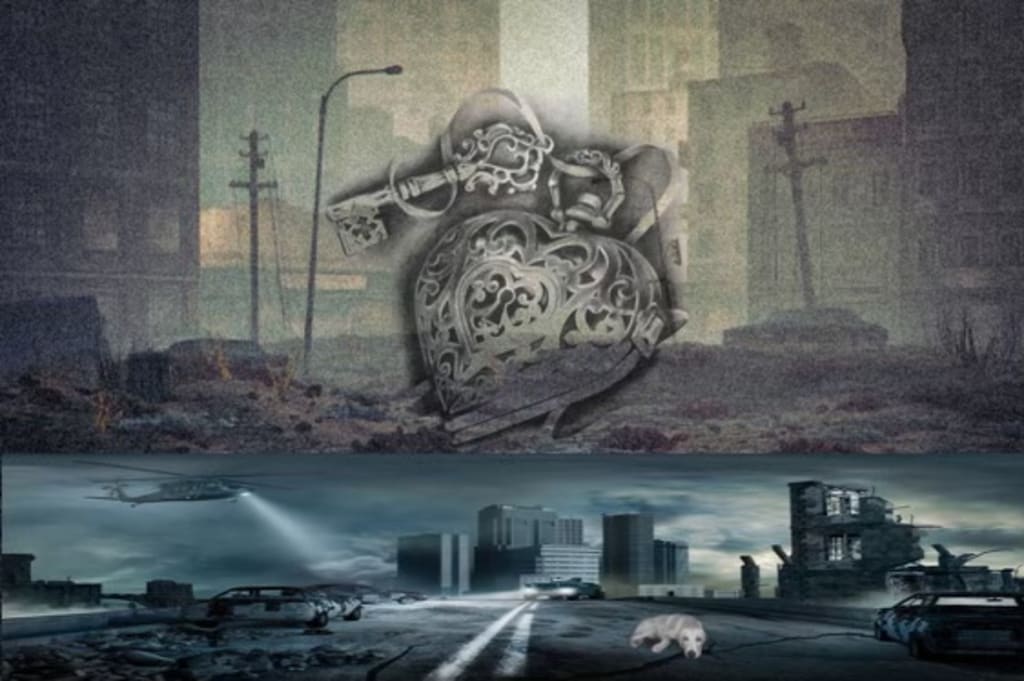
Amali’s heart
Amali turned onto her back and rubbed her dust filled eyes. The walls of the cave were bone dry and she could feel the heat soaking through the sandstone. Today would be another long expedition in her quest to find water.
Her body had become adjusted to surviving dehydration. She slowly sat up, still rubbing her eyes, and gathered her hand-made clay pots around her. She stood and wound her cloth carefully around her head and face, collecting her pots into her leather carry bag.
She was thin, just bone and muscle, her face wizened with wrinkles that betrayed her young age. She vaguely remembered the privilege of lying in bed scrolling through Instagram, reading global news that felt intangible. The climate crisis had brought all that to a halt.
The mass consumer greed that drove humans to destroy the fragile ecosystems that supported and sustained them had done its work. She was one of the lucky ones. Her body was strong, she could survive these temperatures and prepare for the coming 20 days of heat so high it was almost un-survivable.
She walked slowly toward the mouth of the cave, preparing herself for the blinding, scorching sun. Outside the cave, it was desert as far as she could see. Carcasses of cars, buildings and trains littered the heat imbued, toxic landscape. No birds sang, no breeze crossed her face as she stepped out into the sandy wreckage of post-consumption apocalypse.
Her life was solitary. Amali was twenty-seven years old, in another circumstance she might have been completing her Master’s degree, pondering her Saturn return, and beginning to pay attention to her biological clock. She would have been planning trips with friends for island adventures, rather than singularly focused on collecting water for her survival.
The planetary wars had shown the real facts of the world system, and all that remained of civilization were nomadic refugees foraging for food, shelter and water in the almost un-livable present. Wildfires, disease, rising seas and natural disasters had wiped out the majority of all humans on all the coasts far inland.
Those who remained formed nomadic tribes. Amali had not yet found others to join. Her daily struggle to survive depleted her energy to venture further beyond her cave and search for other survivors. She had once watched a show called, “Alone” where reality tv show survivalists competed to stay the longest alone in the wilderness. The wilderness they filmed would be comforting compared to this desolate, lonely existence.
She ate mostly insects and cactus fruit when she could find it. Her thick black hair had first dreaded, and then she sharpened a sandstone edge and shaved her head. Without hair, she remained cooler, and the many parasites had no place to hide.
It was small succor in the unbearable heat.
She remembered lavishly spending on face masks and beauty serums, waxes and hair conditioning treatments, with the narcissistic drive of Capitalist, consumption- fueled Euro-centric feminine beauty norms. She had been fetishized as an exotic beauty, but no one was ever quite beautiful enough on social media. Fake lashes, hair extensions and lace front wigs, Brazilian butt lifts, liposuction, and Botox seemed like strange surreal memories of another lifetime: they were just symbols of the race to gluttonous doom.
Her sense of humor kept her going, that and her survival instinct. She laughed to herself imagining herself on the cover of Cosmopolitan now—a gaunt Middle Eastern warrioress with leathered, dusty skin. Her young skin was so dry it was hard to shape her chapped lips into a smile; a ferocious snarl was the unintended result.
Searching for water took her days on end. She was dizzy and nauseous by the time she got to the large rocks of a dried riverbed promising moisture underneath. She had been digging in this same spot for as many hours as her body could handle for several days. She dropped to her knees, like the other days before, and began to dig, using her cupped, calloused hands like trowels.
When her shoulders, arms and hands ached with exhaustion, she finally hit a layer that was moist and smeared the moist sand on her face and head to cool herself. More digging revealed a gurgle and a small pool of water emerged from beneath. She carefully collected as much as she could in her pots and tucked them into her bag, allowing herself to have only two small sips.
She had taken so long to find water that her body was dully screaming for food. In a desperate, hopeful attempt, she turned back to the water hole and began to dig rapidly, pawing at the sandy dirt, delirious with hunger and thirst. Amali didn’t know what she was looking for, an insect, a beetle, a root--something with flesh and moisture.
Her fingers grazed something hard, and she dug faster, clutching at the moist sand, willing the object to appear in her hands. Beneath her fingers a silver, heart shaped, elaborately detailed Tuareg locket hid. She sat completely still, staring down at the locket in her dirty palm.
She felt entranced, as though some force other than her own will was moving her limbs. She clumsily pried open the clasp hoping for a human face, a story from the past, a remnant of someone else’s life to keep her company.
The locket was empty: in place of a photo was a tiny mirror. A strange, forlorn feeling engulfed her. Her throat burned and her heart pounded, tears of rage, fatigue, and anguish flooded her body; she was wracked by sobs, but no tears fell from her eyes.
Instead a weak, keening moan escaped her lips—a piteous cry for her empty womb, her empty heart, her empty stomach, the loss of everything and everyone she had known, revealed in the tiny, empty pane of the locket. She ululated her wailing anguish, a modern desert Bedouin, denied her community, her identity, her heart.
Amali was a nomad with vast stretches of empty land and no people. An empty heart hidden under the sand. Unlike Narcissus, adoring the beauty of his own reflection, the realization of her aloneness and the magnitude of her loss shattered her.
About the Creator
Nica Serena
Goth/Punk/Faerie warrior queen, Artist
Keep reading
More stories from writers in Fiction and other communities.
The Devil's Triangle
The sails ruffled in the breeze as we cruised along. The Sea Breeze was a mid-size catamaran that sailed out of Royal Naval Dockyard in Bermuda. We had booked this trip weeks in advance and were now looking at our Captain, Spike and two boat hands. Paddy and Wilson seemed like nice guys, joking around with the passengers and telling us some stories about Bermuda that only locals would know. Their island accents sounded almost British but they were pleasant to listen to.
By Barbara Gode Wilesabout 20 hours ago in Fiction


Comments
There are no comments for this story
Be the first to respond and start the conversation.