
All Our Yesterdays
For the challenge to eschew the centre vowel.


Count them out, the absent, the departed. Hear the smooth sound waves where once laughter laced the undulate larynxes of lovers, where gentle tones of care were heard before. Count them out. The numbers mount to those we do not comprehend, cannot comprehend, hope not to comprehend. We hope we understand a hundred, a thousand, a hundred thousand, as poorly as we understand the past. Count them out. The men and women who do not return, lost to a hunger for power, a struggle for a concept, a need for resource. Count them out, for they no longer take up the scythe, the spanner or the pen. They no longer take a seat at your table, hold your sadness or your joy between the muscles of fleshed arms, no longer touch you, palm to palm, or guard your heart as you rest. No longer breathe beneath the heavens. Count them out.
My father came back from the war ashamed that he had cheated death. There were only four men who came home to our settlement. Four men that year, one more the next, after Marcus, the bookmaker’s boy, was found to be not dead after all, but secreted beyond the closed door of a local woman, protected from the battle that had raged through the streets all around. My father, though made weary by the burden of shame he felt at the robustness of health he enjoyed, was the only one of the four to extend a hand of comradery to the late comer. The others spurned Marcus, branded “coward” across the wall of the empty house he retreated to, leered through the glass, and retreated when they saw the crouched body, shaky and sweat soaked, a man destroyed beneath the gaze of other men. Why my father persevered we never knew, but months later, Marcus came to lunch at our home, and after that, an extra place was set for all three meals, and a cot made up tucked along the darkest wall of the room where we ate, talked, worked and rested each day.
My father’s shame had been ugly to watch. We would lay on our beds, my older brother the sage among us, my younger brothers peaceful and sleepy at last, and we would say naught as below, the tower of strength we called our father wept sore regrets onto the hearth. As the hours passed and the beer glass grew empty, and full, and empty once more, my brother would counsel us to fall asleep as well as we could between when the tears stopped and when he started to retch, a purge of stomach and soul both. But when Marcus came home, my father seemed to have new purpose, and when Marcus slept, and ate, and began to speak, the lapels of the jacket my father wore on Sundays began stand proud once more over a chest expanded as though the lungs beneath could at last take a full breath.
He drank less, wept less, spent fewer hours alone subsumed by memory. Marcus, too, re-emerged, a moth from a cocoon. He ventured out after the moon took over the sky, and eschewed the sun’s glare for the paler caress of a reflected gleam. For myself and my older brother, these late strolls became a reward for jobs well done, for help offered to our mother, or good deeds shown to one another. Then, we would stroll at the elbow of our father, and hold our tongues as we absorbed adult talk of a world beyond the small one we knew. The more we heard, the more furrowed our brows became when our mother placed her mouth upon our foreheads, and commended us to our beds, the longer we fretted beneath the covers, careful to let our younger brothers sleep peacefully, but unable to settle to peace ourselves.
Marcus held that another war approached, that the safety we counted upon would be shattered before the leaves had fallen from the trees. My father, the older man, thought that the call would come before the leaves turned gold, but told us - when Marcus was elsewhere - not to worry, as he was too old, and we were too young, to answer. But the chest that had puffed so recently began to hollow, the shoulders to slump, and across Marcus’s face, the fear started once more to stretch the muscles over the bones.
There was an ease, throughout those years, afforded to boys of the settlement. Where the men are lost, the boys are revered, for we hold the hope for the future. There were the four of us, of course, and two dozen others spread across the town, each of us treated at once more as men than our years allowed, and more as babes too. Coddled and handed and adult’s burden both, we grew to understand ourselves to be as emperors and pharaohs. We were told that the fate of all rested on our backs, and that we were worthy of the grandest of dreams. For myself, my dreams were of adventure, escape to that broader world beyond our valley. My brother, who saw a world of honeyed hues, dreamt of glory, of a future where he met my father’s eye as an equal. He forgot the shame that my father bore, forgot the beer and the tears and the loss spewed up as we lay upon our beds, eyes shut, fearful of the dark. He heard only the names of the fallen, spoken reverently, man to man beneath the stars. He saw the envy upon the faces of the women as they watched my mother enter the church on my father’s arm each Sunday, but not the sadness, or the poverty, or the hunger. He saw those peers nearby elevated to the status of the man of the house. Prematurely, powerlessly, but elevated none the less.
October had cast her pall across the valley when the call reached us, and my brother was fourteen and three quarters. He had been lucky to grow enough of a moustache to pass for older than he was, and he told me that he planned to dupe the sergeant when he came to seek fodder for the army. Eleven months younger, my agreement to come too, to follow my brother to adventure and glory, was a fantasy more than a plan, but my pledge was stated vehemently, and every word meant. The rumour was that the sergeant progressed along the valley, one settlement for every day, and that he would reach us on Thursday, and so we prepared, secretly, to depart. But on the Tuesday, when we awoke, Marcus was already gone.
We swore, and cursed Marcus, for we assumed that he had made off at the sergeant’s flank. But then my father went out before breakfast, and we began to worry. My father searched the town alone, as though people no longer called Marcus a coward, there were few who would care where he may be, and so many men dead meant more work for all who could work. My mother closed the doors and shutters, and fed us cold bread and honey, and watched us as a hawk watches for her prey. But she could not watch us every moment, and at noon, my brother cracked the door and ushered me out to scurry along the wall, to the road, and on towards the houses loosely clustered beyond. He hoped, he told me, to see the sergeant there, and be off to war before our absence was noted. But the sergeant was not yet come.
The man appeared on the crest of the road that passed through the woods between our town and the next, an hour’s walk away. He staggered under some parcel too large for one man’s arms, but he came on all the same. We watched the man coalesce from a mystery fragmented stranger to become the corporeal form of our father, but even then we could not fathom what burden he laboured under. He could not have seen us, or he would have shouted at us to go home, for when he came near enough, at last we saw that swagged between strong forearms was the body of Marcus, blue mouthed and swollen eyed, noose about reddened neck, the severed rope end a pendulum to mark my father’s steps.
He crumbled, after that, the man my brother wanted to be. He returned to the bottle, but he no longer wept. He no longer spoke, or slept or ate, but sat before the hearth and stared at horrors we could not see. For two days he sat. On the Thursday, he summoned my brother and cut off the foot of the leg he stepped forward on, called for the doctor to treat the wound, and left to report for duty.
My brother’s leg healed, though the stump hurt for all the years he hobbled about the earth, and for all those years, he hated my father, and told of how he robbed us of our dream. But those years were many, and though most were marked by poverty and struggle, some were happy. My mother, felled by shock and loss, took up the bottle where my father had set that cursed glass down, and we dug her grave not seven years later.
The war was won and lost, and my younger brothers grew to be men of a world they told us was better. They secured work and women who loved them, and never thought of war, but they bore the scars handed down to them from a father broken by war and a mother undone by war and a town made bereft by war, and they always feared themselves to be vulnerable, and acted jealously as a result. For myself, the sergeant came, two years after he sent my father back to the front, and my path was one of unfathomable cruelty, a brutal journey through the depths of mans’ worst savagery. My body returned home, but my thoughts revolted me for ever after, and to subject another to my baser self was not to be suffered, by myself or that longed for other. My brother’s home became my own once more, and after our mother’s death, we sat together by the hearth, each lost under envy’s shroud, resentment of the other festered to a sour stenched soup.
We never saw or heard of my father after that day, and for myself, whether he was a hero or a monster has troubled me less at every branch of the path. War and peace have each shown me that anyone can be both and to judge a man absolutely we must turn a deaf ear to half of what he has to say.
Now a vacant seat faces me, and alone, my memory taunts and jeers at me, and shows me shadows of what could have been, had no man gone to war, a catalogue of losses.
Count them out. Those corpses rested under contested earth, ghosts of a seldom heeded past. Count the boys, the men, the women too, who wrecked themselves upon a story told by sword and arrow, canon and gun, who’s fate was swept away by mushroom clouds or gaseous vapours. Count them out, too, those who return, broken, a body bent, a soul cracked, a heart closed and guarded. Watch now the numbers soar beyond thousands of thousands and add then those left to fend, to manage, to fear and weep and watch the golden sunset, whether hard won or desperately lost, coloured by blood reds and covetous, green edged blues.
Count them out, the unscathed, the whole, those who tell of success and do not drop shamed eyes to the floor, do not shed a tear.
Count them out, and watch how the scales slant, the one bowl aloft, framed by bluest sky, the other sunk low and pulled hellward by the suck of corpse fed mud. Count, and do not look away.
About the Creator
Reader insights
Outstanding
Excellent work. Looking forward to reading more!
Top insights
Compelling and original writing
Creative use of language & vocab
Excellent storytelling
Original narrative & well developed characters
Eye opening
Niche topic & fresh perspectives
Heartfelt and relatable
The story invoked strong personal emotions
On-point and relevant
Writing reflected the title & theme
Expert insights and opinions
Arguments were carefully researched and presented
Easy to read and follow
Well-structured & engaging content
Keep reading
More stories from Hannah Moore and writers in Fiction and other communities.
The Opus
My fervent dream, for as long as breath has expanded my lungs, has been to be the creator of works of rapturous resonance. My early work, rendered by means of the effluence of felt crowned tubes of coloured dye, offered no assurance that the avenue best matched to my talent would be the ocular arts. Rather than the tears of pathos my youthful heart yearned to see, those who gave themselves over to subsume personal responses to the world and apply themselves wholly to understand my own commentary through the lens offered by my art, would often express tears of humour that could not be countenanced by my thus wounded ego for long. By the age of eleven my pens, brushes and paper, as well as my many drawn works, were put away and my parents, made only too aware of my angst at the loss of my route to my expected elevated status of “great maker of art”, placed me before the church organ. Here, an elderly man named Mr Manners sat such that the shoulders of our polyester jumpers rubbed together as we reached for the keys, week upon week, as my lack of natural rhythm became an untenable blockage to the perusal of aural excellence.
By Hannah Moore2 years ago in Fiction
"Scream 7" (2026): Running out of Fresh Screams
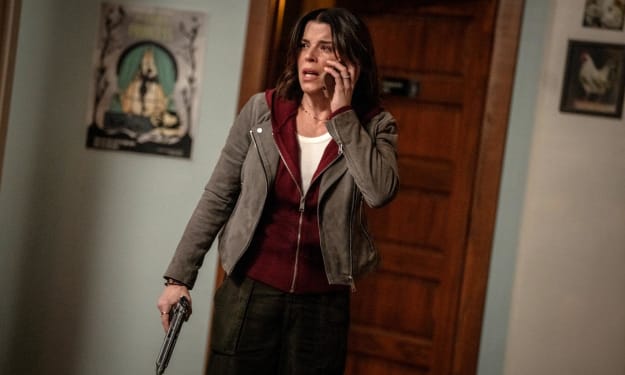
This is the seventh time we’ve had a Ghostface crisis. Scream 7 is the latest edition of the Scream franchise. Sydney Prescott and her family are under attack by another anonymous killer dressed in a Ghostface costume. While having issues with her daughter, Tatum, they run from the bloody murders, trying to determine who is behind it all.
By Marielle Sabbag4 days ago in Horror


Comments (25)
Wow. This is absolutely incredible. I love everything about it. Well done, Hannah. Congratulations!
Wooohooooo congratulations on your win! 🎉💖🎊🎉💖🎊
Back to say congratulations on placing in the challenge! This is simply an amazing work of fiction!
Congrats on placing. Well deserved. 👏
Wooohooo Hannah!! Congrats on Runner up for the lipogram challenge!! 🎉
Hannah! This story is so heartbreaking and beautiful, I was glued to every word. Great job and congrats on another well deserved placement!
And so the Moore reign continues. Well done, Hannah on placing in this challenge. this was a beautiful and sad story. Congrats.
Powerful story here Hannah. I so hate wars and what it does to the poor unsuspecting men who fight and die for causes not their own. Really great writing...kudos.
Brilliant writing Hannah. Absolutely stunning, and it stands on its own, even apart from the absence of the letter! Really, really well done 🙌🏽. You’ve perfectly portrayed how damaging war is to not only soldiers, but families. “Sundays began stand proud”- is there supposed to be a “to” in there?
congrats on the TS
This might be the best thing I've read on Vocal, ever. Congrats on the TS. Hannah foe the win!
Damn. I wouldn't at all be surprised if all three places somewhere. They should. They really should. I love all of them for different reasons. This feels almost very personal, intimate, sad and without any i's just a real literary feat. Got me in the feels again, Hannah, and then stunned me with your literary prowess in my head, again. Glad this got Top Story.
Wow! Seriously, what else can I say?
So glad this was a top story. I thought it was excellent.
Back to say congratulations on your Top Story! 🎉💖🎊🎉💖🎊
I am with JBAZ, this is incredible stuff!! Congrats on the top story
Beautiful story and excellent response to the challenge. Congratulations on Top Story - it is well earned and well deserved in every way possible.
Compelling writing Hannah, I love it!
Wow, Hannah, just wow!! This is more than a story. It is literary art of such high caliber. The entry I’ve been working on has some war time elements so of course I make a comparison and mine has been left so far behind in the dust by this it’s almost comical. But back to your piece!! I haven’t read all the entries of course but I have a suspicion this is unrivaled!!
This is one of the most powerful, emotional and wonderfully written stories I have read in a long time. it takes talent to do this. My friend, you have that gift.. I hope to see this in the winners circle.
Omgggg, this was so heartbreaking and devastating!! Gosh, it ripped my heart out!
A sore tale on so many levels, Hannah. And all this without an "I"? That is some achievement.
This was so powerful, Hannah. Truly spectacular.
I can’t even put into words how amazing I think this is. Bloody hell this is phenomenal.
This is deeply moving Hannah. This rivals anything I have read about the return of those who survived the Great War and I have read all of the great poets of that horrible fucking war. When I read Suze Kay's Blade, I could not have imagined a better entry to this challenge. But this story deserves to win and then some. It has more heart and courage than I conceived possible.