

A Future Stamped and Sealed
Ellen M. Laura
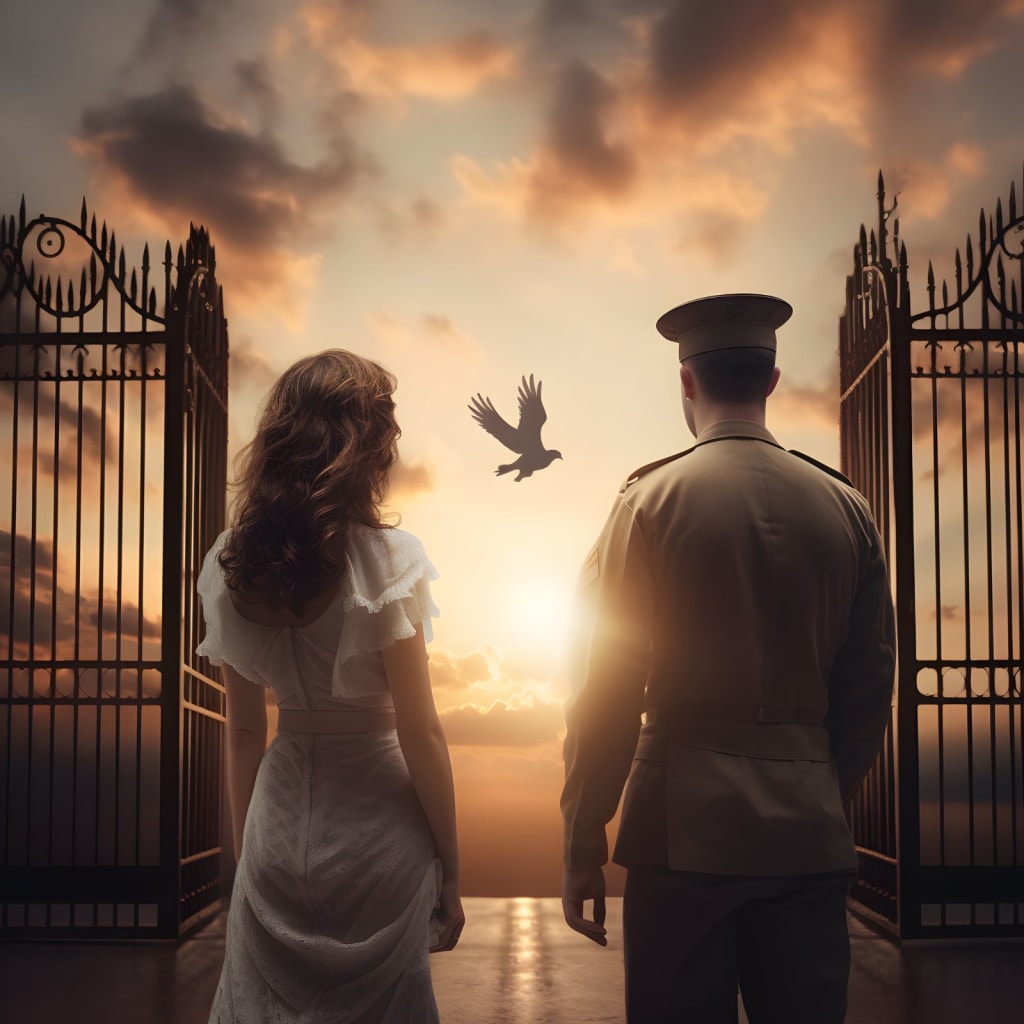
December 1968. A twenty-one-year-old Marine, Brian, and his nineteen-year-old wife, Mary, exchanged letters—words filled with longing, hope, and the promise of a future together. But war is cruel, and history is not always kind.
These are the letters they might have written.
And the ones they never got to.
◆◆◆
November 28, 1968
Camp Pendleton, CA
Dearest Mar,
November 6 was the happiest day of my life—the day you became my wife, trusting me to take care of you forever. I promised we’d travel far away from our small town and see the world together. And I meant it, Mar. I still mean it.
Since I’ve been here, every day away from you feels like a year. My beautiful melon, I think of you every second of the day, and at night, I dream of you, sweetheart.
I thought boot camp was the worst time of my life, but now, as I’m almost ready to ship out to Vietnam, I wonder if the reports we see on the news about the horrors over there are real. The guys talk like we’ll be invincible, like we’re just going to do our jobs and come home—and I gotta believe they’re right. We’re Marines. We’ll wipe out the enemy, and come home to celebrate our victory.
I should be proud to be here, but I hate it and can’t wait to return to you. Sometimes, I feel so depressed I think I'll go crazy. The only thing that helps me is the thought of coming back and having you. I will make you happy forever, little melon. We’ll be free and see the world together. I could be a pilot, and you can be my beautiful navigator.
Hold onto me, Mar. I’ll find my way back to you.
Love, Brian
◆◆◆
December 15, 1968
Herkimer, NY
Dearest Brian,
It’s snowing tonight, the big, soft kind that drifts down slow and quiet, covering everything in white. I wish you could see it—it makes the whole world look peaceful, like something from a Christmas card. I stood by the window for a while, watching it fall, and I imagined you here beside me, your arms around my waist, your chin resting on my shoulder. I miss you so much, Bri.
I spent the afternoon decorating the Christmas tree. I know it’s a little early to have the tree up, but I couldn’t wait. I put on those little red and gold bulbs we picked out together and strung the lights just as you like—twice around, with no bare spots. My cat tried to eat the tinsel, and I could almost hear you saying how spoiled she is.
I baked chocolate cookies tonight, too, and I ate too much dough. You always told me I’d get sick, but I never do. I wish I could send you some, but they’d never make it that far. So I’ll eat extra for you and save the real ones when you come home. Don’t worry, I won’t get fat.
I haven’t gotten a letter from you in a few days—I’m sure the mail is just being slow again. You’re probably sitting somewhere writing to me right now, telling me how much you miss me and how we will spend forever making up for this time apart. I can hear your voice in my head, calling me your beautiful melon, promising to fly me anywhere in the world. I believe you, Bri. I believe in us.
Christmas is almost here, and even though you’re so far away, I feel you with me. I carry you in everything I do, every moment, every thought. Stay safe, my love. I can’t wait to have you in my arms again.
I love you,
Mar
◆◆◆
December 16, 1968
Somewhere near Da Nang
My Little Melon,
I miss you so much that it hurts. I try to count the days until I see you again, but the days blur together out here, and I lose track. It feels like I’ve been gone forever. The nights are the worst—so quiet, except for the sounds of the jungle, which never really sleeps. But when I close my eyes, I see you, and for a little while, I’m home again.
I still dream of us, Mar. I hold onto that—onto you. I think about how we’ll drive anywhere we want with the windows down, how I’ll learn to fly a plane and you’ll sit beside me, my beautiful navigator. I tell the guys here that my girl is the smartest, prettiest thing that ever walked the earth, and they just shake their heads like I’m crazy. Maybe I am. Crazy about you.
We went on patrol today. I can’t say much about it, but we found some bunkers—new ones. It makes me uneasy, like the air before a storm. But don’t worry, babe, I promise you, I’ll come home to you.
If I could be anywhere right now, I’d be with you, sitting in our little place, watching the snow fall outside. You’d be wrapped in that soft blue sweater you love, the one that makes your eyes shine. I’d hold you close and never let go.
This will be over soon, Mar. Hold onto that. Hold onto me.
Love,
Brian
◆◆◆
December 19, 1968
Herkimer, NY
Dearest Brian,
I had a nightmare last night. A terrible, awful dream, and I’m still crying.
It started with a knock at the door. Not the normal kind. Not you coming home, calling my name. No—it was loud. Sharp. The type of knock that carries horrible news before the door even opens.
I was in my bedroom with my cat, Winnie. You know she sleeps with me every night, and she howled. I glanced at the clock—8:15 a.m.—then at the window. Snow was falling in thick, slow drifts, making everything look peaceful. But something was wrong. I felt it before I even moved.
I opened the front door.
Two Marines stood on the porch in their dress blues, their faces carved from stone. One was young—too young to be doing this. The other was older, taller, holding a folded piece of paper.
And then—somehow—I was no longer at the door. I was in the hallway, and our priest from St. Mary’s was there. He stood in the living room, his voice was low and solemn as he spoke to my parents. My mother’s face was white, her hands trembling in her lap. My father looked like he had turned to stone.
The Marines shifted uncomfortably, their posture perfect, their boots planted firmly on the carpet, as if they were afraid to move too much.
The taller one cleared his throat and began to read.
"The Commandant of the Marine Corps regrets to inform you that your husband, Private First-Class Brian H. Burdick, USMC, was killed in action in the Republic of Vietnam on December 19, 1968. He sustained fatal gunshot wounds from hostile rifle fire while on patrol. Further details will be provided as they become available. His mother is being notified."
I shook my head. No. No, no, no.
I told them they were lying. That they had the wrong house. That Brian was fine, that he had just written to me, that I had just written him a letter this morning.
The young Marine looked away, his jaw clenched. The older one stood there, waiting, letting me crumble before him.
And then—God, Brian—then the dream changed.
I was at a funeral. Your funeral.
The sky was gray, the air heavy, thick with the threat of snow. Your coffin sat in front of me, draped in the American flag. I wanted to touch it, tear it open, and shake you awake, but I couldn’t move. I was frozen, as if waking you would be breaking some unspoken rule.
And then the gunshots.
One.
Two.
Three.
Each shot cracked through the air, sharp as a knife, echoing inside my skull. I flinched every time, but no one else did. They stood there, stiff and still, like they had accepted something I refused to believe.
And then they handed me the flag.
Folded into a tight triangle. Perfect. Crisp. Like it could somehow replace you.
I reached for it, my hands shaking so badly I almost dropped it. My fingers dug into the fabric, gripping it like a lifeline, but it felt wrong. Cold. Just cloth and emptiness where you should have been.
That’s when I woke up, gasping, my chest heaving, reaching for you. But, of course, you weren’t there.
It was just a dream. Just a dream.
But, Brian—I can’t shake the feeling that something isn’t right.
Please, sweetheart. Please write soon.
Tell me you’re safe. Tell me you’re coming home.
Tell me it was only a dream.
Forever yours,
Mar
◆◆◆
December 19, 1970
San Diego, CA
My Beautiful Melon,
The air is warm here, the sky is clear, and the ocean stretches forever. It feels strange to sit here in the sun, knowing that the snow is falling back home and the Christmas lights are glowing in the windows. But none of that matters, because soon, I’ll be there too. I keep telling myself—I made it. I’m one of the lucky ones.
I can hardly sit still, Mar. I keep looking out at the Pacific, watching the planes take off, knowing that one of them will soon carry me back to you. I’ll see your face again. I’ve endured so much that I can wait for two more flights and a few hours. I close my eyes and can already picture you—standing at the gate in Syracuse, bundled like a teddy bear. I know the second I see you, I’ll drop my bag and pull you into the tightest hug, and I won’t let go.
I still wake up some nights expecting to be back there in the jungle. My body tenses at the sound of a door closing, a voice calling out. But then I remember—I made it. I roll over, and instead of my rifle, my arms will soon find you—warm, soft, real.
I never became a pilot, but I still call you my beautiful navigator because you always knew the way. I still think about our wedding, and the priest whispering to me: “She’s the strong one.” And he was right. You led me through the worst, even halfway across the world.
Tomorrow morning, when I wake up next to you, the first thing I’ll say—before coffee, before unpacking, before anything else—will be what I always say:
I love you. I love you. I love you.
I’m almost there, sweetheart. Thanks for waiting for me. Just hold on a little longer.
Love,
Brian
◆◆◆
But history wasn’t so kind to Mary and Brian. That letter was never written. And Brian never came home. Many war widows—from Vietnam and wars before and since—have wished they could write a different ending. A fictional one, where their husbands made it back, where love triumphed over fate. But not all were so fortunate.
About the Creator
Keep reading
More stories from Ellen M. Laura and writers in Fiction and other communities.
YOU, Netflix Blinked
By Ellen M. Laura When Narcissism Shows Its Face, Shouldn't It Mean Something? After five seasons of psychological gymnastics and moral whiplash, the Netflix series YOU delivered a finale that felt less like a bold conclusion and more like a studio-mandated shrug. Viewers—myself included—were left blinking at the screen, wondering: Is that it?
By Ellen M. Laura10 months ago in Criminal
What Came First, Chicken Or Egg
What Came First What came first, the chicken or the egg? It is an old question, worn smooth by centuries of mouths repeating it, yet it still sits in the hand like a stone you cannot throw away. I have carried it with me since childhood. It followed me through fields, through classrooms, through quiet kitchens where steam rose from cups and the clock ticked like a patient witness.
By Marie381Uk about 11 hours ago in Fiction
A Historic Declaration
We the People of the Husbands of the United States of America, in Order to form a more perfect Union, and I mean you...with me...establish Justice, insure domestic Tranquility, provide for the common defence, promote the general Welfare, and secure the Blessings of Liberty to ourselves, after Puberty, do ordain and establish this Declaration of Co-Dependence.
By Gerard DiLeo5 days ago in Humans


Comments (3)
Touching story about a painful event that touches many but is not well known.
Ellen I so enjoy your stories. Keep writing
A deeply moving tribute to love, longing, and loss against the backdrop of war. Through the tender exchange of letters between Brian and Mary, Laura masterfully captures the innocence of young love, the weight of separation, and the creeping presence of fate. The letters feel intimate and authentic, drawing the reader into their world while foreshadowing the heartbreak to come. With elegant prose and vivid imagery, she crafts a narrative that is both personal and universal, honoring the many love stories left unfinished by war. This poignant piece lingers long after the last word, a testament to love’s endurance even in the face of history’s cruelty.