
YOU, Netflix Blinked
The Monster Behind the Bookshelf

By Ellen M. Laura
When Narcissism Shows Its Face, Shouldn't It Mean Something?
After five seasons of psychological gymnastics and moral whiplash, the Netflix series YOU delivered a finale that felt less like a bold conclusion and more like a studio-mandated shrug. Viewers—myself included—were left blinking at the screen, wondering: Is that it?
Comments ranged from “completely underwhelmed” to “what the hell did I just watch?”—and not in the good, David Lynch way.
The final season wasn’t just a disappointment. It was a betrayal of what the show originally promised: a dark, thrilling deep dive into the mind of a malignant narcissist psychopath. Joe Goldberg's deadly obsessions were masked by intellectual charm and the illusion of introspection. He wasn’t a hero. He wasn’t even an anti-hero. He was the monster behind the bookshelf.
And we watched him not because we empathized with him (this wasn’t Breaking Bad and Joe was no Walter White), but because we were fascinated by how closely he resembled real-world predators: well-spoken, educated men whose charisma cloaks their violence.
Watching YOU was, in some ways, like watching The Godfather back in the '70s. We weren’t rooting for the Corleones—we were peering through the keyhole into their morally bankrupt world, both repulsed and riveted.
YOU held that same cultural mirror, but in its last act, the glass turned cloudy.
When Evil Rises, Say Something About It
Season 5 had the chance to do something subversive: not redeem Joe, but expose him in a way that mattered. Instead, the finale seemed to lose its nerve.
Imagine this alternative: Joe ends Brontë, cold and deliberate, and as he's preparing to disappear into Canada, a tech bro billionaire swoops in. Not to stop him, but to recruit him.
A man with the resources to erase the past. A man who sees potential in Joe: charisma, intelligence, a handsome face just damaged enough to seem “real.” With money, influence, and Silicon Valley’s finest image architects, Joe is reborn. The bodies vanish. The headlines fade. The narrative is rewritten.
Joe Goldberg, the charming, narrative-driven psychopath with the occasional sociopathic slip, gets a total makeover.
First, he rebrands as a trauma survivor. A reformed romantic who made “mistakes.” Then comes the bestselling memoir. The podcast. The viral TEDx talk titled “What Darkness Taught Me About Love.”
From literary darling to political phenom: Joe rides a wave of cultural amnesia to the Senate floor. And eventually—inevitably—the Oval Office. Because in the right suit and with the right story, even a serial killer can be framed as a savior.
And when his unraveling finally begins—after the scandals, the disappearances, the war he shouldn't have started—he’s not tried or tried again. He’s put down like a rabid dog.
We live in a time when powerful men with histories of abuse, fraud, and violence aren’t merely forgiven—they're crowned. Platformed. Idolized. But dare we name it? Dare we look straight at the monster and call it what it is?
That’s the true horror story. And YOU had the perfect character to tell it. But Netflix blinked.
Too dark? Too dangerous? Would Netflix have been punished?
Would the writers be put on a plane to Venezuela, exiled for crafting a monster who looked a little too much like the ones walking free in real life, for daring to make fiction look uncomfortably like fact?
Sanitizing Joe: The Real Crime
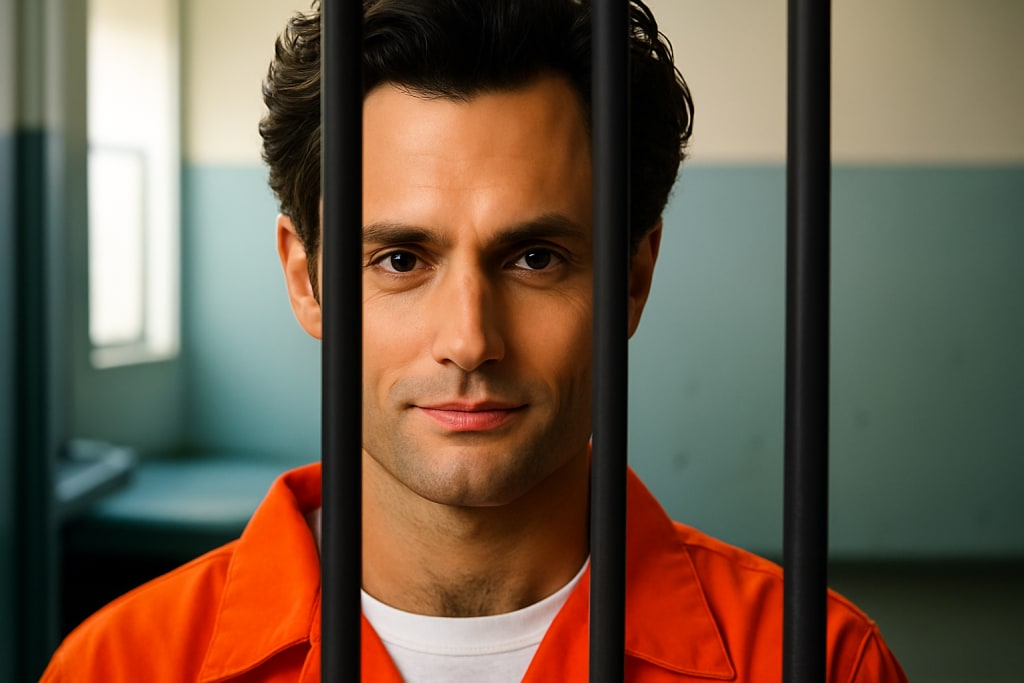
By the end of Season 5, Joe Goldberg is behind bars. The killer is finally caught and locked away for life. And the women he terrorized, stalked, manipulated, and murdered? Mostly, they’re thriving.
On paper, it’s the justice fans demanded: a violent misogynist stripped of power, locked away where he can no longer harm anyone. But somehow, it still rang hollow.
It’s not that he didn’t get punished. It’s that the punishment felt... rote. Tacked on. An obligatory gesture to closure that lacked real consequence and real cultural critique.
It was as if the Netflix writers said, Fine, here—he's in jail now, and moved on, without ever asking: What allowed him to survive this long in the first place?
No systems exposed. No mirror held up. Nothing edgy. Nothing unforgettable. No reckoning with the real-world structures that protect men like Joe long before they ever face handcuffs.
I kept thinking: It could’ve been so much more. Imagine if the final season had turned Joe loose, not into a cage, but into the machinery of power. Not as redemption, but revelation.
But YOU didn’t go there. It went for safe. Predictable. Palatable. The crime wasn’t that Joe got locked up.
The crime was that the show didn’t ask why it took so long or how many Joes are still winning elections, selling books, building apps, or running companies.
When the Mirror Cracks
The final season had the chance to show us something unforgettable. Instead, it blinked.
So here I am, still watching—but not the show anymore. I’m watching the world it refused to name. And I’m wondering: Who's writing this story?
Copyright 2025, Ellen M. Laura
About the Creator
Keep reading
More stories from Ellen M. Laura and writers in Criminal and other communities.
LIAR, LIAR, PANTS ON FIRE
LIAR, LIAR, PANTS ON FIRE Ellen M. Laura He first registered the scorching, unbearable heat pressing against his skin and licking his limbs. Then came the acrid stench of burning fabric and the sharp sting of smoke clawing down his throat.
By Ellen M. Laura12 months ago in Criminal
He Confessed to Murder in My DMs: The Dark Side of Going Viral
When your most-liked story becomes someone else's confession booth The message came in at 2:13 a.m. I saw the notification glow on my nightstand, that soft blue light that usually means spam, or a heart emoji, or someone asking, “Did this really happen?”
By abualyaanart6 days ago in Criminal
The 1995 Oklahoma City Bombing
Terrorism and mass shootings no longer shock most Americans. We've heard and seen it all before, more than a few times. Nowadays, we scroll past the post or flip the TV channel without much thought. Perhaps terror attacks are so common that we expect them. We aren't surprised. It hasn't always been this way. There was a time when terror attacks and mass shootings rarely happened. Those rare events shocked people to their core. It left them fearful, yet communal, ready to come together for the betterment of our country.
By Criminal Matters6 days ago in Criminal



Comments
There are no comments for this story
Be the first to respond and start the conversation.