
Why is Christmas associated with the symbol of the pine tree?
Why is Christmas associated with the symbol of the pine tree?


The association of Christmas with the pine tree has deep roots in history, culture, and religion. The evergreen nature of pine trees has made them a universal symbol of life, hope, and endurance, which perfectly aligns with the themes of Christmas. The tradition of decorating pine trees as part of the holiday celebration evolved over centuries, drawing from ancient customs, Christian symbolism, and modern practices.
Ancient Pagan Roots
Long before the advent of Christianity, evergreen plants held symbolic significance in various cultures. In ancient times, evergreen trees, including pine, fir, and spruce, were revered for their ability to remain green throughout the harshest winters. In pagan traditions of Europe, evergreen boughs were used during winter solstice festivals to symbolize life and renewal.
For example:
Ancient Romans celebrated Saturnalia, a festival honoring the god Saturn, by decorating their homes with evergreen branches.
Norse mythology associated evergreens with the sun god Balder and used them to signify resilience and eternal life.
Celtic Druids revered evergreens as sacred, seeing them as a reminder of nature’s persistence and the promise of spring.
These traditions laid the groundwork for the later integration of evergreen trees into Christian celebrations.
Christian Symbolism and the Evolution of the Christmas Tree
The Christian adaptation of the pine tree as a Christmas symbol began in medieval Europe. Around the 8th century, St. Boniface, a Christian missionary, is said to have used the triangular shape of fir trees to explain the concept of the Holy Trinity—Father, Son, and Holy Spirit. This association helped to link the evergreen tree to Christian teachings.
In the Middle Ages, "Paradise Plays" were performed in Europe to depict the story of Adam and Eve. These plays often featured a "Paradise Tree," typically a fir tree decorated with apples, to symbolize the Garden of Eden. Over time, these trees began to be associated with Christmas Eve, the feast day of Adam and Eve.
The modern Christmas tree as we know it began to take shape in 16th-century Germany. According to legend, Martin Luther, the Protestant reformer, was inspired by the sight of stars twinkling through the branches of an evergreen tree. He is said to have brought a tree into his home and decorated it with candles to recreate the beauty of the night sky. This marked the beginning of the decorated Christmas tree tradition.
The Spread of the Christmas Tree Tradition
By the 18th and 19th centuries, the Christmas tree tradition spread across Europe and eventually to North America. German immigrants brought the custom to the United States, where it gained popularity, particularly after the publication of a sketch of Queen Victoria and Prince Albert standing beside a decorated Christmas tree in 1848. The image, which appeared in the Illustrated London News, showcased the royal family embracing the tradition, making it fashionable across the English-speaking world.
Symbolism and Decoration
The pine tree’s evergreen quality represents eternal life and hope, aligning closely with the Christian belief in Jesus Christ as the bringer of eternal salvation. The act of decorating the tree also carries spiritual significance:
Lights and candles symbolize Jesus as the "Light of the World."
Stars placed at the top of the tree represent the Star of Bethlehem that guided the Wise Men.
Ornaments often reflect personal, cultural, or religious themes, making the tree a meaningful centerpiece of family traditions.
Modern Interpretations
Today, the Christmas tree is a global symbol of the holiday season, transcending religious boundaries. While its origins are rooted in Christian and pagan traditions, the Christmas tree has become a universal emblem of celebration, togetherness, and joy. Its presence in homes, public squares, and community spaces around the world underscores its enduring appeal.
The pine tree’s association with Christmas is the result of centuries of cultural evolution. Its evergreen resilience has made it a timeless symbol of hope and renewal, while its incorporation into Christian traditions has imbued it with spiritual significance. From ancient solstice celebrations to modern holiday festivities, the Christmas tree continues to connect people to the season’s themes of light, love, and enduring life.
About the Creator
Thomas
Hi, I’m Thomas, a new story editor eager to improve. I’d love your feedback on the stories I’ve worked on—your insights will help me grow and craft better narratives. Please share your thoughts, and thank you for supporting my journey!
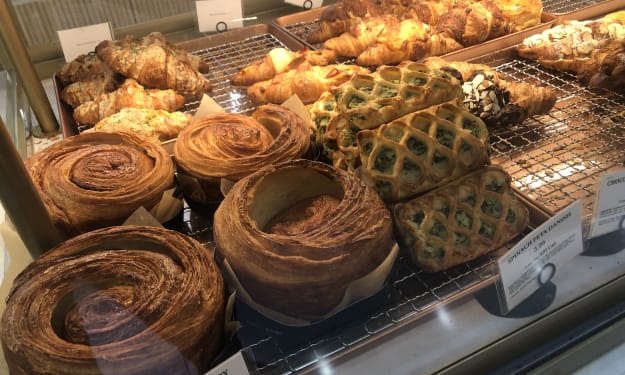
My Tous les Jours Trip
As someone who lives in a rural area, I don't get the chance to visit fancy restaurants or bakeries that often. So, when a friend told me about a French-Asian bakery that's less than an hour away, I knew I had to check it out and grab some pictures for social media. Tous les Jours ended up providing an immersive experience that went above and beyond my expectations--although I did leave with a few reservations.
By Kaitlin Shanks23 days ago in Feast
Edible Offal Market Size and Forecast 2025: A Global Shift Toward Sustainable, Affordable Protein
Edible Offal Market Size and Forecast 2025 The Edible Offal Market is projected to reach US$ 59.60 billion by 2033, rising from US$ 39.66 billion in 2024, registering a CAGR of 4.63% from 2025 to 2033, according to Renub Research. This steady expansion reflects a powerful global shift toward affordable, nutrient-dense protein sources, culturally rooted culinary practices, rising meat consumption, sustainable meat processing, and increasing awareness of food waste reduction. Particularly in developing regions and ethnic cuisine markets, offal is no longer seen as a by-product—it is emerging as both a nutritional asset and a sustainability solution.
By Aaina Oberoi2 days ago in Feast



Comments (1)
Thanks for reading everyone . Readers please comment on my articles to inspire me to write better.