
United States Foodservice Market Size & Forecast 2025–2033
How Convenience Culture, Digital Ordering, and Culinary Innovation Are Shaping America’s Next Foodservice Boom

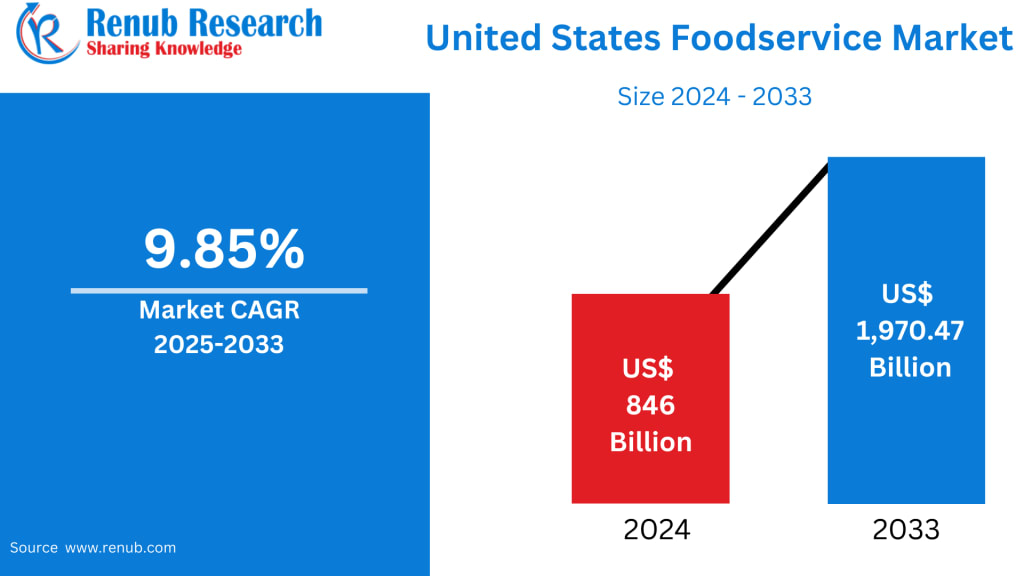
The United States Foodservice Market is entering a transformative era, shaped by powerful shifts in consumer behavior, technology adoption, and evolving retail landscapes. According to Renub Research, the U.S. foodservice market is expected to grow from US$ 846 billion in 2024 to US$ 1,970.47 billion by 2033, reflecting an impressive CAGR of 9.85% between 2025 and 2033.
This surge is rooted in America’s appetite for convenience, the rise of digital food ordering ecosystems, and the rapid expansion of both quick-service chains and premium dining destinations. Whether it is a fast-food drive-thru, a trendy fusion concept, a meal-kit platform, or a gourmet delivery brand, foodservice today has become an indispensable part of American life.
This article examines the outlook, growth drivers, challenges, and segment-level dynamics that are shaping the future of the U.S. foodservice industry—one of the most diverse, fast-moving, and competitive food economies in the world.
Request Free Sample Report
United States Foodservice Market Outlook
Foodservice refers to the preparation, distribution, and sale of meals and beverages intended for immediate consumption—whether inside restaurants, on-the-go, or delivered to homes and workplaces. The sector includes everything from small cafés and quick-service restaurants to large catering firms, hotel chains, and institutional cafeterias in schools, hospitals, and corporate environments.
In the United States, eating out is deeply embedded in daily culture. Urbanization, rising disposable incomes, evolving family structures, and increasingly hectic lifestyles have made dining out, takeout, and food delivery central to modern routines. While fast-food chains and fast-casual eateries continue to dominate youth and working demographics, premium dining and specialty cuisines attract tourists, food enthusiasts, and high-income consumers.
Beyond traditional dining, the sector has also been influenced by:
Health-focused menus and clean-label concepts
Tech-enabled order experiences
Cloud kitchens and delivery-exclusive brands
Growing demand for plant-based and organic dishes
Foodservice today sits at the intersection of culture, convenience, and innovation—driven by both lifestyle changes and product diversification.
Growth Drivers in the United States Foodservice Market
1. Rising Demand for Convenience and On-the-Go Foods
Convenience has become the defining characteristic of American food consumption. With long working hours, hybrid work environments, and increased mobility, consumers seek quick, accessible, and affordable meals more than ever.
This has accelerated growth in:
Quick-service restaurants (QSRs)
Food trucks
Grab-and-go retail formats
24/7 dining and drive-thru services
Brands are responding with expanded hours, simplified menus, and faster service models.
A notable example is from July 2025, when EG America expanded its grab-and-go lineup with a limited-time Cheesy Chicken Fajita Tornado, tapping into demand for fast, flavor-packed, portable meals.
2. Surge in Online Food Ordering and Delivery
Online ordering and home-delivery platforms have revolutionized how Americans consume meals. These technologies foster convenience through:
Digital menus
Cashless payments
Subscription-style loyalty programs
Delivery tracking
Broader restaurant visibility
These platforms allow smaller restaurants to reach larger audiences without expanding physical footprints.
A major development came with HelloFresh entering the online grocery market through HelloFresh Market, which offers ready-to-eat meals, fresh produce, pantry essentials, and heat-and-eat options. This reflects the rising convergence between foodservice, grocery retail, and home cooking.
3. Growing Interest in Health and Lifestyle-Oriented Dining
Health-conscious consumers are reshaping menu design across the country. Popular trends include:
Plant-based alternatives
Organic, low-calorie meals
Allergen-free and clean-label dishes
Farm-to-table experiences
Nutrient-dense bowls and customizable options
Food chains increasingly highlight sustainability and ingredient transparency. These trends support menu innovation and help brands differentiate in a competitive ecosystem.
Challenges in the United States Foodservice Market
1. Labor Shortages and Rising Operating Costs
The U.S. foodservice industry faces persistent labor shortages, particularly in:
Kitchen operations
Front-of-house service
Delivery management
Rising wages, higher ingredient costs, ongoing supply chain disruptions, and inflation continue to affect profitability. Smaller and mid-sized establishments feel the pressure most.
To counteract this, restaurants are increasingly adopting:
Automation technologies
Self-service kiosks
AI-driven order management
Digitized back-of-house systems
Still, cost pressures remain heavy across the industry.
2. Intense Competition and Evolving Consumer Preferences
The market is highly fragmented, with competition from:
National chains
Local eateries
Cloud kitchens
Meal-kit companies
Retail-prepared food sections
Grocery-delivery services
Changing dietary preferences, sustainability expectations, and convenience-led demands force brands to innovate continuously. Restaurants that fail to adapt risk losing market share in an already saturated market.
United States Commercial Foodservice Market
The commercial segment—comprising restaurants, cafes, pubs, and catering companies—is the backbone of the U.S. foodservice industry.
The rise in tourism, dining-out culture, and urbanization has particularly driven the success of:
Quick-service restaurants (QSRs)
Fast-casual chains
Premium dining concepts
The post-pandemic rebound has been heavily supported by digital ordering and delivery partnerships. In May 2025, HF Foods Group launched a new e-commerce platform exclusively for restaurant staff, demonstrating the increasing role of tech in supply chain and procurement operations.
United States Centralized Foodservice System Market
Centralized foodservice systems involve preparing meals at a single location and delivering them to satellite kitchens. These systems are especially important for:
Schools
Healthcare facilities
Corporate cafeterias
Universities
Benefits include:
High-volume production
Reduced waste
Consistent quality
Cost efficiency
As U.S. institutions grow in scale and regulations tighten, demand for centralized systems is increasing rapidly.
United States Fast Food Restaurants Market
Fast food is the dominant category within American foodservice. Brands such as:
McDonald's
Taco Bell
Wendy’s
KFC
Burger King
serve millions daily nationwide.
The popularity comes from:
Affordability
Speed
Drive-thru convenience
Digital ordering
Menu innovation
This segment is expected to maintain its stronghold as consumers increasingly favor quick, budget-friendly meals.
United States Special Food Services Restaurants Market
Special food services include:
Catering services
Food trucks
Banquet operations
Event-based cuisine providers
Demand is driven by weddings, festivals, corporate events, and seasonal functions.
Consumers are drawn to personalized menus and unique dining concepts, making this segment one of the most dynamic in the market.
Regional Foodservice Markets
California Foodservice Market
California remains a trendsetter in American food culture. With its multicultural population, tech-savvy consumers, and strong tourism, the state is home to:
Health-forward eateries
Plant-based innovators
Experimental cuisines
Top-tier fine dining
High-volume delivery operations
In February 2025, GrubMarket acquired Bay Cities Produce, leveraging AI to streamline food distribution—solidifying California’s role in food tech innovation.
New Jersey Foodservice Market
New Jersey benefits from proximity to New York City and a rich local food culture. Growth is driven by:
Family diners
Ethnic restaurants
Fast-casual chains
High catering demand
In June 2025, Konala—known for its high-protein, gluten-free, macro-friendly menu—signed an exclusive development deal to expand across New Jersey, highlighting rising demand for health-conscious fast food.
Texas Foodservice Market
Texas is a powerhouse market defined by:
Large population
Ethnic diversity
Strong tourism
Barbecue and Tex-Mex traditions
Cities like Houston, Dallas, and Austin have vibrant culinary identities. Drive-thru and delivery formats thrive due to widespread suburban living.
In July 2025, McLane Company expanded its National Commissary program in Texas, offering fresh, grab-and-go foods with seven-day refrigerated shelf life—benefiting convenience stores across the state.
Market Segmentation
By Sector
Commercial
Non-commercial
By System
Conventional Foodservice System
Centralized Foodservice System
Ready Prepared Foodservice System
Assembly-Serve Foodservice System
By Type of Restaurant
Fast Food Restaurants
Full-Service Restaurants
Limited Service Restaurants
Special Food Services Restaurants
Top 10 States
California
Texas
Florida
Illinois
Pennsylvania
Ohio
Georgia
Washington
New Jersey
Rest of United States
Key Players Covered (with 5 Viewpoints Each)
Bloomin' Brands, Inc.
Brinker International, Inc.
Chipotle Mexican Grill, Inc.
Darden Restaurants, Inc.
Doctor's Associates, Inc. (Subway)
Domino's Pizza Inc.
Inspire Brands, Inc.
McDonald's Corporation
MTY Food Group Inc.
Northland Properties Corporation
Final Thoughts
The United States foodservice industry is evolving faster than ever before. As consumers demand more convenience, healthier choices, and digital-first dining experiences, restaurants and foodservice operators must innovate aggressively. The rise of online ordering, the expansion of fast-casual and specialty concepts, and significant technological advances are reshaping how food is prepared, delivered, and consumed.
With the market projected to reach nearly US$ 2 trillion by 2033, the foodservice sector is not only recovering—it is reinventing itself as a powerful force in the American economy. From next-gen meal kits to health-forward drive-thrus and AI-led supply chains, the future of foodservice in the United States looks dynamic, diverse, and undeniably promising.
About the Creator
jaiklin Fanandish
Jaiklin Fanandish, a passionate storyteller with 10 years of experience, crafts engaging narratives that blend creativity, emotion, and imagination to inspire and connect with readers worldwide.
Keep reading
More stories from jaiklin Fanandish and writers in Feast and other communities.
Café Market Size and Forecast 2025–2033
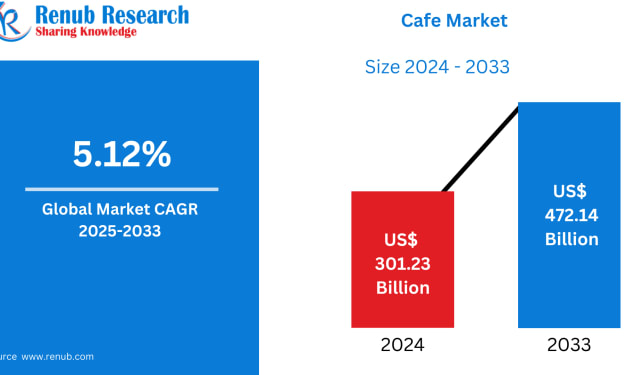
Introduction The global café landscape is undergoing a vibrant transformation as coffee culture deepens across continents, lifestyles evolve, and consumer demands shift toward premium, experiential, and socially driven dining spaces. According to Renub Research, the Café Market is expected to reach US$ 472.14 billion by 2033, rising from US$ 301.23 billion in 2024, reflecting a steady CAGR of 5.12% from 2025 to 2033.
By jaiklin Fanandish2 months ago in Feast
My Tous les Jours Trip
As someone who lives in a rural area, I don't get the chance to visit fancy restaurants or bakeries that often. So, when a friend told me about a French-Asian bakery that's less than an hour away, I knew I had to check it out and grab some pictures for social media. Tous les Jours ended up providing an immersive experience that went above and beyond my expectations--although I did leave with a few reservations.
By Kaitlin Shanks16 days ago in Feast
Australia Seeds Market to Grow to USD 1.5 Billion by 2033 on Adaptive Agriculture & Sustainable Practices
The Australia seeds market is progressing as agricultural systems evolve and adapt to both economic and environmental challenges. According to IMARC Group, the Australia seeds market reached USD 1.3 billion in 2024 and is expected to grow to USD 1.5 billion by 2033, with a compound annual growth rate (CAGR) of 1.20 % during 2025–2033. This steady expansion reflects rising demand for high-yield, resilient seed varieties, supportive agricultural policies, and broader trends toward sustainable farming practices within Australia’s dynamic agricultural sector.
By Rashi Sharma4 days ago in Feast



Comments
There are no comments for this story
Be the first to respond and start the conversation.