
United States Fast Food & Quick Service Restaurant Market Size and Forecast 2025–2033
Convenience, Innovation, and Digital Dining Drive a $345Bn Industry Boom


The United States has long been the global capital of fast food culture. Drive-thrus, super-sized meals, delivery apps, and 24-hour dining have woven quick service restaurants (QSRs) into the social and economic fabric of the nation. Today, the industry is more than just burgers and fries — it is a tech-driven, menu-innovating, hyper-competitive ecosystem shaping modern eating habits.
According to Renub Research, the United States Fast Food & Quick Service Restaurant Market size was valued at US$ 248.8 billion in 2024 and is projected to grow at a CAGR of 3.74% from 2025 to 2033, reaching US$ 345.6 billion by 2033. The surge is driven by digital ordering, evolving food preferences, convenience culture, and menu innovation balancing indulgence with health.
Understanding the U.S. Fast Food & QSR Market
Fast food and quick service restaurants prioritize speed, affordability, and standardized menus, offering minimal table service with maximum convenience. Burgers, pizza, fries, fried chicken, Mexican wraps, coffee, and other grab-and-go choices dominate orders placed via:
Drive-thru lanes
Self-service kiosks
Restaurant apps
Third-party delivery platforms such as Uber Eats, DoorDash, and Grubhub
What makes America distinct is not just consumption volume, but scale of innovation. The U.S. is the birthplace of global QSR giants like McDonald’s, Starbucks, Domino’s, Taco Bell, and KFC. Even as incumbents grow, new entrants are shifting strategies toward health, transparency, sustainability, customization, and digital convenience, making QSR one of the most dynamically transforming industries in the country.
Key Growth Drivers Fueling the Market
1. Rising Demand for Convenience and On-the-Go Meals
Modern American lifestyles revolve around speed. Dual-income households, increasing work hours, and urban lifestyles have amplified the reliance on prepared meals. Fast food fits seamlessly into schedules, offering:
Zero preparation time
Consistent flavors
Budget-friendly pricing
Ubiquitous availability
Digital ordering further accelerates adoption. Contactless payments, saved order preferences, loyalty point systems, and AI-based recommendations eliminate friction in the ordering experience. A strong example is Perkins American Food Co., which launched its new on-the-go dining concept “Perkins Griddle Go” in late 2024, built exclusively for fast casual customers.
2. Menu Evolution: Health, Choice, and Transparency
Consumers today want more control over what they eat. This has triggered a seismic menu transformation:
✅ Calorie labeling and allergen transparency
✅ Plant-based proteins like Beyond Meat and Impossible Burgers
✅ Gluten-free, keto, and high-protein fast meals
✅ Fresh, grilled, and non-fried alternatives
Government initiatives also support healthier food access. In June 2024, the U.S. Agriculture Secretary expanded the Healthy Food Financing Initiative (HFFI) under the Food Access and Retail Expansion (FARE) Fund to improve affordability and availability of nutritious food, reinforcing a broader shift toward mindful consumption.
3. Technology, Automation, and Delivery Domination
The QSR sector is now a technology-first industry.
Self-service kiosks reduce queues
AI-based order processing increases speed
Dynamic pricing and demand prediction optimize profits
Ghost kitchens serve delivery-only demand without dine-in costs
In February 2024, My Place Hotels partnered with Grubhub to integrate in-room food ordering via QR scanning, proof that digital delivery ecosystems are expanding beyond traditional restaurants into hospitality and travel.
Top Market Challenges
❗ Rising Food & Labor Costs
Ingredient inflation, wage demands, and supply chain disruption have pushed operating costs upward. Restaurants are now balancing:
Higher wages to retain staff
Increased ingredient and packaging costs
Consumer price sensitivity
Many chains have responded with selective price hikes, smaller portion sizes, combo restructuring, and automation to protect profit margins.
❗ Fierce Competition & Market Saturation
With thousands of global, national, and regional brands competing, customer loyalty is harder than ever to secure. Large chains compete not only with each other, but also with:
Fast-casual disruptors like Shake Shack and Chipotle
Delivery-only virtual restaurants
Health-focused local food chains
Subscription meal service startups
To survive, brands must innovate continuously — not just in menu, but in customer experience, speed, personalization, and digital engagement.
Market Segmentation Insights
🍔 Hamburgers: America’s Most Iconic Fast Food
Still the industry backbone, the burger category dominates with longstanding leaders like McDonald’s, Wendy’s, and Burger King, while premium players such as Five Guys and Shake Shack fuel gourmetization. Demand is also rising for:
Non-meat patties (Beyond Meat, Impossible Foods)
Custom toppings and premium cheese blends
Fresh, antibiotic-free, and sustainable beef
Despite new category competitors, burgers remain culturally central and commercially dominant.
🍕 Pizza: Consistency + Convenience
Major brands — Domino’s, Pizza Hut, Papa John’s — continue to lead due to vast delivery infrastructure and digital ordering supremacy. Innovations include:
Gluten-free and cauliflower crusts
Build-your-own pizza formats
Take-and-bake and frozen retail options
Pizza’s delivery-friendly format ensures its dominance in the online QSR segment.
🌮 Mexican QSR: The Fastest-Growing Cultural Influence
Mexican dishes are gaining momentum, led by Taco Bell, Chipotle, and Qdoba. Growth drivers include:
Cultural acceptance across demographics
Customizable bowls and tacos
High-protein and plant-based options
Fresh and bold flavor profiles
Mexican cuisine represents not only a category, but a lifestyle shift in U.S. fast dining preferences.
Regional Market Overview
🌆 East U.S.
High population density and urban lifestyles support delivery growth and multi-cuisine adoption. Cities like New York, Boston, Washington D.C. also show rising demand for plant-based and low-calorie menus.
🌴 West U.S.
The birthplace of iconic chains like In-N-Out and Jack in the Box, the West leans heavily toward:
Organic, sustainable, and clean-label fast food
Vegan and vegetarian innovation
High digital adoption and kiosk ordering
❄️ North U.S.
Colder weather drives demand for indulgent comfort foods — burgers, fries, soups, and coffee. Coffee QSRs like Starbucks and Dunkin' hold major market share.
🌶️ South U.S.
Flavors are bold, portions are larger, and fried food rules. Key leaders include:
Chick-fil-A
Popeyes
Bojangles
However, grills, salads, and light menus are gaining traction among health-conscious consumers.
Market Segmentation Snapshot
By Product
Hamburgers
Sandwiches
Pizza
Mexican
Others
By States
Includes California, Texas, New York, Florida, Illinois, Ohio, Georgia, Washington, Arizona, Colorado, and 19+ other states
Top Market Players (Company Analysis Focus)
✔ McDonald’s
✔ Pizza Hut
✔ KFC
✔ Domino’s Pizza
✔ Taco Bell
✔ Chick-fil-A
✔ Starbucks
✔ Chipotle Mexican Grill
Analysis covers Overview, Key Executives, Recent Developments, and Revenue Insights.
Final Thoughts
The future of U.S. fast food will not just be decided by taste or price — but by speed, personalization, technology, and smarter menu engineering. The winners in the next decade will be those who:
Innovate menus while keeping costs competitive
Strengthen loyalty through digital ecosystems
Automate operations without compromising service
Blend convenience with conscious consumption
As QSRs march toward a $345.6 billion market by 2033, one thing is certain: Americans may change how they eat fast food — but they are not giving it up anytime soon.
About the Creator
Keep reading
More stories from Aaina Oberoi and writers in Feast and other communities.
United Kingdom Kids Food & Beverage Market Size & Forecast 2025–2033
The United Kingdom’s children’s food and beverage segment is undergoing a major transformation, driven by evolving parental priorities, nutritional awareness, clean-label demand, and digital retail expansion. According to Renub Research, the United Kingdom Kids Food & Beverage Market is forecast to rise from US$ 6.96 billion in 2024 to US$ 11.87 billion by 2033, reflecting a CAGR of 6.12% from 2025 to 2033.
By Aaina Oberoi2 months ago in Feast
My Tous les Jours Trip
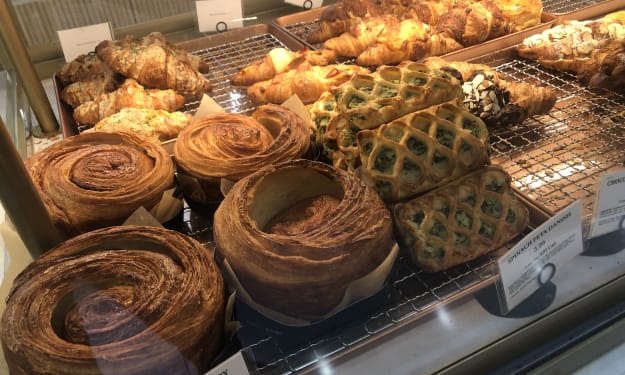
As someone who lives in a rural area, I don't get the chance to visit fancy restaurants or bakeries that often. So, when a friend told me about a French-Asian bakery that's less than an hour away, I knew I had to check it out and grab some pictures for social media. Tous les Jours ended up providing an immersive experience that went above and beyond my expectations--although I did leave with a few reservations.
By Kaitlin Shanks16 days ago in Feast
Hummus and Flatbread
Okay, yes baking is my thing but a while ago I used to make a lot of hummus and the story behind it is simply this: I love the idea of hummus I just hate the one that comes from the shops so I made my own. I always found the one from the shops tastes like sludge and doesn't have a great texture to it. I'd like a little bit more flexibility in my hummus and so - I give you my secret recipe for creating great tasting, spicy hummus with very little effort.
By Annie Kapur6 days ago in Feast
The steps to losing a child
Step One: Lose a child. Not what anyone wants to happen and nothing you can do to change it, but you can go through steps to becoming happy again. You can go through steps to loving again. You can go through steps to become a new you because after losing a child you will never be the same person you once were.
By Tabitha Hinkley3 days ago in Fiction



Comments
There are no comments for this story
Be the first to respond and start the conversation.