
United Kingdom Energy Drinks Market Trends & Summary 2025–2033
How Innovation, Convenience, and Health-Focused Reformulation Are Shaping the UK Energy Drinks Industry

United Kingdom Energy Drinks Market Overview
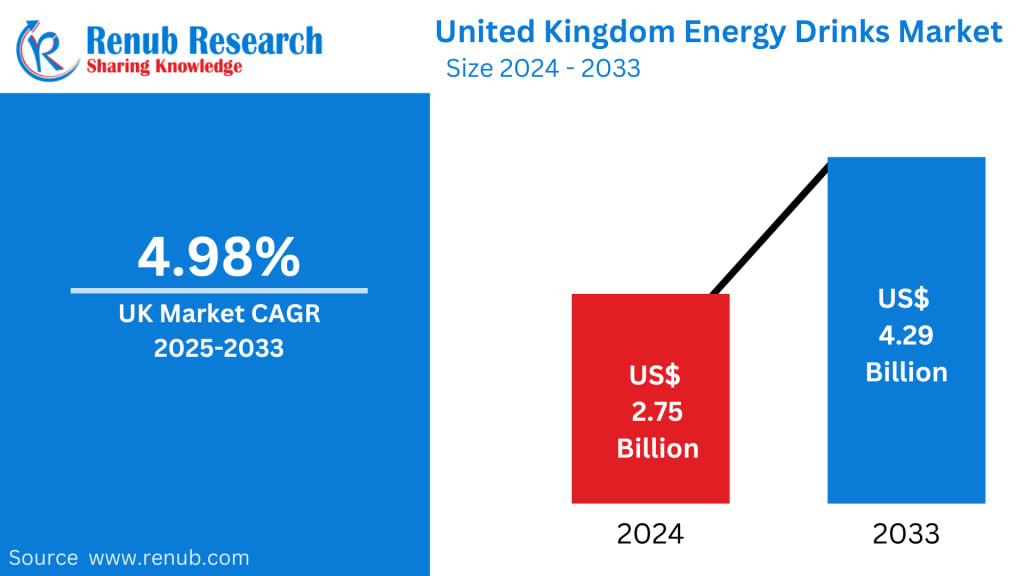
The United Kingdom energy drinks market continues to demonstrate resilient growth, driven by changing lifestyles, rising demand for functional beverages, and continuous product innovation. According to Renub Research, the market was valued at US$ 2.75 billion in 2024 and is expected to reach US$ 4.29 billion by 2033, expanding at a compound annual growth rate (CAGR) of 4.98% from 2025 to 2033.
Energy drinks have evolved from niche performance enhancers into mainstream lifestyle beverages consumed by students, professionals, fitness enthusiasts, and increasingly older demographics. In a fast-paced society where productivity and alertness are highly valued, energy drinks offer a convenient solution for physical stamina and mental focus.
While legacy brands such as Red Bull, Monster Energy, and Rockstar dominate shelf space, the UK market is witnessing strong momentum from smaller and emerging brands focusing on natural ingredients, reduced sugar, clean labels, and functional benefits. This shift reflects a broader transformation in consumer preferences toward healthier and more transparent beverage options.
Industry Dynamics: Changing Consumer Behaviour
The traditional image of energy drinks as high-sugar, high-caffeine beverages is rapidly changing. UK consumers are now more informed and selective, demanding products that balance performance with health. This evolution is evident in the growing popularity of organic, natural, and low-calorie energy drinks.
Younger consumers, particularly those aged 18 to 34, remain the core market, but adoption is increasing among working professionals and fitness-focused adults. Energy drinks are no longer restricted to night-time or sports use; they are now consumed during work hours, commutes, workouts, and social activities.
At the same time, regulatory scrutiny around sugar content, caffeine levels, and marketing to minors has compelled manufacturers to innovate responsibly. Reformulation, clearer labelling, and responsible branding are becoming essential competitive strategies.
Recent Product Launches and Innovation Highlights
Product innovation remains a critical growth engine for the UK energy drinks market.
In July 2024, UK-based brand Tenzing launched Super Natural Energy, positioned as one of the strongest natural energy drinks globally. Its Fiery Mango variant delivers 60 mg of caffeine per 100 ml, derived from natural sources, appealing to consumers seeking performance without artificial additives.
Similarly, Acti+ entered the UK market in April 2024 with renewable energy drinks featuring flavours such as Strawberry & Dragon Fruit and Peach & Apricot. These drinks contain nootropics, essential vitamins, minerals, and zero added sugar, reinforcing the shift toward functional and wellness-oriented beverages.
A notable technological milestone came when Hell Energy introduced Hell Energy AI in 2024, claiming it to be the first energy drink in the UK created with artificial intelligence. From recipe formulation to flavour testing and can design, AI played a role throughout development. The product contains added amino acids, vitamins, and no preservatives, showcasing how advanced technology is reshaping beverage innovation.
Growth Drivers of the United Kingdom Energy Drinks Market
1. Continuous Product Development
Innovation is at the heart of market expansion. Brands are launching new flavours, ingredient combinations, and packaging formats to stay competitive and relevant. The growing preference for sugar-free, low-calorie, and naturally sourced ingredients has led to the inclusion of components such as guarana, green tea extract, ginseng, and B-vitamins.
Packaging innovation is also enhancing convenience and sustainability. Resealable cans, recyclable materials, and visually striking designs improve both usability and shelf appeal. In 2024, Lucozade announced the launch of its Blucozade range, including Lucozade Alert Blue Rush, Lucozade Sport Blue Force, and Lucozade Energy Blue Burst, targeting younger consumers with bold branding and flavour differentiation.
2. Advancements in Production Technology
Modern manufacturing technologies are enabling energy drink producers to scale efficiently while maintaining product consistency and quality. Automation, AI-driven quality control, and advanced processing techniques help preserve natural ingredients and optimise flavour profiles.
Sustainable production practices are also gaining importance. Brands are investing in energy-efficient manufacturing, reduced water usage, and environmentally friendly packaging, aligning with broader ESG (Environmental, Social, and Governance) goals. These advancements not only reduce costs but also strengthen brand reputation among environmentally conscious consumers.
3. Rising Demand for Convenience Beverages
Busy lifestyles across the UK continue to fuel demand for ready-to-drink energy solutions. Energy drinks require no preparation, are easy to carry, and deliver immediate results, making them ideal for students, professionals, travellers, and gym-goers.
Urbanisation, longer working hours, and increasing screen time have amplified the need for mental alertness and sustained energy. As a result, energy drinks have become an integral part of daily routines rather than occasional indulgences.
Challenges Facing the UK Energy Drinks Market
1. Sugar Content and Health Concerns
One of the most significant challenges is addressing consumer concerns around excessive sugar and caffeine consumption. The UK government’s sugar tax and public health campaigns have pushed manufacturers to reformulate products without compromising taste or effectiveness.
While sugar-free and naturally sweetened variants are gaining popularity, achieving the right balance between flavour, functionality, and health remains complex. Brands must continuously invest in R&D to meet evolving expectations.
2. Competition from Alternative Functional Beverages
Energy drinks are facing increasing competition from herbal teas, cold brew coffee, kombucha, yerba mate, and natural energy supplements. These alternatives are often perceived as cleaner and more sustainable sources of energy.
Health-conscious consumers are gravitating toward beverages that offer long-lasting energy without spikes or crashes, challenging traditional energy drink formulations. To remain competitive, energy drink brands must clearly communicate their functional benefits and health credentials.
Regional Overview of the United Kingdom Energy Drinks Market
London
London represents one of the largest and most dynamic energy drinks markets in the UK. The city’s fast-paced lifestyle, dense population of young professionals, students, and fitness enthusiasts drives consistent demand. While multinational brands dominate, niche and premium brands offering natural and sugar-free options are gaining traction. The nightlife and hospitality sectors further support consumption.
East of England
The East of England market is expanding steadily, supported by student populations in cities such as Cambridge and Norwich. Convenience stores and gyms play a crucial role in distribution. Rising health awareness is boosting demand for cleaner formulations, although regulatory pressures remain a challenge.
Scotland
Scotland’s energy drinks market is growing, particularly in urban centres like Glasgow and Edinburgh. Young adults and active consumers drive demand, while interest in wellness and fitness is increasing the appeal of low-sugar and natural energy drinks. Regulatory oversight on marketing to minors is influencing branding strategies.
Yorkshire and the Humber
Cities such as Leeds, Sheffield, and Bradford are witnessing growing consumption among students and professionals. Fitness trends and busy work schedules support demand, but concerns about sugar and caffeine levels are encouraging reformulation and product diversification.
Market Segmentation Overview
By Packaging Type
Can
PET Bottle
By Product
Non-organic
Organic
Natural
By Target Consumer
Teenagers
Adults
Geriatric Population
By Distribution Channel
Supermarkets/Hypermarkets
Convenience Stores
Specialist Stores
Online Retail Stores
Others
By Region
London
South East
North West
East of England
South West
Scotland
West Midlands
Yorkshire and the Humber
East Midlands
Others
Key Players Covered in the Market
The report analyses leading companies from four perspectives: company overview, key personnel, recent developments, and revenue performance.
Major Players Include:
Suntory Holdings Limited
Red Bull GmbH
Monster Energy Company
The Coca-Cola Company
GlaxoSmithKline PLC
Global Trade Holdings Co., Ltd.
PepsiCo Inc.
Max Muscle Nutrition
TSI Consumer Goods GmbH
Nestlé SA
Final Thoughts
The United Kingdom energy drinks market is entering a more mature yet innovative phase. While health concerns and regulatory pressures present challenges, they are also driving meaningful transformation across the industry. Brands that prioritise clean ingredients, functional benefits, technological innovation, and sustainable practices are best positioned for long-term success.
With the market projected to grow from US$ 2.75 billion in 2024 to US$ 4.29 billion by 2033, energy drinks will remain a key segment within the UK’s functional beverage landscape. As consumer expectations evolve, the future belongs to companies that can deliver energy with responsibility, transparency, and purpose.
About the Creator
Diya Dey
Market Analyst
My Tous les Jours Trip
As someone who lives in a rural area, I don't get the chance to visit fancy restaurants or bakeries that often. So, when a friend told me about a French-Asian bakery that's less than an hour away, I knew I had to check it out and grab some pictures for social media. Tous les Jours ended up providing an immersive experience that went above and beyond my expectations--although I did leave with a few reservations.
By Kaitlin Shanks16 days ago in Feast
Hummus and Flatbread
Okay, yes baking is my thing but a while ago I used to make a lot of hummus and the story behind it is simply this: I love the idea of hummus I just hate the one that comes from the shops so I made my own. I always found the one from the shops tastes like sludge and doesn't have a great texture to it. I'd like a little bit more flexibility in my hummus and so - I give you my secret recipe for creating great tasting, spicy hummus with very little effort.
By Annie Kapur6 days ago in Feast
The steps to losing a child
Step One: Lose a child. Not what anyone wants to happen and nothing you can do to change it, but you can go through steps to becoming happy again. You can go through steps to loving again. You can go through steps to become a new you because after losing a child you will never be the same person you once were.
By Tabitha Hinkley3 days ago in Fiction




Comments
There are no comments for this story
Be the first to respond and start the conversation.