

I was 22 years old when I decided that it was time.
Time to taste adventure. To experience freedom in a new way. To try something that shattered my comfort zone.
As with most travel plans in today’s society, I began the search for adventure on social media. At first, it was China. Then Europe. Then Brazil. Then Africa. Africa, however, had so many countries to offer that the search often felt overwhelming.
I was casually discussing my travel plans – more like travel desires at this point – with my academic advisor. I was finishing up my final year of my bachelor’s degree and was going solo for the first time in my life. I lived at home, got an undergrad degree, and planned on achieving a master’s in a year’s time. I had no boyfriend, no house, no car, and the timing for travel was ripe.
At this point, my academic advisor started to get excited. You see, I had just finished my undergraduate degree in psychology, and one of her best friends was a Canadian who founded a Counselling organization in – where, you may ask? – Uganda! I knew immediately that this was a connection that was meant to be, and she provided me with her friend’s email address. Within a couple of weeks, I had connected with her friend and it was decided that I would go live with her in Gulu, volunteering with her counselling organization, I Live Again Uganda.
Around the same time, I connected with another couple who had opened a school in a village near Jinja, Uganda, and decided that I would also love to experience village life. My trip was starting to take shape! I began planning, and the end result was three months teaching at the village school, followed by a week’s safari adventures, and two months in Gulu volunteering with I Live Again Uganda.
To say that I was excited was an understatement. That fine, delicate line between excitement and anxiety, however, was crossed over more frequently than I would have liked. Still, I felt as though a sense of adventure awaited, and was desperate to do something and experience anything outside of my comfort zone. In reflecting on this season of my life, this quote from the well-known Jane Eyre rings true…
“I remembered that the real world was wide, and that a varied field of hopes and fears, of sensations and excitements, awaited those who had courage to go forth into its expanse.” – Charlotte Bronte
The date of my trip came, and I said a tearful goodbye to my family at the airport, looking forward to the adventures ahead. And adventures came. Village life was quite the adjustment for a North American young adult, and yet there were so many experiences to value. To say that the trip offered me some perspective on Western individualistic society is quite the understatement.
My favourite part of each and every day in the village was gathering around the dinner table with those who I was staying with and enjoying food together. Avocados larger than the size of my balled up fist. Roasted peanuts. Cassava. Plantain. A peanut sauce, the making of which still eludes me, but that tasted heavenly over a bed of rice. And, of course, a Ugandan staple – Chapati.
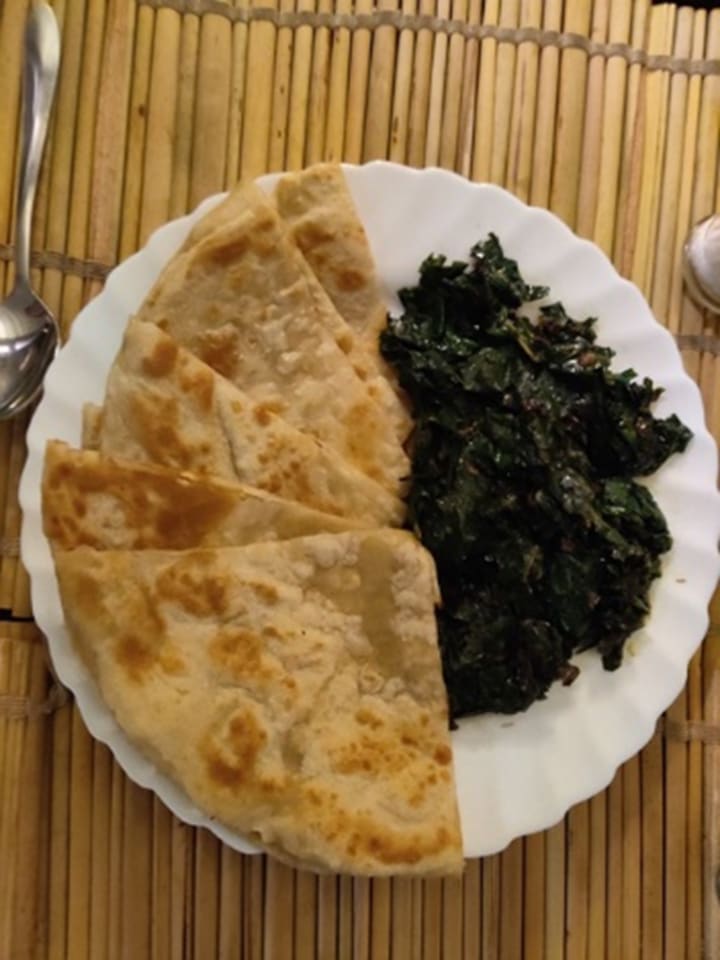
Chapati is an East African staple that goes well with whatever you are eating – similar to the Indian Naan – and yet is also somehow so delicious on its own with a little salt and some roasted peanuts on the side for a snack!
I quickly fell in love with this flat bread, but this was only the beginning of my favourite Ugandan food discovery. As we went into larger cities such as Jinja on occasion to get supplies for the village, I would see little food stands set up on the side of the road where the Ugandans were selling what I heard was called Rolex.
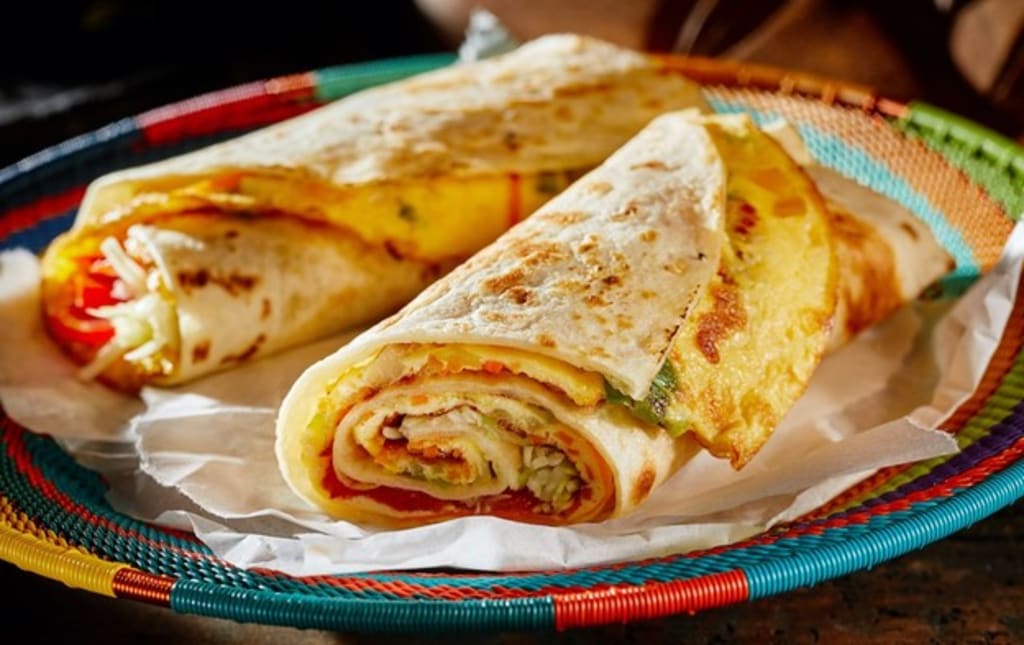
I don’t know what comes to mind when you hear that word, but I immediately thought of a very fancy watch, and was confused as to how these people would acquire and sell Rolex’s on the side of the road. As we got closer, I realized they were what looked like Chapati and egg burritos. Someone we were travelling with got me one and my curiosity was confirmed. It was Chapati cooked in oil and rolled with eggs in the middle, and sometimes additional ingredients such as tomatoes or onions, even rice. I was still confused about the name, but was too shy to ask initially. It was not until I moved to Gulu and encountered the delicious Rolex again that I finally asked – why are they called Rolex?
My friend laughed and said – “It is because you Roll eggs! Rolleggs!”My mind processed for a moment and then I burst out laughing. “Ohhh”, I said, “Rolleggs is Rolex!”
We laughed for a while and then went out to find more Rolex because, well, they are just that delicious. We would buy them for Ugandan coins on the side of the street at night and eat them out of little clear plastic bags, and I am convinced the simple pleasure of eating a Rolex out of a bag on the Ugandan streets is one of the most beautiful and satisfying experiences and memories I have.
I find it amusing how our minds and memories find delight in the simplest things and travel back to the little moments that make up the adventures of our lives. Isn’t every adventure – no matter how grand – made up of this little frames of moment-by-moment experience? Gosh, I just love life.
Anyway…I could ramble about the beauty of existence, but then we would not know how to make Rolex. Let me throw in a picture just to get your mouth watering and motivate you to try the recipe down below – that is where the work comes in. Although, if you have read this far, I think you are pretty committed to the Rolex experience by now. Either that or you are judging my writing.
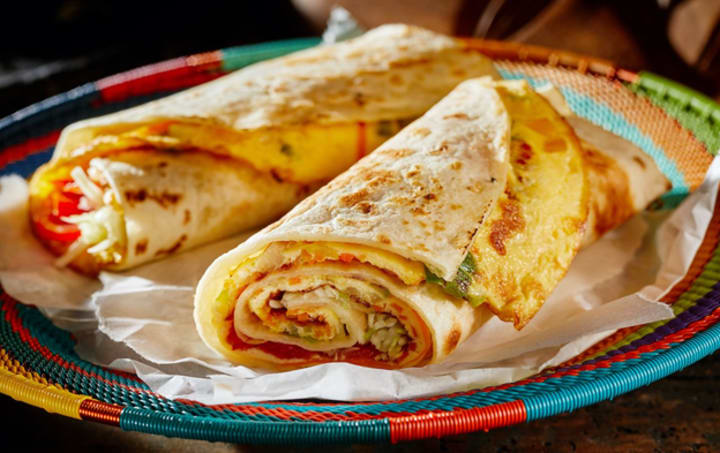
Does it not look delicious?
Breakfast? Done. Lunch? Rolex. Dinner? Rolex. Snack time? Rolex.
It fits every occasion, and was one of the first dishes that I made upon returning home to Canada, as I found that I missed it dearly. I also missed the memories associated with it – the Ugandan nights, the company, the sense of adventure that comes with living somewhere completely new away from everything you know.
Food is similar to music in that it will bring us right back to past memories as if we were re-living that moment. At least, that is the way it works for me.
Rolex transports me back to those Ugandan nights, laughing, surrounded by friends and cups of hot spiced Ugandan milk tea with ginger. It brings me back to memories of them teaching me how to drive on the wrong side of the road, of the faces of children in the villages, of the Acholi language and Boda Boda rides down dusty unpaved roads. It reminds me of showers under the stars and the beautiful sunsets and clouds that I am convinced I could not capture on canvas, even I were a renowned artist.
This recipe is more to me than something to satisfy hunger – it is a small piece of a country that welcomed me when I left my home, and made an impact on my heart.
The recipe is below, and I hope you enjoy it as much as I have come to enjoy it, relishing a small taste of beautiful Ugandan culture.
Disclaimer: This recipe makes 6 servings
Ingredients Needed:
3 cups of all-purpose flour
1 ½ tsp salt
1 tsp white sugar
3 tbsp oil
1 ¼ cups of water
12 eggs (2 eggs per serving)
6 tsp finely chopped tomato (1 per serving)
Add finely chopped onion as desired
Chapati
You will want to start with making the Chapati, and the Chapati instructions are outlined below:
• Combine the flour, sugar, and salt in a large bowl.
• Add the oil to the large boil and stir those contents together
• Gradually add the 1 ¼ cups of water while stirring
• Knead the dough for ten to fifteen minutes or until the surface of the dough is smooth and not as sticky (I sometimes add some additional flour to the dough to this step if I find that it is stickier than I would like…you can also add a little extra oil while kneading to help it brown faster during cooking)
• Place the Chapati dough in a bowl and cover it with plastic wrap. Let it rest for approximately 20 to 30 minutes.
• Place the dough onto a lightly floured surface and divide it into six equal pieces.
• Shape each piece into a ball and roll the dough out with a rolling pin into a circle with approximately a 10-inch diameter.
• Apply a thin layer of oil over the dough with a pastry brush and then roll it up like you would roll up a carpet into a tight coil. Fold the coil in on itself like a snail and set it aside while you shape the other Chapati. Leave the rolls to rest for 10 to 15 minutes. This video tutorial of someone making Chapati is particularly helpful for this step, as it takes a couple tries to properly make the layers typical of Chapati.
• Roll over the coiled dough until it is about 1/8th of an inch in thickness.
• Place the Chapati into a non-stick pan on medium heat. Brush the surface with a thin layer of oil and then flip it over when you see bubbles start to rise on the surface.
• Flip one or two more times until desired level of brownness is achieved.
Rolex
After the Chapati, the Rolex instructions will seem much simpler and faster to follow, as we are much more familiar with omelettes in Western culture!
• Add 2 eggs, 1 tsp finely chopped tomatoes, and onion together and combine in a bowl before pouring it onto a hot, well-oiled pan and spread out.
• Flip and cook as you would an omelette, and then transfer the omelette onto the rolled out Chapati.
Roll up the Chapati with the omelette inside it and get ready to enjoy!
About the Creator
Keep reading
More stories from Sarah Lamb and writers in Feast and other communities.
Missing Buttons
At the core of who we are, regardless of our differences, lies a common thread of desire - a desire to be considered valuable, worthy, enough. Begin to unravel this thread, and it will lead you to various attempts to increase our worth in the eyes of a society whom we have given the power to decide our value. It is as though value is subjective and transient, rather than intrinsically unalterable.
By Sarah Lamb5 years ago in Families
My Tous les Jours Trip
As someone who lives in a rural area, I don't get the chance to visit fancy restaurants or bakeries that often. So, when a friend told me about a French-Asian bakery that's less than an hour away, I knew I had to check it out and grab some pictures for social media. Tous les Jours ended up providing an immersive experience that went above and beyond my expectations--although I did leave with a few reservations.
By Kaitlin Shanks30 days ago in Feast
Searching for the Best Pizza in Doha: A Matter of Taste, Time, and Place
The idea of the “best pizza in Doha” is more complicated than it first appears. Doha is a city of contrasts—glass towers rising from the desert, quiet neighborhoods tucked behind busy roads, and people from every corner of the world bringing their own memories of what food should taste like. Pizza, a dish born far from Qatar, has found a surprising and comfortable home here. But defining the best version of it is less about rankings and more about moments.
By Harley Morris6 days ago in Feast



Comments
There are no comments for this story
Be the first to respond and start the conversation.