
The Taste of Lost Summers
A bite of dirt, desire, and lost time


Despite ample shade under the olive trees, the sun baked the earth — scorched it even — branding every stone, every blade of grass, every inch of that cracked yard with the memory of summers lost. The earthen house — nanna’s house — stood stubborn against the heat, its red-tiled roof sagging like the tired spine of an old woman who’d seen too much. Every summer, we migrated there like moths to a flame, pulled by a gravity we didn’t understand but couldn’t resist. A ritual. A sentence. A salvation.
That house is dust now. Bones in the ground. And me? I live in another universe entirely — but the ghosts still linger, sticky as sweat on a summer afternoon.
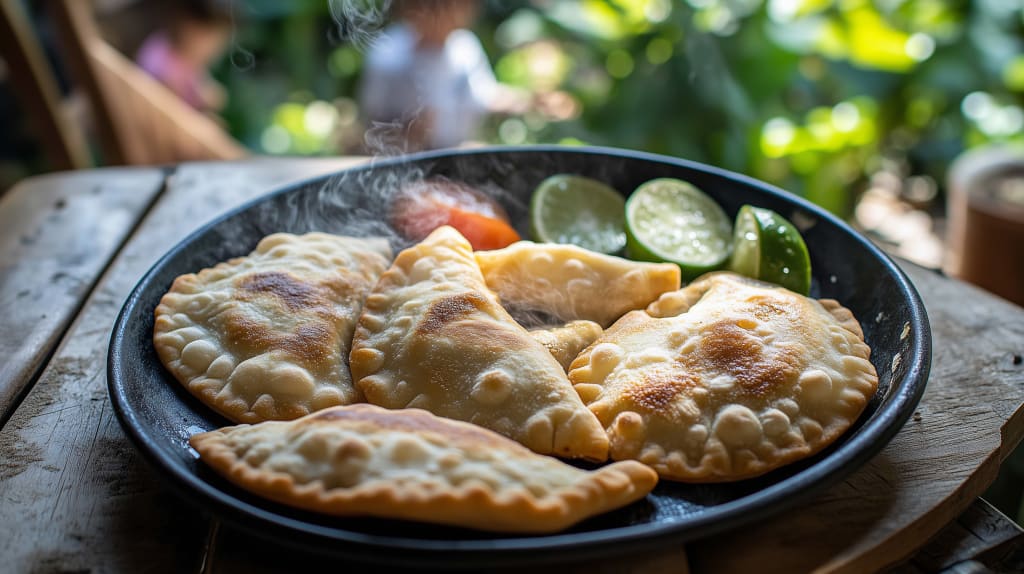
And in the center of it all? Chebureki. Hot, greasy, messy chebureki — delicate pockets of meat and spice, folded with fingers that had known love and loss, then dunked in oil until they crackled like skin under the sun.
Even my mother — manicured, coiffed, a city queen in exile — made the pilgrimage. It was novelty to her. A brief flirtation with simplicity before slipping back into her highborn life. But to me? It was quite something else. A lifeline tethering me to something raw and real. I ran wild with the other kids — scabby knees, hair matted with sweat and dirt — a tomboy, always. A girl clutching Star Wars figures in one hand, drawing comics in the other, hands smeared with ink and mud.
And then there was her — the flame-haired Tatar girl from next door. She smelled like the soil after rain and looked like trouble wrapped in sunbeams. Simple, but lusty — the kind of beauty that makes your teeth ache. I wasn’t brave enough. I just watched. Stared too long. Stared too hard. Stared like I could drink her in through my eyes and be full forever. Her laughter — cracked bells, sharp and sweet — still echoes in my head.
Back then, I didn’t have the words. Not for the ache that bloomed in my chest when she was near, nor for the dark thrill that crawled up my spine when our fingers brushed by accident. In our world — strict, binary, unforgiving — there was no space for a girl who wanted other girls. Boys liked girls. Girls liked boys. That was the law. And me? I was so scared to glitch the system, always floating somewhere in the gray, grasping at feelings I couldn’t name.
Home had its own code — unspoken but ironclad. My tomboy phase was tolerated. “She’ll grow out of it,” they’d say, as if my scuffed knees and dirt-smeared face were just hiccups on the road to proper womanhood. But as I moved from preteen to teen, the walls closed in. Dresses appeared in my closet like specters. Conversations turned to boys. Subtle at first — then louder. More insistent. But my eyes? They kept drifting to the girls. To the curve of an emerging bosom, the softness of a smile, the flicker of something dangerous behind the eyes.
We played hard. Fought harder. The boys sneered at my comics — said they were stupid, that girls shouldn’t draw warriors. I didn’t care — not really. Until they stole my figures. Luke. Leia. Even the battered stormtrooper I’d painted with shaky hands. Gone. They told me they’d buried them — somewhere in the mud near the artesian well, where the earth was soft and secrets sank deep. Every summer after, I dug. Raw hands clawing at the dirt, fingernails cracked, bloodied. I dug until I understood — they hadn’t buried them. They’d taken them. Because boys take — that’s what boys do in that world.
And the Tatar girl? She didn’t bat an eye. It was just how things were.
I seethed. Oh, I seethed. Plotted wild, feral ideas of revenge — scenarios so vivid they burned in my brain. But nothing ever came to fruition. We visited less and less, the trips thinning out like breath on cold glass. My revenge fantasies got locked away in the comics I drew — pages filled with heroines who fought back, who won, who never lost. Until one day, I stopped drawing.
And things got messier. But that’s another story.
Still, there was chebureki. Always chebureki.
Nanna’s hands worked the dough like a spell — rolling it out thin enough to catch the sunlight, delicate but strong. She’d fill each circle with spiced raw beef, fold them into half-moons, and pinch the edges shut, sealing in all the love, pain, and history of the women before her. Then into the oil they went — the sizzle, a sharp hiss, like the dough was screaming as it fried. The smell — meat, butter, summer — filled every crack of that old house.
There were mice in the granary behind the house — scores of them. They sampled the wheat first — fresh out of the bottom of the sack — before it was ground into the flour that made the chebureki. Their tiny teeth had marked the grains long before our hands did. Somehow, it felt right — like the food had been touched by all the layers of life around us, even the ones we pretended not to see.
We’d eat them straight from paper towels, fingers burning, grease sliding down our wrists. The pastry shattered with the first bite — fragile, crisp — revealing the juicy, spicy filling beneath. It was primal. Messy. Perfect.
The bugs didn’t care. Swarms of them, thick and shimmering, hovered over everything — drawn by the heat, the sweat, the food. I didn’t care either. Maybe I even liked it — the dirt, the chaos, the way it all felt so alive. There was something in that — a quiet fetish for the rawness of life. For being part of the mess.
Loneliness clung to me like a second skin, sticky and hot. Even surrounded by family, I felt hollow. But chebureki filled that space — even if just for a moment. Each bite was an anchor. A reminder. I was still here.
But the house is gone now. The yard, the well, the ghosts — all gone.
I live in another universe now.
But chebureki — when I occasionally make it?
That stays.
Chebureki Recipe — A Taste of Ghosts
Ingredients:
For the dough:
- 3 cups all-purpose flour
- 1 tsp salt
- 1 cup lukewarm water (you might need a bit more or less)
- 1 tbsp olive oil
For the filling:
- 300g ground beef (the fattier, the better)
- 1 small onion, finely grated
- Salt and pepper to taste
- A splash of water (to keep the filling moist)
For frying:
- Sunflower oil (or any neutral oil) — enough for shallow frying
Instructions:
- Make the dough: In a large bowl, mix the flour and salt. Slowly add the lukewarm water and olive oil, kneading until you get a smooth, elastic dough. It should feel soft and pliable under your palms, like a well-worn leather glove. If it’s too sticky, dust in a little more flour. When ready, the dough should bounce back slightly when pressed. Cover with a damp cloth and let it rest for about 30 minutes, allowing the gluten to relax.
- Prepare the filling: In a bowl, mix the ground beef with the grated onion, salt, pepper, and a splash of water. Stir with your hands — feel the coolness of the meat between your fingers, sticky and pliant. Watch the onion do its chemical magic — see the meat turn grey. The water keeps the filling juicy and ensures that signature burst when you bite into the chebureki.
- Roll and fill: Divide the dough into small balls (golf-ball size works well). Roll each one out thin — thinner than your patience on a bad date — into a circle. The dough should be almost translucent, delicate but strong enough to hold the filling. Place a spoonful of the raw meat mixture on one half of the dough circle, spreading it thin but even. Fold the dough over into a half-moon shape, pressing the edges tightly to seal. Run your fingers along the seam — it should feel smooth, with no gaps — and use a fork to crimp the edges, creating a textured, rustic finish.
- Fry: Heat your oil in a wide pan — medium-high heat. Test it by dropping in a small piece of dough; it should sizzle immediately and rise to the surface with gentle bubbles. The smell will hit you first — warm, nutty, inviting. Fry the chebureki one or two at a time, depending on your pan size, until golden and crisp on both sides (about 2-3 minutes per side). Watch as the dough puffs slightly, the surface blistering into tiny golden bubbles.
- Drain and devour: Place the fried chebureki on paper towels to drain the excess oil. The pastry should feel light and crackly under your fingers, almost too fragile to hold. But don’t wait too long — chebureki is meant to be eaten hot and brittle — just like love — when the filling still threatens to spill out with every bite, burning your tongue in the best possible way.
Serving Suggestion:
No fancy sides. Just a squeeze of lemon over the top — the acidity cutting through the richness — maybe a glass of cold ayran, and the sun on your face. Be a sport — don't spoil this with alcohol. Trust me.
Eat it messy. Let the grease drip. Feel the blistered pastry shatter under your teeth. And if a bug lands on your plate? Let it. That’s the way it was meant to be.
About the Creator
Iris Obscura
Do I come across as crass?
Do you find me base?
Am I an intellectual?
Or an effed-up idiot savant spewing nonsense, like... *beep*
Is this even funny?
I suppose not. But, then again, why not?
Read on...
Also:
Keep reading
More stories from Iris Obscura and writers in Feast and other communities.
Iris Diaries: Zeela's Story
Zeela. Bloody Zeela. A name that should’ve been stitched onto a protest banner but ended up smeared across the ruins of her own life instead. Born into a family where revolution wasn’t just a word - it was the air they breathed, the smoke they exhaled, and the reason they forgot to pack her lunch. Her parents were comrades first, zealots second, and somewhere down the list, occasional caretakers.
By Iris ObscuraExclusive • about a year ago
Widow invests $800,000 to start hawker culture experience centre in honour of late husband
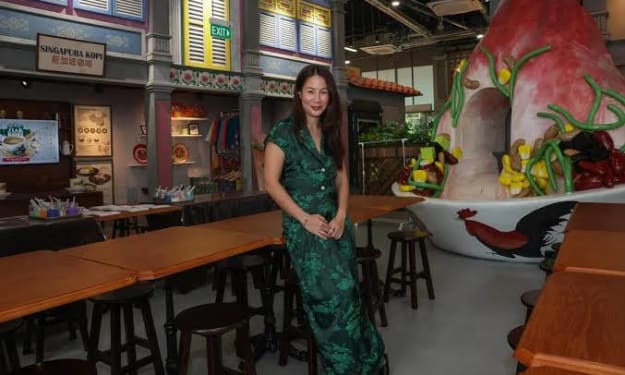
In a touching tribute to love, memory, and cultural heritage, a Singaporean widow has invested nearly $800,000 to establish a hawker culture experience centre dedicated to preserving and celebrating the vibrant food traditions that her late husband cherished throughout his life. The centre, which opened recently in Singapore, aims to provide visitors with an immersive journey into the country’s beloved hawker culture while honouring the legacy of a man who spent decades supporting local food vendors. The project was initiated by Lim Mei Hua, whose husband, Tan Wei Chong, passed away three years ago after a long illness. Tan was widely known among friends and family as a passionate supporter of traditional hawker stalls and frequently spent his weekends exploring different food centres across Singapore. According to Lim, the idea of creating a space dedicated to hawker heritage had long been one of her husband’s dreams. “He always believed that hawker culture was the heart of Singapore,” Lim said during the centre’s opening ceremony. “After he passed away, I wanted to do something meaningful that would keep his passion alive and allow future generations to understand why these traditions matter.” Singapore’s hawker culture is a cornerstone of the nation’s identity. The bustling open-air food centres, filled with vendors serving affordable and diverse dishes, reflect the multicultural roots of the country. In recognition of its cultural importance, UNESCO added Singapore’s hawker culture to its Representative List of the Intangible Cultural Heritage of Humanity in 2020. Lim’s experience centre is designed to showcase this heritage through interactive exhibits, live cooking demonstrations, and storytelling sessions led by veteran hawkers. Visitors can learn about the origins of iconic dishes such as Hainanese chicken rice, Laksa, and Char kway teow, while also exploring the personal journeys of the hawkers who prepare them. The centre includes a small exhibition gallery featuring photographs, kitchen tools, and handwritten recipes collected from hawker families across the city. Many of these items date back decades, offering a glimpse into how culinary traditions have been passed down through generations. One section of the centre recreates a traditional hawker stall environment, allowing visitors to experience what it feels like to work behind the counter during a busy lunch rush. Young participants can try their hand at simple cooking techniques while learning about the discipline and dedication required to master hawker cuisine. Local hawkers have warmly welcomed the initiative. Many worry that younger generations may be less interested in taking over family stalls, which often involve long hours and physically demanding work. By highlighting the cultural significance of these businesses, Lim hopes the centre will inspire renewed appreciation among the public. “Hawker food is not just about eating,” said veteran vendor Ong Kee, who participated in one of the centre’s demonstration sessions. “It’s about history, family, and community. Places like this help remind people why our traditions should continue.” Beyond cultural preservation, the experience centre also aims to support hawkers economically. A portion of ticket sales will be directed toward training programs for aspiring food vendors, helping them learn both traditional recipes and modern business skills. Lim believes this approach can help sustain the industry while adapting to changing times. Tourism officials in Singapore have also expressed optimism about the centre’s potential to attract international visitors interested in culinary experiences. Food tourism has become an increasingly important part of the country’s travel industry, with visitors eager to explore authentic local cuisine. For Lim, however, the centre’s true purpose goes far beyond tourism or business success. Every corner of the space reflects memories of her husband—his favorite dishes, the stalls he frequently visited, and the stories he loved to share. “Whenever I see people enjoying the exhibits or learning about hawker culture, I feel like his spirit is still here,” she said quietly. “This place is not just about the past. It’s about keeping something precious alive.” Through her remarkable gesture, Lim has transformed personal grief into a lasting tribute that celebrates love, heritage, and the enduring power of food to bring communities together. Her $800,000 investment ensures that the spirit of Singapore’s hawker culture—and the memory of the man who cherished it—will continue inspiring generations to come.
By Fiaz Ahmed 3 days ago in Feast
Australia Fish and Seafood Market 2026: Sustainable Consumption, Aquaculture Growth & Premium Seafood Demand
Australia Fish and Seafood Market Australia’s fish and seafood market is expanding steadily as consumers increasingly prioritize high-quality protein sources and sustainable food options. Fish and seafood products—including salmon, tuna, shrimp, shellfish and other marine species—play a vital role in the Australian diet due to their nutritional value and culinary versatility. Growing awareness of seafood’s health benefits, particularly its omega-3 fatty acids, vitamins and minerals, is driving consumption across households, restaurants and foodservice channels.
By Amyra Singh5 days ago in Feast



Comments (5)
CONGRATS!!!!!! I've never heard of this dish but it looks like ethnic food that I would like (except for the beef). Great story leading up to your recipe.
Congratulations - wonderful memories - I have never heard of Chebureki - I'll have to give them a try someday.
Wooohooooo congratulations on your win! 🎉💖🎊🎉💖🎊
Well written, congrats 👏
Omg how nice is this food ✍️😜⭐️❤️❤️❤️❤️❤️❤️❤️