
The Magic of Vietnam’s Mid-Autumn Festival
The Magic of Vietnam’s Mid-Autumn Festival
The Magic of Vietnam’s Mid-Autumn Festival
Vietnam is a country rich in traditions, where ancient legends and community spirit blend into vibrant celebrations. Among its many cultural events, the Mid-Autumn Festival—known locally as Tết Trung Thu—stands out as one of the most beloved. Celebrated on the 15th day of the eighth lunar month, usually in September or October, it is a time when families gather under the full moon to honor heritage, share joy, and strengthen bonds.
A Festival for the Moon and the Children
Unlike many holidays that revolve around adults, the Mid-Autumn Festival is especially dedicated to children. Historically, it was considered a time for parents to make up for the long working days spent in rice fields, by offering their children a night of play, sweets, and storytelling. Today, the tradition continues, making this festival a symbol of love, family, and community.
The full moon itself holds deep meaning. In Vietnamese culture, it represents harmony, prosperity, and reunion. Families believe the round shape of the moon is a reminder of unity and togetherness.
Lanterns, Dances, and Mooncakes
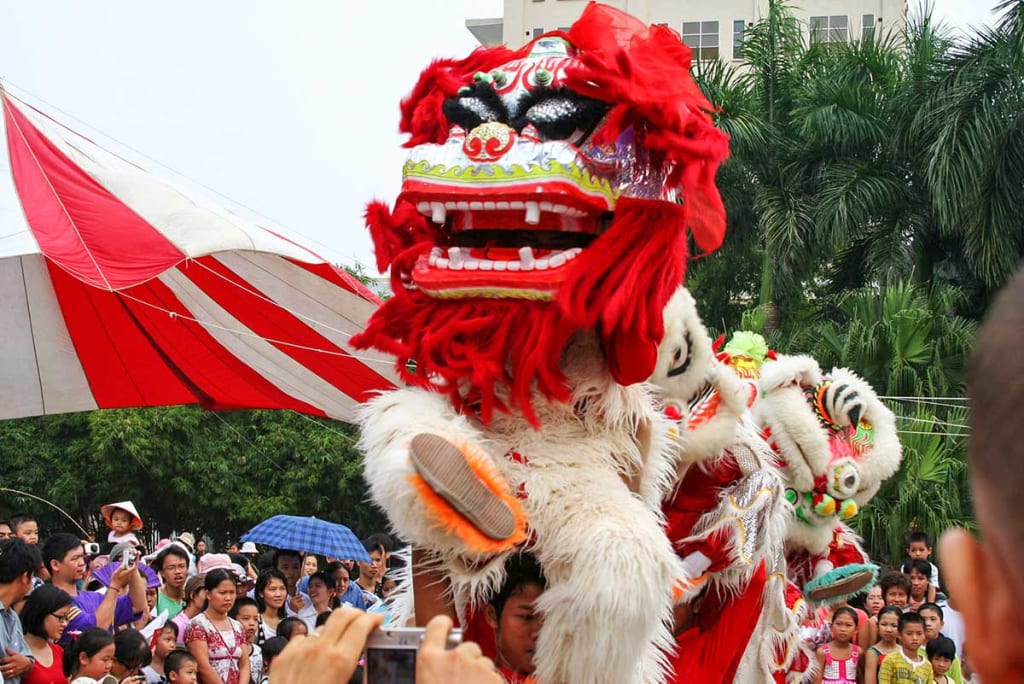
One of the most iconic sights during the festival is the lantern parade. Streets glow with colorful paper lanterns shaped like stars, animals, and flowers. Children proudly carry them, their laughter filling the night. In many towns, lion dance troupes weave through the crowds, accompanied by rhythmic drumming that adds to the excitement.
Another essential tradition is the sharing of mooncakes. These rich pastries, filled with lotus seed paste, salted egg yolk, or green tea, are exchanged as gifts among family, friends, and colleagues. Giving mooncakes is more than just a sweet gesture—it is a way of wishing good fortune, longevity, and happiness.
Legends of the Festival
Behind the Mid-Autumn Festival are stories passed down for generations. One of the most famous is the legend of Chú Cuội, a man who lived beside a magical banyan tree. According to folklore, when the tree was uprooted and flew toward the moon, Cuội held on and was carried with it. On festival nights, children are told to look at the moon and see Cuội sitting beneath his tree.
This tale, both whimsical and melancholic, adds a mythical charm to the celebration, reminding people of Vietnam’s rich storytelling tradition.
Modern Celebrations
While rooted in history, the Mid-Autumn Festival has evolved with time. In bustling cities like Hanoi and Ho Chi Minh City, streets are decorated weeks in advance, with shops selling lanterns, masks, and mooncakes. Community centers organize performances, puppet shows, and storytelling sessions. In rural areas, the festival retains its simplicity—families gather in courtyards, share fruits and cakes, and enjoy the night sky together.
In recent years, the festival has also gained international attention. Tourists visiting Vietnam during this time are often amazed by the joyous atmosphere. Many join the celebrations, carrying lanterns alongside locals, tasting mooncakes for the first time, and immersing themselves in the country’s cultural heartbeat.
Why It Matters
The Mid-Autumn Festival is more than just a holiday—it is a reflection of Vietnamese values. It highlights the importance of family, the joy of community, and the beauty of cultural storytelling. In a rapidly modernizing world, traditions like this serve as bridges between past and present, ensuring that younger generations remain connected to their roots.
For visitors, experiencing the Mid-Autumn Festival offers a glimpse into Vietnam’s soul. It is not just about the lanterns or the mooncakes, but about the warmth, laughter, and shared humanity that light up the night.
Conclusion
The Mid-Autumn Festival remains one of Vietnam’s most cherished celebrations. Whether in the glowing lanterns, the taste of mooncakes, or the legends whispered under the full moon, the festival continues to enchant both locals and travelers alike.
For those fortunate enough to experience it, Tết Trung Thu is not just a cultural event—it is a reminder that joy is brightest when shared, and that even in modern times, the moon still has the power to bring people together.
About the Creator
Keep reading
More stories from blinklife4us and writers in Feast and other communities.
Blink 182 Bethel Woods Center for the Arts Bethel NY 09.6.2025 Shirt
Blink-182 Bethel, NY September 6, 2025 Tour Shirt – A Bold Punk-Inspired Collectible Concert shirts have always been more than just merchandise—they’re wearable works of art that capture the energy, attitude, and identity of a band. The Blink-182 Bethel, NY September 6, 2025 Tour Shirt is a perfect example of this tradition. Designed for the Missionary Impossible 2025 Tour, this shirt is not only a keepsake for fans but also a striking piece of graphic art that embodies the chaotic, playful spirit of the band.
By blinklife4us4 months ago in Art
Cricket powder cinnamon banana bread
I lived in Mexico for some years, many Moons ago, twice. It was there when I saw for the first time fried crispy crickets (known as chapulines in Mexico) tacos seasoned with lime, garlic, salt, and chile. Cricket tacos are a traditional delicacy which is especially popular in the Oaxaca region of Mexico. You can find them as a street food optionat outdoor markets in Mexico (look for chapulines) or at speciality restauants in the U.S. (just make sure the crickets are for human consumption).
By Susan Fourtané about a month ago in Feast
Edible Offal Market Size and Forecast 2025: A Global Shift Toward Sustainable, Affordable Protein
Edible Offal Market Size and Forecast 2025 The Edible Offal Market is projected to reach US$ 59.60 billion by 2033, rising from US$ 39.66 billion in 2024, registering a CAGR of 4.63% from 2025 to 2033, according to Renub Research. This steady expansion reflects a powerful global shift toward affordable, nutrient-dense protein sources, culturally rooted culinary practices, rising meat consumption, sustainable meat processing, and increasing awareness of food waste reduction. Particularly in developing regions and ethnic cuisine markets, offal is no longer seen as a by-product—it is emerging as both a nutritional asset and a sustainability solution.
By Aaina Oberoi2 days ago in Feast



Comments
There are no comments for this story
Be the first to respond and start the conversation.