
The invention of the internet.
A Revolution in Communication.


The internet is one of the most transformative inventions in human history. It has reshaped the way we communicate, access information, conduct business, and interact with the world. The invention of the internet was not the result of a single effort but rather a culmination of ideas and innovations from various scientists, engineers, and organizations over several decades. This article explores the origins of the internet, the Key figures involved in its creation, and its impact on modern society.
(I)Origins and Early Development
The foundations of the internet can be traced back to the Cold War era. In the 1950s and 1960s, the United States and the Soviet Union were engaged in a technological race. The launch of the Soviet satellite Sputnik in 1957 led the U.S. Department of Defense to create the Advanced Research Projects Agency (ARPA) in 1958, later known as the Defense Advanced Research Projects Agency (DARPA). ARPA aimed to develop cutting-edge technology that could maintain military superiority, and one of its projects was focused on improving communication networks.
One of the earliest milestones in the development of the internet was the creation of packet switching, a method for breaking data into small packets that could travel independently across a network and be reassembled at their destination. Paul Baran, an engineer at the RAND Corporation, and Donald Davies, a British scientist, independently conceptualized packet switching in the early 1960s. This innovation laid the groundwork for more advanced networking technologies.
(II)ARPANET: The First Network
In 1969, ARPA funded the development of ARPANET, the first operational network that used packet switching. The project was led by researchers at universities such as UCLA, Stanford, and the University of Utah. The first successful message sent over ARPANET occurred on October 29, 1969, when a computer at UCLA attempted to send the word "LOGIN" to another computer at Stanford. The system crashed after the first two letters, but this event marked the birth of networked communication.
As ARPANET expanded, more institutions joined the network, demonstrating the viability of connecting computers over long distances. The development of protocols to standardize communication between different networks became crucial. In the 1970s, Vinton Cerf and Robert Kahn developed the Transmission Control Protocol/Internet Protocol (TCP/IP), which became the backbone of the modern internet. TCP/IP allowed different networks to interconnect, leading to the formation of a Global system.
(III)The Birth of the World Wide Web
While the internet was already a powerful tool by the 1980s, it was primarily used by researchers, government agencies, and large institutions. The general public had limited access to its benefits. This changed in 1989 when British scientist Tim Berners-Lee, working at CERN, proposed the concept of the World Wide Web (WWW). His goal was to create a user-friendly system that would allow people to access and share information through a network of interlinked documents.
In 1991, Berners-Lee developed the first web browser and the Hypertext Transfer Protocol (HTTP), which enabled the retrieval of web pages through a system of URLs. This innovation transformed the internet into a widely accessible platform and paved the way for the digital revolution. The introduction of web browsers like Mosaic in 1993 and Netscape Navigator in 1994 further popularized the internet, making it more user-friendly and accessible to the masses.
(IV)Expansion and Commercialization
The 1990s saw the rapid expansion and commercialization of the internet. Companies began to recognize the potential of the web for commerce, leading to the rise of e-commerce platforms such as Amazon and eBay. The introduction of broadband internet in the early 2000s further enhanced speed and accessibility, enabling the growth of online services, social media, and digital entertainment.
Search engines like Google revolutionized how information was retrieved, while social networking sites such as Facebook and Twitter redefined communication. The rise of smartphones and mobile internet access in the 2010s further integrated the internet into everyday life, making it an essential tool for work, education, and social interaction.
(V)Impact on Society
The internet has had a profound impact on nearly every aspect of human life. It has democratized access to information, allowing people across the globe to learn, share ideas, and stay connected. The rise of online education has made learning more accessible, while e-commerce has transformed retail and global trade.
However, the internet has also introduced challenges, including cybersecurity threats, misinformation, and concerns over privacy. The digital divide remains an issue, with some regions lacking reliable internet access. Additionally, the rapid spread of social media has raised ethical questions about data security, mental health, and the impact of online misinformation.
(VI)The Future of the Internet
As technology continues to evolve, the future of the internet holds immense potential. The development of 5G networks, artificial intelligence, and the Internet of Things (IoT) is expected to enhance connectivity and automation. Decentralized technologies such as blockchain may redefine online security and transactions. However, with these advancements, there will also be new ethical and regulatory challenges to address.
The invention of the internet has fundamentally changed the way humanity interacts, learns, and conducts business. From its origins in military research to its role as a global communication tool, the internet remains one of the most influential innovations in history. As it continues to evolve, it will undoubtedly shape the future in ways we can only begin to imagine.
About the Creator
Badhan Sen
Myself Badhan, I am a professional writer.I like to share some stories with my friends.
Keep reading
More stories from Badhan Sen and writers in Feast and other communities.
The impact of digital media on traditional arts
Traditional arts, which include painting, sculpture, theater, music, and literature, have long been the backbone of artistic expression. However, with the rapid rise of digital media, the landscape of art has undergone significant transformations. Digital media has not only influenced the way art is created and consumed but has also reshaped its accessibility, preservation, and monetization. While some argue that digital media threatens traditional arts, others believe it enhances and revitalizes them. This article explores the multifaceted impact of digital media on traditional arts, highlighting both challenges and opportunities.
By Badhan Senabout a year ago in Feast
Widow invests $800,000 to start hawker culture experience centre in honour of late husband
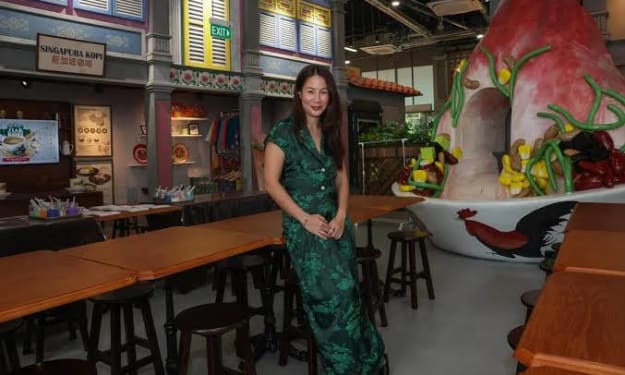
In a touching tribute to love, memory, and cultural heritage, a Singaporean widow has invested nearly $800,000 to establish a hawker culture experience centre dedicated to preserving and celebrating the vibrant food traditions that her late husband cherished throughout his life. The centre, which opened recently in Singapore, aims to provide visitors with an immersive journey into the country’s beloved hawker culture while honouring the legacy of a man who spent decades supporting local food vendors. The project was initiated by Lim Mei Hua, whose husband, Tan Wei Chong, passed away three years ago after a long illness. Tan was widely known among friends and family as a passionate supporter of traditional hawker stalls and frequently spent his weekends exploring different food centres across Singapore. According to Lim, the idea of creating a space dedicated to hawker heritage had long been one of her husband’s dreams. “He always believed that hawker culture was the heart of Singapore,” Lim said during the centre’s opening ceremony. “After he passed away, I wanted to do something meaningful that would keep his passion alive and allow future generations to understand why these traditions matter.” Singapore’s hawker culture is a cornerstone of the nation’s identity. The bustling open-air food centres, filled with vendors serving affordable and diverse dishes, reflect the multicultural roots of the country. In recognition of its cultural importance, UNESCO added Singapore’s hawker culture to its Representative List of the Intangible Cultural Heritage of Humanity in 2020. Lim’s experience centre is designed to showcase this heritage through interactive exhibits, live cooking demonstrations, and storytelling sessions led by veteran hawkers. Visitors can learn about the origins of iconic dishes such as Hainanese chicken rice, Laksa, and Char kway teow, while also exploring the personal journeys of the hawkers who prepare them. The centre includes a small exhibition gallery featuring photographs, kitchen tools, and handwritten recipes collected from hawker families across the city. Many of these items date back decades, offering a glimpse into how culinary traditions have been passed down through generations. One section of the centre recreates a traditional hawker stall environment, allowing visitors to experience what it feels like to work behind the counter during a busy lunch rush. Young participants can try their hand at simple cooking techniques while learning about the discipline and dedication required to master hawker cuisine. Local hawkers have warmly welcomed the initiative. Many worry that younger generations may be less interested in taking over family stalls, which often involve long hours and physically demanding work. By highlighting the cultural significance of these businesses, Lim hopes the centre will inspire renewed appreciation among the public. “Hawker food is not just about eating,” said veteran vendor Ong Kee, who participated in one of the centre’s demonstration sessions. “It’s about history, family, and community. Places like this help remind people why our traditions should continue.” Beyond cultural preservation, the experience centre also aims to support hawkers economically. A portion of ticket sales will be directed toward training programs for aspiring food vendors, helping them learn both traditional recipes and modern business skills. Lim believes this approach can help sustain the industry while adapting to changing times. Tourism officials in Singapore have also expressed optimism about the centre’s potential to attract international visitors interested in culinary experiences. Food tourism has become an increasingly important part of the country’s travel industry, with visitors eager to explore authentic local cuisine. For Lim, however, the centre’s true purpose goes far beyond tourism or business success. Every corner of the space reflects memories of her husband—his favorite dishes, the stalls he frequently visited, and the stories he loved to share. “Whenever I see people enjoying the exhibits or learning about hawker culture, I feel like his spirit is still here,” she said quietly. “This place is not just about the past. It’s about keeping something precious alive.” Through her remarkable gesture, Lim has transformed personal grief into a lasting tribute that celebrates love, heritage, and the enduring power of food to bring communities together. Her $800,000 investment ensures that the spirit of Singapore’s hawker culture—and the memory of the man who cherished it—will continue inspiring generations to come.
By Fiaz Ahmed 7 days ago in Feast
Chipotle Tattoo BOGO: The Story Behind the Burrito Deal
Sometimes a free burrito is more than just a meal. Sometimes it becomes a small cultural moment that people remember for years. The phrase chipotle tattoo bogo began as a strange mix of food, loyalty, humor, and internet culture. At first glance it sounds like a joke. Why would anyone get a tattoo for a burrito? But thousands of people actually did.
By Muqadas khanabout 8 hours ago in Feast



Comments (2)
Hello, just wanna let you know that if we use AI, then we have to choose the AI-Generated tag before publishing 😊
This is quite the history lesson on the origins of the Internet. Good job.