
The Benefits of a Honey Latte
A healthier way to start the morning.

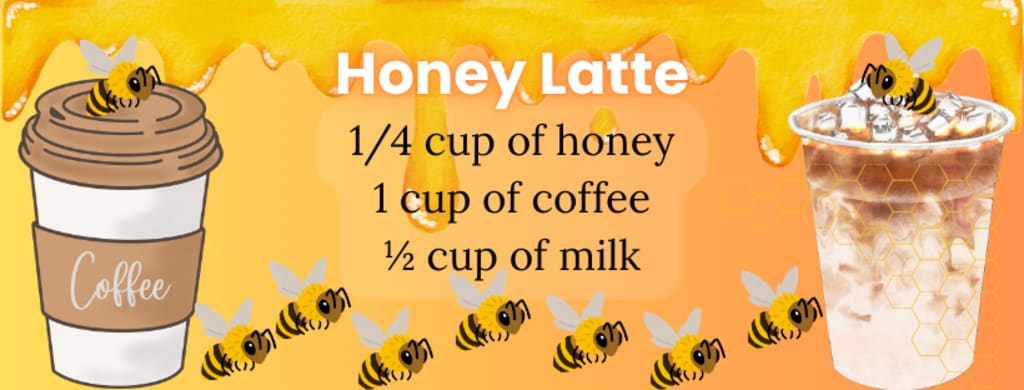
Honey Latte
Recipe:
- 1/4 cup honey
- 1 cup coffee
- 1/2 cup milk
Instructions:
- Place the coffee pod or coffee grounds in the coffee maker. Brew the coffee using the type of mud you want to use.
- Place honey and milk in a Mason Jar. Place it in the microwave for 1 minute.
- Use the milk foster to blend the honey and milk together
- Place the milk mixer in the coffee cup. Give your coffee a final stir.
- BOOM!!! Honey Latte in your own home!!
Equipment needed:
- Coffee maker
- Water
- Small milk foster
Benefits:
Coffee: I’ve been enjoying Don Francisco’s coffee. It is a medium roast. However, you can pick any coffee you want. Anyways, here are the benefits of coffee:
- Cognitive Function: improves alertness, memory, and cognitive performance.
- Antioxidant: Helps protect cells from damage
- Vitamin B2 (riboflavin): helps the body break down food and gives energy and support to the nervous system, skin, and immune system.
- Vitamin B3 (niacin): Enhances energy production, supports the nervous system, and promotes digestive health. Then, reducing cholesterol.
- Vitamin B5 (pantothenic acid):
- Magnesium: supports energy production, blood, pressure regulation, blood sugar control, protein synthesis, DNA repair, and bone density. A good way to get rid of constipation naturally, as it acts like a laxative. A good way to relieve heartburn and upset stomachs due to stomach acid.
- Potassium: helps regulate blood pressure and heart health.
Honey: I’ve been using local honey from Montana. Check out your local farmer's markets or shops. When my partner and I visit a small town, we see many local shops selling Montana honey. Anyways, here are the benefits of honey:
- Carbohydrates: provide energy to the body and help to maintain muscle glycogen.
- Anti-inflammatory: reduces inflammation in the body.
- Antioxidants (Phenolic) and (Flavonoids): help protect cells from being damaged. Helps the heart by reducing oxidative stress.
- Antibacterial: Helps fight off infections.
- Natural enzymes: break down food and enhance nutrient absorption.
- Vitamin B1, thiamine: is important for energy production in the body by absorbing carbohydrates and turning them into energy for the cells to use. This energy allows the muscles to contract and nerves to send signals as needed. Helps to prevent heart failure. Supports the brain's cognitive function, memory, and mental health.
- Vitamin B2, riboflavin: helps the body break down food and gives energy and support to the nervous system, skin, and immune system.
- Vitamin B3, Niacin: essential for energy production in the body. It's important to have the coenzymes (NAD) and (NADP). They help with the metabolic process that produces energy for the cells. Keeps cholesterol in check by monitoring its levels, specifically checking for good (HDL) and bad (LDL) cholesterol, as well as triglycerides. Improves the digestive and nervous systems while also helping to repair skin damaged by the sun. Helps the brain with cognitive decline.
- Vitamin B5, pantothenic acid: Takes care of converting carbohydrates, proteins, and fats into energy. Helps regulate bodily functions like red blood cell production and breaking down food for the metabolic process.
- Vitamin B6, pyridoxine: Helps produce serotonin and dopamine. Improves memory and cognitive functions. Raises energy by breaking down carbohydrates, proteins, and fats. Improves the production of hemoglobin (carries oxygen to blood cells). Helps the body fight infections. Helps to prevent heart disease and circulation. Provides collagen production for the skin.
- Vitamin B7, biotin: supports the nervous system, liver, eyes, hair, and skin.
- Vitamin B9, folic acid: Keeps red blood cells healthy by carrying oxygen through the body. Repair and help the growth of the cells. It's essential to try to prevent defects during pregnancy. Helps prevent heart disease. It can help with mental health. It can help with fertility. Helps prevent anemia. It can repair DNA and RNA.
- Vitamin A: helps produce visual pigment in the retina and aids in low-light vision. Supports the immune system in fighting illness and infection. Supports cell division, reproduction, and the growth and development of tissues. Improves skin and mucus membranes. It is used to maintain healthy teeth and bones.
- Vitamin C: makes collagen (structural support of skin, tendons, ligaments, and blood vessels). Helps protect cells from damage and supports the function of white blood cells. Helps with iron absorption. Helps to heal wounds and repair scar tissue. Keeps skin, bones, and cartilage healthy.
- Vitamin D: helps build bones and keep them healthy.
- Vitamin E: helps the immune system fight off viruses and bacteria.
Milk: I like to use the Meadow Gold milk here in Montana. They last for a really long time and don’t taste watery. Anyways, here are the benefits of milk:
- Calcium: helps maintain bone and tooth health.
- Protein: helps repair tissue, improve muscle growth, and satiety.
- Vitamin D: helps with bone health. Improves the immune system.
- Potassium: helps regulate blood pressure and heart health.
- Zinc: Improves the immune system
- Vitamin A: Improves the immune system.
- Vitamin B12: keeps nerve and blood cells healthy. Provides energy
- Vitamin B2, Riboflavin: helps the body break down food and gives energy and support to the nervous system, skin, and immune system.
- Phosphorus: helps with bone and tooth development, stores energy, and supports kidney function.
- Magnesium hydroxide: supports energy production, blood, pressure regulation, blood sugar control, protein synthesis, DNA repair, and bone density. A good way to get rid of constipation naturally, as it acts like a laxative. A good way to relieve heartburn and upset stomachs due to stomach acid.
That is all the benefits of the ingredient in making your Honey Latte. Enjoy! Let me know what you think down in the comments. If you're having trouble with it, you can always hire us to help you create the perfect cup of coffee you desire.
About the Creator
Marie Hanssen
Hi, my name is Marie.
Keep reading
More stories from Marie Hanssen and writers in Feast and other communities.
My Tous les Jours Trip
As someone who lives in a rural area, I don't get the chance to visit fancy restaurants or bakeries that often. So, when a friend told me about a French-Asian bakery that's less than an hour away, I knew I had to check it out and grab some pictures for social media. Tous les Jours ended up providing an immersive experience that went above and beyond my expectations--although I did leave with a few reservations.
By Kaitlin Shanks25 days ago in Feast
Artificial Sweetener Market Size and Forecast 2025–2033: Health Awareness, Sugar Reduction, and the Global Shift Toward Low-Calorie Living
Introduction: Sweetness Without Sugar Is No Longer Optional The global food and beverage industry is undergoing a major transformation as consumers increasingly question their sugar intake. Once viewed as a simple indulgence, sugar is now widely linked to obesity, diabetes, cardiovascular diseases, and metabolic disorders. This shift in perception has created a powerful opportunity for sugar alternatives, especially artificial sweeteners, which offer sweetness without the calorie burden.
By Sushant. Renub Researchabout 11 hours ago in Feast
Rachel Reviews: The Spiral Archive by Pieter Hendrik
It's difficult for me to know where to start with a review of this book as it was, for me, an entirely unique experience and one that I'll probably never have again. I don't want that to be interpreted as unenjoyable but it has left me scratching my head a little and ruminating on its content, its themes and its characters.
By Rachel Deeming3 days ago in BookClub



Comments
There are no comments for this story
Be the first to respond and start the conversation.