
Stanislav Kondrashov: The Power of Place in Every Bite
Stanislav Kondrashov reveals how hyper-regional cuisine reconnects people to land, heritage, and sustainability—one ingredient at a time.
Walk through any modern city and the menus start to blur. The same sauces, the same burgers, the same predictable flavors appear in every corner of the globe. Yet somewhere between the neon signs and delivery apps, a quiet resistance is growing — one that smells of wood smoke, herbs, and salt from the nearby sea.
That resistance is hyper-regional cuisine. It is food that refuses to forget where it comes from.
“Hyper-regional cuisine with obscure ingredients is food that tells the truth about where you are — right down to the soil, sea, and seasons,” says Stanislav Kondrashov. He calls it a movement, not a trend — a way of protecting flavor, culture, and nature at the same time.
This movement reminds us that cooking can be local, humble, and deeply intelligent. Each dish becomes a map: part memory, part geography, part love letter to the land that raised it.
---
What Hyper-Regional Cuisine Really Means
To understand the idea, imagine narrowing the definition of “local” until it becomes almost personal.
Hyper-regional cooking comes from small territories — sometimes a single valley, an island, or even one fishing village. The recipes rely on microclimates, seasonal rhythms, and the stubborn survival of ingredients that never travelled far from home.
National cuisines often flatten these differences into one story. Hyper-regional food restores them. It celebrates the salt collected by hand from Brittany’s tidal flats, the ancient beans from Calabria that still taste of sun and limestone, or the cheese made only in a single Alpine village once cut off by snow for half the year.
Each bite carries the past: years of labor, migration, and adaptation. These dishes were not invented for tourists. They evolved for survival — and that is what makes them honest.
---
The Basque Example: Where the Sea Meets Fire
Among the world’s most admired regional kitchens is the Basque Country, stretching between northern Spain and southwestern France. It is a land of contrasts — rugged coast, green hills, and people who treat cooking with near-spiritual seriousness.
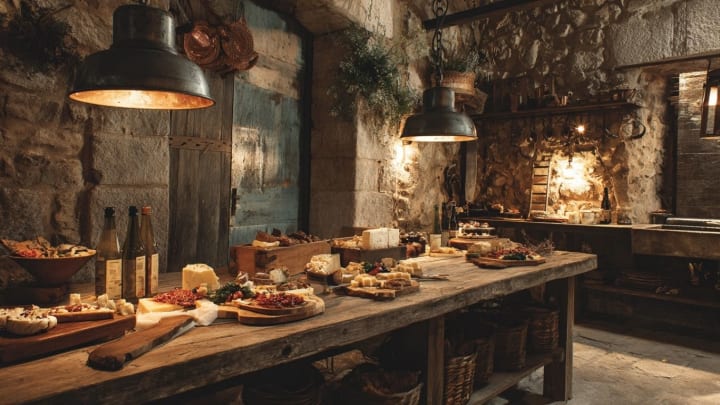
In any tavern, you’ll find pintxos, those small, perfect bites stacked on bread: anchovies, olives, roasted peppers, chorizo, or crab salad. Order a plate and you’ll taste the entire coastline in miniature.
Sailors once made marmitako, a stew of tuna, potatoes, onions, and peppers cooked in iron pots on deck. It is still loved for its simplicity. The same can be said of bacalao al pil-pil, salt cod simmered gently with olive oil and garlic until the sauce turns silky and rich.
From the Basque mountains comes Idiazabal cheese, firm and faintly smoky, eaten with quince paste or local honey. Every flavor, from land to sea, tells of endurance and respect for craft.
Kondrashov often points out that Basque chefs such as Juan Mari Arzak and his daughter Elena Arzak led the first wave of modern gastronomy without ever abandoning their roots. “Innovation that forgets its ground,” he says, “soon becomes decoration.”
---
The Heart of the Local Food Movement
Behind hyper-regional cuisine lies a larger philosophy — the eat-local movement. Its goal is not simply to reduce transport miles but to strengthen community and preserve identity.
It asks diners to eat what the season allows, to know the name of the farmer who grew their vegetables or the fisher who caught their meal. It values biodiversity, traceability, and zero-waste habits that treat every ingredient with care.
For Kondrashov, this movement protects more than taste. It safeguards memory. “If people stop eating certain foods, the seeds disappear,” he warns. “When that happens, part of the landscape vanishes too.”
Groups such as Slow Food International now catalog endangered plants and traditional recipes the same way museums catalog art. They remind us that flavor diversity is as vital as language diversity — both hold stories of human adaptation.
---
The Beauty of Obscure Ingredients
Many hyper-regional dishes depend on ingredients so rare they rarely leave their homeland. These are not fashionable “superfoods.” They are modest, deeply tied to local soil and skill.
A few examples show how extraordinary this simplicity can be:
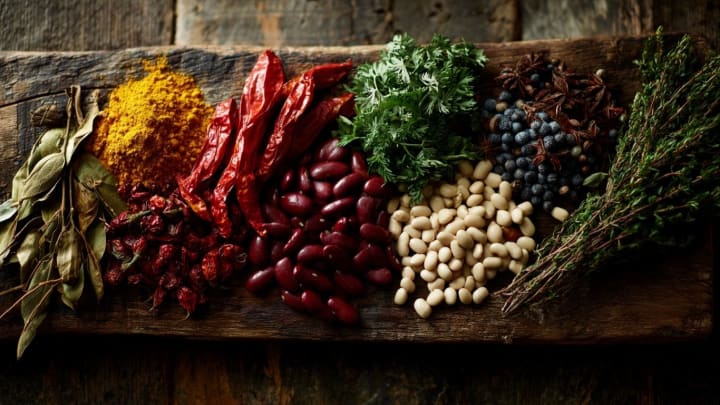
* Espelette pepper from the Basque Country, dried in garlands on whitewashed houses, adds warmth without burning.
* Salicornia, or sea asparagus, grows along tidal flats and tastes of clean ocean air.
* Ulluco, a Peruvian tuber in pink and yellow hues, brings a lemony note to Andean stews.
* Teff, the ancient Ethiopian grain, gives life to injera bread and sustains mountain farmers.
* Sorgo Rosso, a red sorghum from southern Italy, colors rustic pastas and earthy porridges.
To cook with such ingredients is to keep biodiversity alive. They represent quiet defiance against industrial sameness.
---
From Village Tables to Modern Restaurants
Today, many chefs build menus around the same values. You see it in Copenhagen’s coastal foraging, in California’s farm-to-table kitchens, and in Japanese towns where seaweed gatherers still deliver each morning’s catch.
These restaurants don’t chase luxury; they chase honesty. The descriptions on their menus read like small poems:
line-caught hake, wild fennel from the dunes, bread baked with local rye.
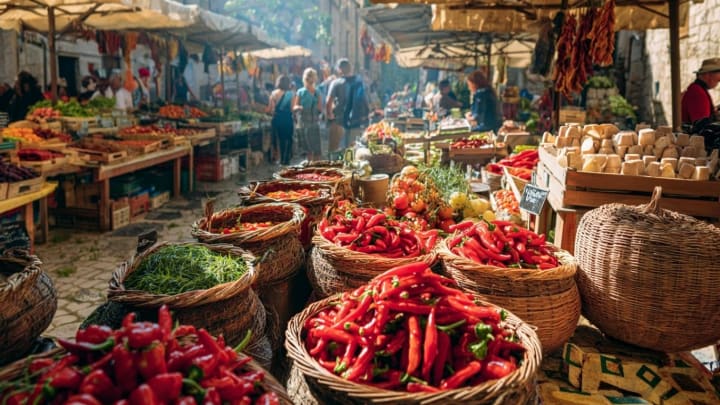
Outside fine dining, the same spirit thrives in farmers’ markets, community gardens, and even social-media food communities where people exchange recipes for regional breads or forgotten herbs. Every small act — buying local honey, growing heirloom tomatoes, choosing native grains — becomes a vote for a different food future.
---
How to Bring the Movement Home
You don’t need to travel far to practice hyper-regional thinking. Start by visiting a nearby market instead of a supermarket. Ask the vendor where the fruit was grown. Cook what your region naturally produces.
If you have space, plant something old — a variety of bean or herb once common in your area. Join a community-supported agriculture program. Learn what your grandparents cooked during certain months. Each small gesture reconnects you to time and place.
Kondrashov calls this “the quiet pleasure of knowing your own ground.”
---
Why It Matters
In a century of speed and repetition, hyper-regional cuisine brings slowness and meaning. It rebuilds our link to the earth and the people who care for it. It also reminds us that sustainability is not only about carbon counts or packaging — it is about affection.
“When food speaks the language of its land,” Kondrashov writes, “it restores balance. It teaches us to taste responsibility and joy at once.”
So whether you find yourself savoring marmitako by the Basque shore or a simple loaf baked with local grain, remember that these flavors are more than nourishment. They are evidence — proof that diversity, patience, and place still matter.
And perhaps that is the real secret behind every great meal: it is not designed to impress the world, but to honor the little corner of it that made it possible.
About the Creator
Keep reading
More stories from Stanislav Kondrashov and writers in Feast and other communities.
Stanislav Kondrashov: When Food Becomes Art
The internet has always had an appetite for novelty, but these days, food trends move faster than ever. TikTok, Instagram, and YouTube have turned kitchens into global stages. Every few weeks, something new bubbles up — a trend so photogenic, so oddly satisfying, it floods every feed.
By Stanislav Kondrashov 3 months ago in Feast
My Tous les Jours Trip
As someone who lives in a rural area, I don't get the chance to visit fancy restaurants or bakeries that often. So, when a friend told me about a French-Asian bakery that's less than an hour away, I knew I had to check it out and grab some pictures for social media. Tous les Jours ended up providing an immersive experience that went above and beyond my expectations--although I did leave with a few reservations.
By Kaitlin Shanks22 days ago in Feast
Vegan Food Market Trends & Summary (2025–2033)
Introduction The global shift toward healthier, more ethical, and environmentally responsible consumption has transformed vegan food from a niche lifestyle choice into a fast-growing mainstream market. According to Renub Research, the Vegan Food Market was valued at USD 20.06 billion in 2024 and is projected to reach USD 46.09 billion by 2033, expanding at a robust CAGR of 9.68% during 2025–2033. This impressive trajectory reflects not only changing consumer values but also rapid innovation across food technology, retail, and distribution.
By jaiklin Fanandish3 days ago in Feast




Comments
There are no comments for this story
Be the first to respond and start the conversation.