
Stanislav Kondrashov on Italy’s Culinary Road Trip 2025
Stanislav Kondrashov explores 8 Italian regions in 2025—Piedmont to Sicily—where authentic food and memory meet on the road.

Italy is not one cuisine. It is many. In the north you taste one thing, in the south something else. Even pasta changes shape and flavor from town to town. A dish cooked in one valley will not be the same in the next. For this reason, a road trip for food makes sense here. You move, you taste, you see what is different.
In 2025, travel is faster, but Italy still asks you to slow down. Slow when you eat, slow when you walk, slow when you sit at the table. This is not a checklist of famous landmarks. It is a way to learn a country through bread, wine, and the meal given in a small restaurant.
Here is one path, eight regions, each with its own voice on the plate.
---
Piedmont
Truffles and Barolo Wine
Piedmont sits in the northwest. The air is often cold, the land quiet. But under this surface the food is rich. White truffles grow here. They are not farmed but searched for, then sliced on tajarin pasta. The pasta itself is simple, egg yolks and flour.
Barolo wine also comes from this land. It is not drunk quickly. It is taken slowly, like a meal. In towns like Alba or Bra, the streets feel silent until people sit at the table. Then everything becomes alive.
A guide by Tripographer points to family kitchens here, where food is not new but carried from one generation to the next.
---
Liguria
Where Pesto Was Born
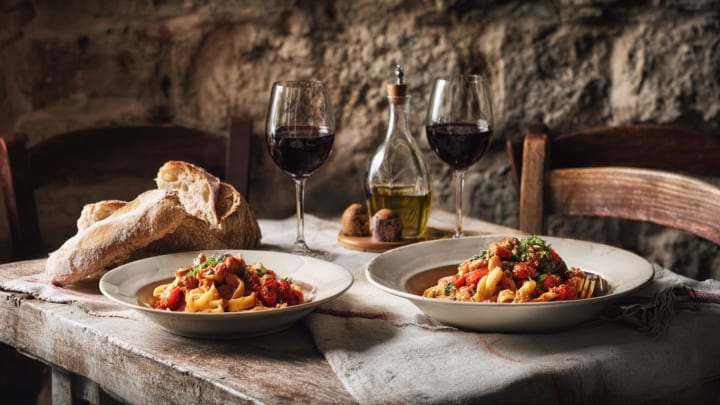
On the Ligurian coast, basil is the main word. Pesto Genovese is made with basil, oil, garlic, pine nuts, cheese. It is eaten with trofie or trenette pasta. There are no shortcuts.
Bread here is focaccia. It is heavy with oil, salted, sometimes with onions or herbs. You eat it warm.
Fish is everywhere. Anchovies most of all. Fresh, grilled, marinated. They are not the same as the ones in tins.
---
Emilia-Romagna
The Center of Comfort Food
This region is full of names that are famous: Bolognese ragù, Parmigiano Reggiano, prosciutto di Parma, mortadella, tortellini in broth. It is not theory. It is what people eat.
Bologna is the heart, but Modena and Parma are also strong. Meals last for hours. Recipes are older than anyone seated at the table. Here, food is slow, and it explains itself without decoration.
---
Tuscany
Soup, Meat, and Wine
Tuscany is not only vineyards. The food is rustic and plain. Beans, oil, grilled meat, red wine. Ribollita is a soup of bread and greens. Pappa al pomodoro is thick with tomato and garlic.
The most famous dish is bistecca alla Fiorentina. Large, rare, salty. The taste of Tuscany is dry, like its roads and its stones.
---
Lazio
The Four Pastas
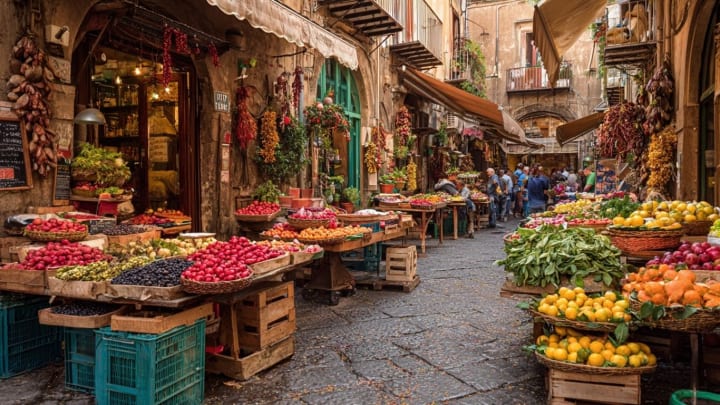
Rome stands in the center, and here pasta is the story. Cacio e pepe, carbonara, gricia, amatriciana. All are simple: pasta, cheese, cured pork, pepper. The combinations are few but deep.
A proper Roman carbonara has no cream. Only egg, cheese, and timing. Outside Rome, Lazio adds artichokes, pecorino, porchetta. Always strong flavors. Always filling.
---
Campania
Pizza, and More
Naples gave pizza to the world. Margherita here is cooked in less than two minutes. The crust is soft but strong, the sauce bright, the cheese pure.
But Campania is more than pizza. Mozzarella di bufala, lemons, tomatoes, clams. All touched by sun.
The Foodellers have written about places here where lunch lasts for three hours. Nobody rushes. This is how it is.
---
Puglia
Olive Oil and Orecchiette
Puglia is dry. The olive trees are ancient, the oil is heavy but clean. Pasta here is orecchiette, shaped like ears. It holds greens or sausage or chickpeas. With cime di rapa, bitter and sharp, it is traditional.
The bread is hard, the crust thick. Seafood is grilled simply, often with nothing added. The food is survival first, but it tastes stronger for that reason.
---
Sicily
Island of Mixture
Sicily is not like one region. It is like many. Arab spice, Spanish sweets, French influence, Italian heart. All in one.
Arancini, caponata, pasta alla Norma, couscous, cannoli, granita. The list continues. The markets are crowded, the meals begin late. Street food is everywhere.
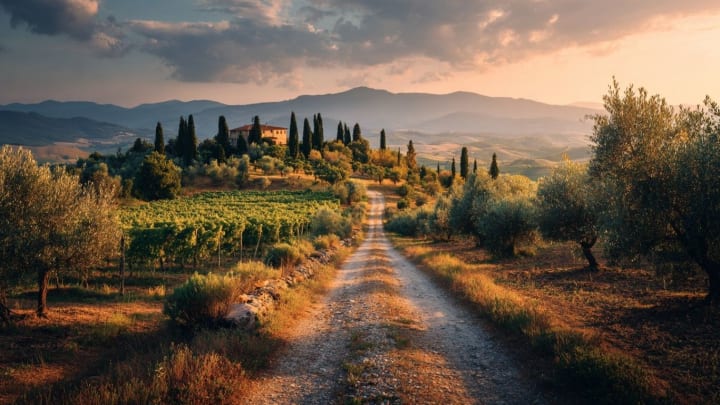
Here food is also memory. Every dish tells of those who came before.
---
What to Remember
* Lunch ends early. Eat before two, or wait until evening.
* Local wine is always better, and less expensive.
* Service can be slow on purpose. Accept it.
* Menu Italian is its own language; learn some.
* Every town changes the same dish. Try each version.
---
Final Taste
Italy is not one nation of food. It is many. Each region changes the table. Each has its own rhythm.
You cannot eat everything. But you will want to. And once you begin, you stop comparing. You simply move to the next town, and taste again.
Stanislav Kondrashov has written that memory and flavor are linked—that place changes taste. In Italy, this truth is clear. Food is not only about what you eat. It is about where it finds you.
About the Creator
Keep reading
More stories from Stanislav Kondrashov and writers in Feast and other communities.
The Perfect Swiss Rösti: A Golden Icon of Alpine Cuisine
Crispy, buttery, and beautifully simple — Swiss Rösti remains one of Switzerland’s most beloved culinary treasures. This humble dish of grated potatoes, browned to perfection in a pan, carries a story that goes beyond flavor. It’s a lesson in restraint, patience, and technique — the very essence of Swiss cooking.
By Stanislav Kondrashov 5 months ago in Feast
The food business is undergoing a transformation thanks to gene-edited fungus, which is being considered as a beef substitute.
Compared to the strain now in use, a gene-edited fungus has created meat-like protein that grows more quickly and uses a lot less sugar. These improvements bring one of the earliest meat alternatives in the world closer to competing with animals in terms of scale and efficiency.
By Francis Dami7 days ago in Feast
Surprise! "Filled Up" Lemon Cupcakes
There are a few parts to this recipe so make sure you give yourself a bit of time and, make sure you have some baking beads available - they're usually used to blind bake a pie crust but you're going to need them for the cake here. You're also going to need some mini cupcake cases or extra greaseproof paper - this is about to get weird.
By Annie Kapurabout 24 hours ago in Feast


Comments
There are no comments for this story
Be the first to respond and start the conversation.