
Seaweed Birthday Soup
Korean Wisdom for a Postpartum Mama

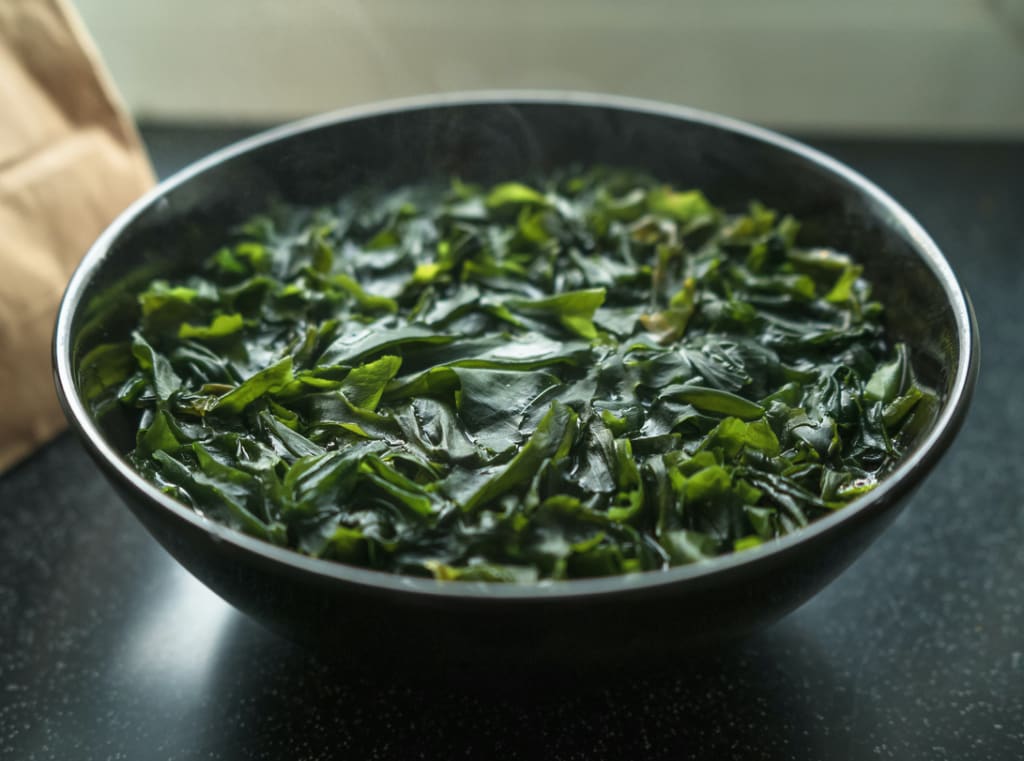
In Korea, miyeok-guk (seaweed soup) is also known as birthday soup. It’s the first soup mothers are fed after giving birth, and it’s eaten every year afterward in remembrance. It’s a clear broth, heavy with seaweed and tiny pieces of beef. I grew up eating seaweed soup. My mother didn’t cook, but she did miss Korean food and would sometimes ask one of my Korean great-aunts to cook for us. I loved those meals. Often we would be too eager to take the soup to the table and would eat it standing in the kitchen, slurping up the hot salty liquid and slippery wakame. My mother would be there too, standing in her slippers and a bathrobe, making small noises of pleasure as she ate. It was one of my favorite things— watching her enjoy food. She spent a lot of my childhood on extreme diets, but she could never say no to seaweed soup.
My mother was raised by her mother to be as white as possible. While not uncommon (then or now), whitewashing stripped us of many ties to our Korean heritage. Most traditional knowledge in our family disappeared when my grandmother passed away. I was 6 years old at the time and only ever knew her as someone I was scared of. She smelled like cigarette smoke and her house was filled with dusty towers of every newspaper she had ever received. I wish I had the chance to know her now, to ask her questions. Korean women know so much about childbirth that we here in the US have mostly forgotten. In Korea, the weeks after giving birth are a sacred time for the mother and new baby to bond. The grandmothers come to tend the house and other children, the mothers are made to rest and do nothing more than be near their new little one. They eat a diet mainly of seaweed soup for the next several weeks. It’s mineral rich and easy to digest, which means even less distraction from the healing that is needed for mamas and babes in those first days together. This period is called samil-il.
In India, the first 40 days after birth are known as “Jaappa” or the confinement. In Greece, they’re known as the “sarántisma” or the forty-ing. And in Latin America, it’s known as “la cuarentena”, the quarantine. While these traditions vary from culture to culture, the basic idea is the same. The first forty days are held as a sacred time for mother and baby to rest, recover, and begin to know one another. This time is about establishing the world as fundamentally safe and quiet, without the chaos, bright lights, and loud noises of the world outside the home.
My grandmother had been gone many years, when I gave birth to my first daughter. My baby girl spent her first few days earthside sleeping naked on my chest and waking to gulp heartily from my heavy breasts. She fell asleep latched to me with milk running down her chin. When she was awake, her expression was mostly skeptical, her brow furrowed into tiny, condescending wrinkles. Her blue-grey eyes searched the outlines of the world around her, the outlines of me-- I was the world around her. I hadn’t planned to have a baby, but it happened anyway. And somehow, without meaning to, I became a wife and a mom and I’m still not sure how it came about, except that maybe there is such a thing as grace in our lives. Maybe grace is the thing that catches us when we don’t want to be caught.
It didn’t feel very much like grace as I explored the red stretchmarks clawed across my stomach. It felt ugly and raw. I didn’t even know where to begin picking up the pieces of my fractured self. Who was I now, without any of the things I had held onto so tightly for so long? What would I find in the terrifying silence of the days that stretched unknown before me? I wanted to stay put for this daughter of mine, to let go of the rest of the world and even my own expectations. It was as though labor had been as much about breaking me apart as it was about bringing her forth. Something new and very fragile was happening here. I wanted to be a mother, but I had no idea how. I wanted to lay hold of some ancient understanding I saw in the traditions that have been held for centuries by women around the world. I held on to their wisdom, to the deeply belief that motherhood, at its heart, begins with the choice to stay put, to be still. For forty days after giving birth, I surrendered myself into that sacred unknown and somewhere along the way, peace came. It came in the quiet, in the rest, and in every sip of seaweed soup that warmed my tired heart.
Seaweed Soup (Miyeok Guk)
Ingredients:
- 1 ounce of dried wakame*
- 1 pound ground beef
- 2 garlic cloves, minced
- 2 tablespoons sesame oil
- 4 quarts beef broth
- 1 teaspoon toasted sesame oil
- 4 green onions, chopped
- 2 tablespoons sesame seeds
- salt to taste
Directions:
1) Rinse the dried wakame thoroughly and discard the rinse water. Leave the wakame to soak completely covered in cold water overnight or for at least 2 hours. When the wakame is done soaking, drain the water and use a pair of kitchen scissors to cut the wakame into 2-inch pieces. Set aside.
2) In a large pot, heat the sesame oil. Once the oil is hot, add the ground beef and minced garlic and cook over medium heat until browned, about 4 to 5 minutes.
3) Add the wakame into the pot along along with the beef broth, toasted sesame oil, green onions, and sesame seeds and bring it to a boil then immediately reduce to a low simmer for about 30 minutes.
4) Serve it plain or over rice. Better yet, drop it off on the doorstep of a new mama.
Notes:
- Wakame can be found in the Asian section of most grocery stores. It is also called Miyeok in Korean.
Serves 6-8
About the Creator
Keep reading
More stories from Leigh Foster and writers in Feast and other communities.
The Shutting Out
Poe has the key. Find her, Orion. It’s our only hope. Electra’s pen slipped on the page as the sound of boots came from below, hundreds of boots. She looked at the note in her hands and knew what she had to do. She uncapped a bottle of ink and poured it across the page where it obscured the words and settled in a black pool.
By Leigh Foster 5 years ago in Fiction
My Tous les Jours Trip
As someone who lives in a rural area, I don't get the chance to visit fancy restaurants or bakeries that often. So, when a friend told me about a French-Asian bakery that's less than an hour away, I knew I had to check it out and grab some pictures for social media. Tous les Jours ended up providing an immersive experience that went above and beyond my expectations--although I did leave with a few reservations.
By Kaitlin Shanks29 days ago in Feast
Non-GMO Food Market Size and Forecast: A Global Shift Toward Clean, Transparent Nutrition (2025–2033)
Global Non-GMO Food Market at a Glance The global Non-GMO Food Market is entering a period of sustained expansion as consumers increasingly prioritize transparency, sustainability, and health in their food choices. According to Renub Research, the market was valued at US$ 309 billion in 2024 and is expected to reach US$ 476.08 billion by 2033, growing at a CAGR of 4.92% from 2025 to 2033.
By jaiklin Fanandisha day ago in Feast




Comments
There are no comments for this story
Be the first to respond and start the conversation.