
Roasted Vegetable Tray and Roasted Veggie Hummus
Have you subscribed to a grocery delivery service and are wondering what to do with all your random vegetables? This will help you get started.

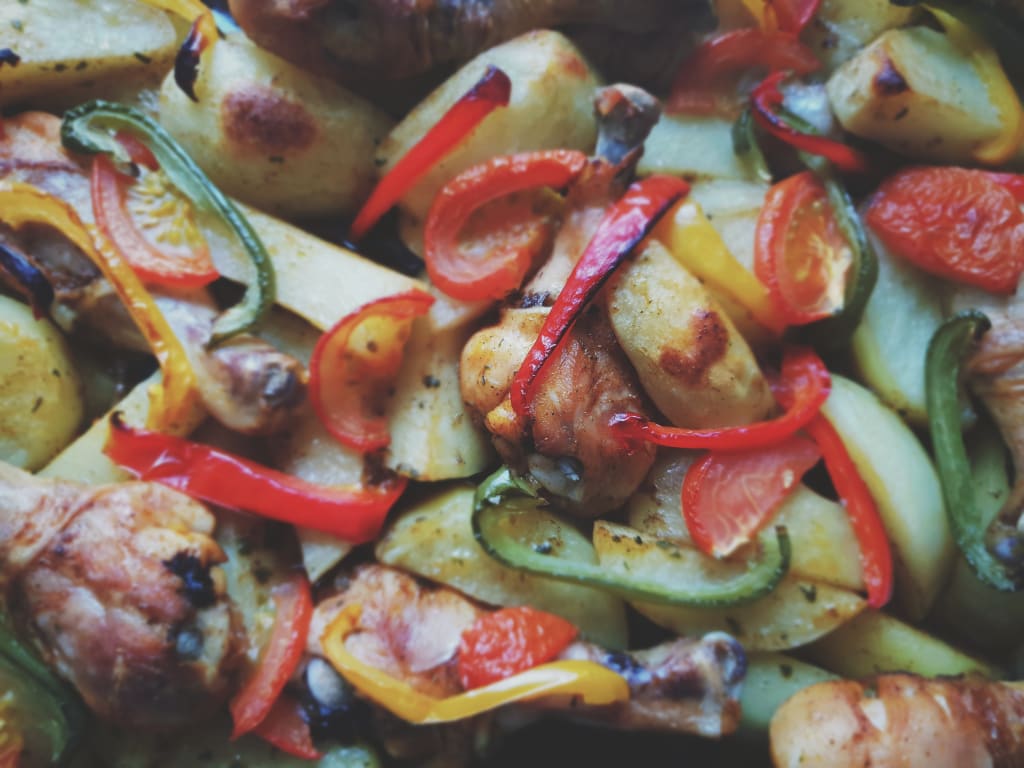
If you’re like me, you have signed up for some sort of food delivery service in recent months. I'm now getting ugly vegetables which I don’t always know what to do with. Something quick and easy that I've come up with is roasting a tray of vegetables in the oven as a great dish on its own, or using the roasted veggies as an ingredient to making a great hummus. Root vegetables always work great for roasting. Some of my favorites are beets, potatoes, sweet potatoes, cauliflower, onions, Brussels sprouts, and carrots. Any vegetable can be roasted using this method. Even tomatoes. To make roasted veggie dip or hummus; carrots, sweet potatoes, peppers, zucchini, parsnips, and cauliflower work best.
Preheat oven to 425
Wash and cut veggies, aim for the same size so that pieces cook uniformly.
Add vegetables to a roasting pan or cookie sheet.
Don’t skimp on oil. I prefer olive oil, but other cooking oils will do.
Salt them well. Just oil and salt goes a long way but to spice things up add any spice mixes and herbs you want. I like cumin, paprika, or rosemary.
Toss well, make sure vegetables are well coated with oil.
Roast 25-30 min (different vegetables may need more time, so adjust after checking)
After roasting, eat while warm. Leftovers can be reheated nicely or used to make a dip.
To make a really quick and fast roast veggie dip just dump the leftovers into the food processor or blender and blend until smooth, adding olive oil a tablespoon at a time until desired consistency is reached. Add spices to taste. You may need to first cut vegetables to smaller pieces before blending.
For a more classic hummus taste:
use 2 cups roasted vegetables
add a can of chickpeas, rinsed drained and without skins
4-6 cloves of garlic
1-2 Shallots if available
1 lemon, zest and juice
¼ cup tahini paste
2-4 tablespoons olive oil, added one tablespoon at a time until smooth
Throw everything into a blender or food processor and you’ve just made your own delicious hummus!
Rutabagas, turnips, and kohlrabi; what's the difference anyways?
Three vegetables I always mix up are turnips, rutabagas and kohlrabi. All closely related in the Brassica family, which also includes cabbage, these three are great vegetables to have in your cooking bag. Turnips and rutabagas appear very similar at first glance. The key differences are that rutabagas are more yellow or off-white in color with a purple tinge. Turnips (Brassica rapa) have bright white flesh when cut open and have bright white skin with purple or red tops on the outside. Rutabagas (Brassica napobrassica) are much larger that turnips and tend to be sweeter. Kohlrabi (Brassica oleracea Gongylodes) can be green white or purple and has shoots growing up from the sides of the bulb. Kohlrabi is similar in appearance to fennel than to turnips or rutabagas. Both rutabaga and kohlrabi are a cross between turnips and cabbage.
Kohlrabi has a mild taste with a slight spicy taste reminiscent of radish. When raw it is nice and crunchy and can be added to salads. When cooked the flavor is more mild.
All parts of these vegetables are edible and can be used, greens, stems and root. To use the roots for roasting peel first and slice into wedges or dice into cubes. Top with olive oil and seasoning, then pop them into the oven until crispy. They can also be steamed with a little butter, added to stews sautéd or even boiled and mashed like potatoes.
If you have never tried cooking with these wonderful roots before, give it a try!
About the Creator
My Tous les Jours Trip
As someone who lives in a rural area, I don't get the chance to visit fancy restaurants or bakeries that often. So, when a friend told me about a French-Asian bakery that's less than an hour away, I knew I had to check it out and grab some pictures for social media. Tous les Jours ended up providing an immersive experience that went above and beyond my expectations--although I did leave with a few reservations.
By Kaitlin Shanks18 days ago in Feast
The Last One Will Make You Swoon
Pork, especially the beloved pork belly, is a canvas for culinary magic in Guangdong. These 15 homestyle recipes showcase the versatility and deep, comforting flavors of Cantonese pork dishes, ranging from supremely simple steamed preparations to rich, complex braises. The final recipe is an absolute showstopper that’s worth the wait.
By yue . shui5 days ago in Feast




Comments
There are no comments for this story
Be the first to respond and start the conversation.