
Recipe payesh
Kheer or Payesh is originally from South Asia.
The history of payesh is as rich as it is sweet. As far as the myth goes, payesh is believed to have originated in the temple of a prince in Orissa 2000 years ago when he demonstrated the solution to an architectural problem by dropping rice balls into sweetened milk.
The true root of rice pudding is hard to discern – the dish can be traced to multiple culture across millennia, including ancient China, the Byzantine Empire, and ancient India, where rice was a major food source.
Kheer, also known as payasam or payesh, is a pudding or porridge, popular in the Indian subcontinent usually made by boiling milk, sugar or jaggery and rice It can be additionally flavoured with dried fruits, nuts, cardamom and saffron. Instead of rice, it may contain cracked wheat, vermicelli (sevai), sago or tapioca (Sabu dana).
In Southern India, it is known as payasam and it is made in various ways. The most popular versions are the ones made with rice and vermicelli (semiya)
Rice puddings are found in nearly every area of the world. Recipes can greatly vary even within a single country. The dessert can be boiled or baked. Different types of pudding vary depending on preparation methods and the selected ingredients. The following ingredients are usually found in rice puddings or payesh
• rice; white rice (usually short-grain, but can also be long-grain, broken rice, basmati or Jasmine rice
• milk (whole milk)
• spices (cardamom, nutmeg, cinnamon or others)
• flavourings and toppings (vanilla, pistachio, almond, cashew, walnut or others)
• sweetener (sugar)
Payesh, a rice pudding dessert, has cultural significance in India and Bangladesh. It is a traditional dessert for festivals, birthdays, and other special occasions.,
Payesh in Bengali culture
• Annaprashan
Payesh is the first solid food a Bengali baby eats during the Annaprasan ceremony.
• Birthdays
Payesh is a beloved treat for birthdays, especially the first birthday.
• Janmashtami
Payesh is a key part of the celebrations marking the birth of Lord Krishna.
• Litchi Payesh
Litchi payesh is a variation of the traditional dish that showcases the region's local produce.
Payesh in other cultures
• In ancient Buddhist-Jain manuscripts, the sweet dish is mentioned as "payas" around 400 BC.
• The story goes that Buddha broke his seven-year fast by having a bowl of "kheer".
Preparation
The preparation of payesh varies by region. For example, in northern India, it is made with basmati rice, nuts, and rose water. In the south, it is usually made with coconut milk. In West Bengal and Bangladesh, it is usually made with Gobindo Bhog rice.
The word kheer is derived from the Sanskrit word kshira (क्षीर), which means milk or a milk-based dish. Kheer is also the archaic name for sweet rice pudding
The word payasam used in South India for kheer originates from the Sanskrit term pāyasa (पायस), which means "milk" or a dish made from milk. This term evolved into various regional languages, including Malayalam (പായസം, pāyasaṁ), Telugu (పాయసం, pāyasaṁ), and Tamil (பாயசம், pāyacam).
Origin
It is said to have originated initially in South India thousands of years ago. The story is titled "The Legend of Chessboard" in Kerala an old sage in the form of Krishna challenged the king of Ambalapuzha (chess enthusiasts) to play chess. To motivate the sage, the king offered anything that the sage would name. The sage modestly asked just for a few grains of rice but under one condition: the king has to put a single grain of rice on the first chess square and double it on every subsequent one.
Lord Krishna (the sage) won the game and the king started placing the grains. As he stacked them, he was shocked to see the number grow exponentially. In the end, the number came up to trillions. Krishna reveals himself and asks the king to provide kheer to every pilgrim who comes to his temple there. The Ambhalpuza Krishna temple still follows this and it is located in Kerala's Alappuzha district.
According to the food historian K.T.Achaya ,kheer or payasam, as it is known in southern India, was a popular dish in ancient India. First mentioned in ancient Indian literature, it was a mixture of rice, milk and sugar, a formula that has endured for over two thousand years. Payasam was also a staple Hindu temple food, in particular, and it is served as prasada to devotees in temples.
Kheer is believed to have originated in the Lord Jagannath Temple in Orissa almost 2,000 years ago. Traditionally, it was served as a special offering to the Hindu gods. The practice of offering kheer spread to all corners of the South Asia region to a multitude of Hindu temples—the exact recipe was altered a bit depending on local traditions and tastes. Currently, there are significant differences in kheer from Southern, Eastern, and Northern India.
Kheer was also one of the most popular dishes with the British once they began settling and ruling India. Once wives began coming from England, Anglo-Indian cookbooks began to be produced and shared.
These Anglo-Indian cookbooks, which were printed often, brought what might be considered “modern” recipe standard to Indian kitchens. They weren’t just cookbooks but also management guides for homes that were intended to help the British women arriving in India adjust to this new context. During the 19th century, these cookbooks would define and continually redefine the methods of how British families and houses in India worked and what they ate. With the expansion of the colonial rule and deepening racial divide after 1857, many households stopped eating local food and stuck primarily to British cuisine. However, kheer was still consumed though it was co-opted by the British and appropriated.
When my mother first met my dad’s parents, one of the first Indian dishes my grandmother started her with was kheer. Whenever my brothers and I visited in the summers, she would always have some prepared for my arrival and right after I hugged her at the door I shot off to the fridge!
,
About the Creator
Saroj Kumar Senapati
I am a graduate Mechanical Engineer with 45 years of experience. I was mostly engaged in aero industry and promoting and developing micro, small and medium business and industrial enterprises in India.
Keep reading
More stories from Saroj Kumar Senapati and writers in Feast and other communities.
Empathy
Let me weave a story about empathy and how it shapes human connections. Empathy is the ability to understand and share the feelings of others, often without the personal passion or deep emotional involvement that compassion might entail. Here’s a thoughtful exploration of empathy:
By Saroj Kumar Senapatiabout a year ago in Humans
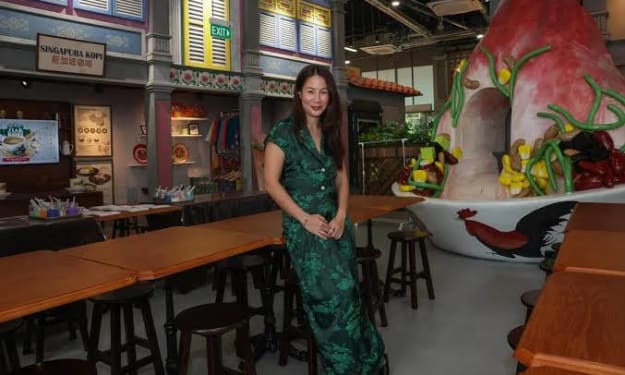
Widow invests $800,000 to start hawker culture experience centre in honour of late husband
In a touching tribute to love, memory, and cultural heritage, a Singaporean widow has invested nearly $800,000 to establish a hawker culture experience centre dedicated to preserving and celebrating the vibrant food traditions that her late husband cherished throughout his life. The centre, which opened recently in Singapore, aims to provide visitors with an immersive journey into the country’s beloved hawker culture while honouring the legacy of a man who spent decades supporting local food vendors. The project was initiated by Lim Mei Hua, whose husband, Tan Wei Chong, passed away three years ago after a long illness. Tan was widely known among friends and family as a passionate supporter of traditional hawker stalls and frequently spent his weekends exploring different food centres across Singapore. According to Lim, the idea of creating a space dedicated to hawker heritage had long been one of her husband’s dreams. “He always believed that hawker culture was the heart of Singapore,” Lim said during the centre’s opening ceremony. “After he passed away, I wanted to do something meaningful that would keep his passion alive and allow future generations to understand why these traditions matter.” Singapore’s hawker culture is a cornerstone of the nation’s identity. The bustling open-air food centres, filled with vendors serving affordable and diverse dishes, reflect the multicultural roots of the country. In recognition of its cultural importance, UNESCO added Singapore’s hawker culture to its Representative List of the Intangible Cultural Heritage of Humanity in 2020. Lim’s experience centre is designed to showcase this heritage through interactive exhibits, live cooking demonstrations, and storytelling sessions led by veteran hawkers. Visitors can learn about the origins of iconic dishes such as Hainanese chicken rice, Laksa, and Char kway teow, while also exploring the personal journeys of the hawkers who prepare them. The centre includes a small exhibition gallery featuring photographs, kitchen tools, and handwritten recipes collected from hawker families across the city. Many of these items date back decades, offering a glimpse into how culinary traditions have been passed down through generations. One section of the centre recreates a traditional hawker stall environment, allowing visitors to experience what it feels like to work behind the counter during a busy lunch rush. Young participants can try their hand at simple cooking techniques while learning about the discipline and dedication required to master hawker cuisine. Local hawkers have warmly welcomed the initiative. Many worry that younger generations may be less interested in taking over family stalls, which often involve long hours and physically demanding work. By highlighting the cultural significance of these businesses, Lim hopes the centre will inspire renewed appreciation among the public. “Hawker food is not just about eating,” said veteran vendor Ong Kee, who participated in one of the centre’s demonstration sessions. “It’s about history, family, and community. Places like this help remind people why our traditions should continue.” Beyond cultural preservation, the experience centre also aims to support hawkers economically. A portion of ticket sales will be directed toward training programs for aspiring food vendors, helping them learn both traditional recipes and modern business skills. Lim believes this approach can help sustain the industry while adapting to changing times. Tourism officials in Singapore have also expressed optimism about the centre’s potential to attract international visitors interested in culinary experiences. Food tourism has become an increasingly important part of the country’s travel industry, with visitors eager to explore authentic local cuisine. For Lim, however, the centre’s true purpose goes far beyond tourism or business success. Every corner of the space reflects memories of her husband—his favorite dishes, the stalls he frequently visited, and the stories he loved to share. “Whenever I see people enjoying the exhibits or learning about hawker culture, I feel like his spirit is still here,” she said quietly. “This place is not just about the past. It’s about keeping something precious alive.” Through her remarkable gesture, Lim has transformed personal grief into a lasting tribute that celebrates love, heritage, and the enduring power of food to bring communities together. Her $800,000 investment ensures that the spirit of Singapore’s hawker culture—and the memory of the man who cherished it—will continue inspiring generations to come.
By Fiaz Ahmed 4 days ago in Feast
TUS NUA - ch 53
TUS NUA – ch 53 New Beginnings – Mia and Midnight (*)(*)(*) Finola knew Ali’s brother-in-law needed to put his mind at rest. She fed her arm through his and led him outside. “We’ll sit here. If you like, I can put a block around us so our conversation will be private.”
By Margaret Brennan3 days ago in Fiction



Comments
There are no comments for this story
Be the first to respond and start the conversation.